Artificial intelligence (AI) and cloud computing have evolved from emerging technologies into the backbone of Artificial intelligence and cloud computing have quietly become the engines powering modern business.
What began as two separate innovations has evolved into a single, connected force that drives everything from daily operations to long-term strategy.
Across industries, organizations are turning to intelligent cloud systems to automate tasks, improve efficiency, and turn raw data into meaningful insights.
The Fusion That’s Redefining Business
These AI-driven cloud management platforms go beyond basic software, they act as the backbone of digital operations. By combining machine learning, analytics, and scalable cloud infrastructure, they unify multiple departments under one intelligent system. Finance, HR, marketing, and customer management can now operate seamlessly, sharing data and decisions in real time.
Unlike traditional tools that work in isolation, this integrated setup delivers predictive insights, automation, and agility. Routine processes, like forecasting, lead management, or supply chain tracking, are optimized for speed and accuracy. Teams can access secure, up-to-date information from anywhere, ensuring decisions happen faster and with greater precision.
Businesses embracing this model report measurable benefits:
- Reduced operational costs
- Smarter, data-driven decision making
- Faster product rollouts
- Stronger customer relationships
AI-powered cloud systems are no longer optional, they’re the foundation of modern growth.
In the sections that follow, we’ll explore how these platforms are shaping enterprises in 2025 and why their convergence has become the key to staying competitive.
1. Salesforce Einstein (Salesforce Cloud)
Overview:
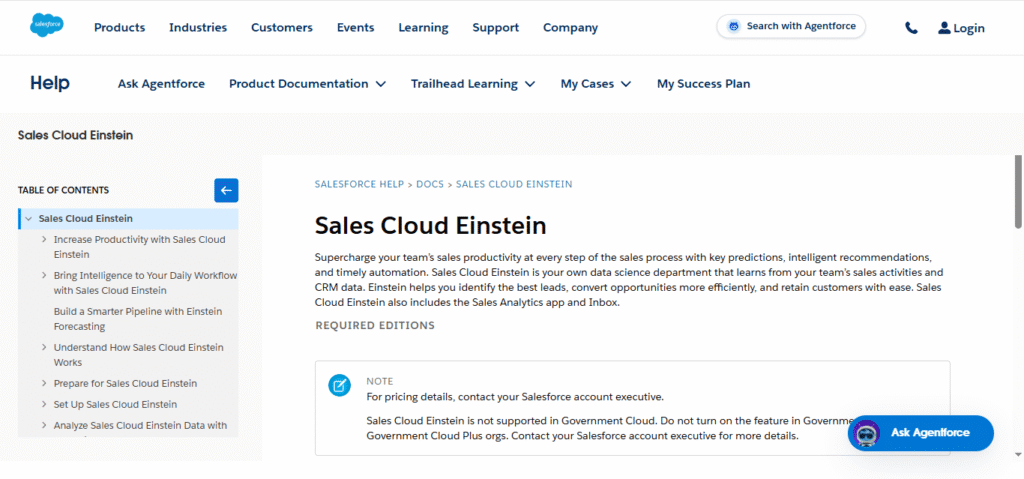
Salesforce Einstein is the AI powerhouse behind the Salesforce ecosystem, seamlessly integrated across its suite of cloud products including Sales Cloud, Marketing Cloud, Service Cloud, and Commerce Cloud. Designed to bring intelligence to every business process, Einstein uses machine learning, predictive analytics, and natural language processing (NLP) to help companies automate repetitive tasks, uncover valuable insights, and deliver deeply personalized customer experiences.
By embedding AI directly into the Salesforce platform, Einstein transforms how organizations understand and engage with customers. It not only analyzes massive datasets but also predicts outcomes such as which leads are most likely to convert or which customers are at risk of churn allowing teams to act strategically and proactively.
Key Features:
- Predictive Lead Scoring & Customer Behavior Analysis
Einstein analyzes historical sales data, customer interactions, and behavioral patterns to predict which leads are most likely to close. This enables sales teams to prioritize high-value opportunities and improve conversion rates. - Automated Workflows & Task Recommendations
Repetitive administrative tasks — like follow-up reminders or email responses are automated through Einstein’s smart recommendations. This frees up valuable time for teams to focus on strategic initiatives. - AI-Powered Chatbots for Customer Service
Einstein Bots provide instant, AI-driven customer support. They handle common service requests, escalate complex issues to human agents, and ensure customers receive consistent, 24/7 assistance. - Real-Time Analytics & Opportunity Insights
With built-in analytics, Einstein offers real-time dashboards that visualize trends, forecast revenues, and provide insights into customer sentiment helping leaders make smarter business decisions.
Why It Stands Out:
Salesforce Einstein redefines how CRM systems operate by merging data-driven intelligence with automation. Unlike standalone AI tools, it’s fully embedded into the Salesforce ecosystem,
ensuring seamless integration across all departments — from sales and service to marketing and commerce. Its predictive capabilities enable teams to anticipate customer needs, while its automation features optimize workflows across the organization.
Best For:
- Large enterprises and sales-driven organizations
- Companies seeking to leverage customer data for smarter engagement
- Businesses aiming to integrate AI-powered automation into their CRM, marketing, and support operations
In essence, Salesforce Einstein transforms Salesforce from a CRM into a self-learning business intelligence system, one that helps organizations not only understand what’s happening but also anticipate what comes next.
2. Microsoft Dynamics 365 + Copilot (Azure AI)
Overview:
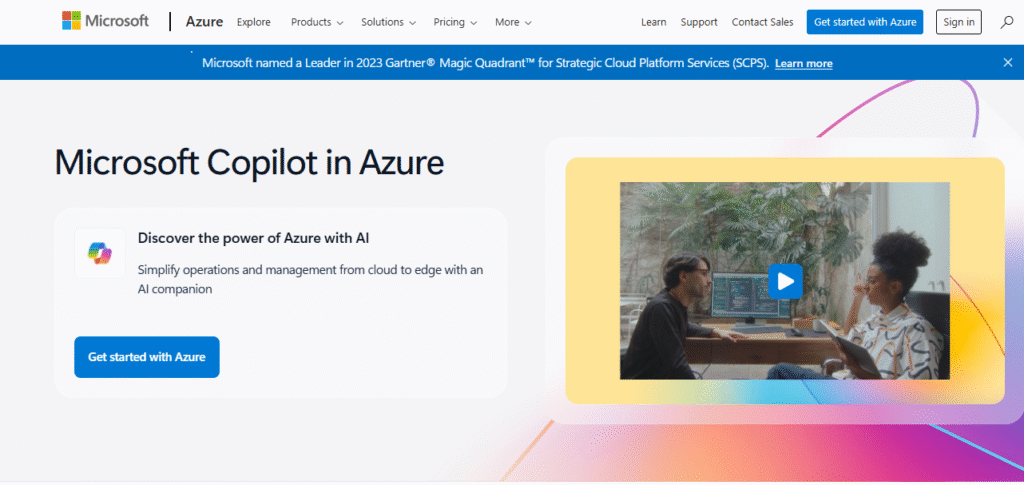
Microsoft Dynamics 365 is a unified platform that blends CRM and ERP capabilities, empowering organizations to streamline sales, operations, finance, and customer service. By integrating with Azure AI and Microsoft’s generative AI assistant, Copilot, it delivers intelligent automation, predictive insights, and natural language interactions making business management more intuitive and data-driven.
Dynamics 365 enables companies to automate workflows, analyze performance in real time, and make informed decisions across departments. With Copilot, users can use plain language to query data, generate reports, or even draft emails ,all within familiar Microsoft tools.
Key Features:
- AI-Driven Sales Forecasting and Customer Insights
Using Azure AI, Dynamics 365 analyzes historical data to forecast sales, identify potential customers, and recommend next-best actions, helping sales teams close deals faster.
- Workflow Automation via Power Automate
Businesses can automate repetitive processes from invoice approvals to lead management through Microsoft’s Power Automate integration, reducing manual errors and improving productivity. - Natural Language Interface with Copilot
With Microsoft Copilot, users can ask questions like “Show me revenue trends for Q3” or “Draft a response to this client”, making analytics and communication faster and easier. - Integration with Microsoft 365 and Teams
Seamlessly connects with tools like Outlook, Excel, and Teams, enabling real-time collaboration and smoother communication across the organization.
Why It Stands Out:
Microsoft Dynamics 365 with Copilot stands out for its tight integration with the Microsoft ecosystem. Businesses already using Microsoft 365, Teams, or Azure can leverage this solution for end-to-end visibility and automation. Its AI and natural language features transform traditional workflows into smart, conversational experiences.
Best For:
- Enterprises using Microsoft 365 or Azure infrastructure
- Organizations seeking AI-enhanced ERP and CRM integration
- Businesses focused on data-driven collaboration and automation
Dynamics 365 + Copilot brings the power of enterprise AI to everyday tools helping teams make smarter decisions with less effort.
3. Zoho One + Zia AI
Overview:
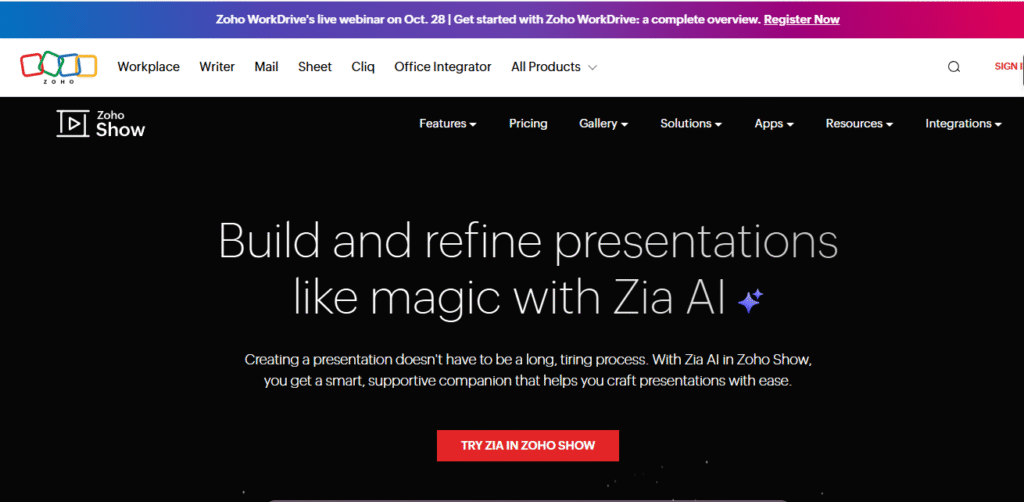
Zoho One is a comprehensive suite of over 45 integrated business applications covering CRM, HR, finance, project management, and marketing. At the heart of this ecosystem lies Zia,
Zoho’s intelligent AI assistant that analyzes data, automates workflows, and predicts business outcomes.
Zia uses advanced machine learning and NLP to help users identify trends, detect anomalies, and even gauge customer sentiment from emails or chats. Designed for affordability and scalability, Zoho One offers enterprise-grade intelligence accessible to small and medium-sized businesses.
Key Features:
- AI-Based Analytics and Anomaly Detection
Zia scans large datasets to identify unusual patterns such as sales dips or cost spikes, helping businesses act quickly to address issues. - Email and Sentiment Analysis
Zia analyzes customer emails and feedback to detect tone, intent, and satisfaction levels, giving businesses actionable insights into customer relations. - Automated Business Workflows
Automates routine processes across departments, such as sending invoices, following up with leads, or updating CRM records, boosting efficiency and accuracy. - Integration Across CRM, HR, and Accounting
All Zoho applications share data seamlessly, allowing for smooth coordination between departments like sales, HR, and finance within one platform.
Why It Stands Out:
Zoho One + Zia AI is known for combining affordability with enterprise intelligence. While large-scale ERP and CRM systems can be costly, Zoho offers AI-powered automation, analytics, and reporting at a fraction of the price, making it a go-to choice for growing businesses.
Best For:
- Small and mid-sized businesses seeking an all-in-one business management suite
- Organizations looking for AI automation without enterprise-level costs
- Teams wanting unified data flow between CRM, HR, finance, and marketing
Zoho One + Zia AI proves that smart, connected business management doesn’t have to come with an enterprise price tag, making it one of the most versatile and cost-effective AI-powered cloud platforms in 2025.
4. Oracle NetSuite AI
Best for: Mid-sized businesses managing financials, operations, and growth
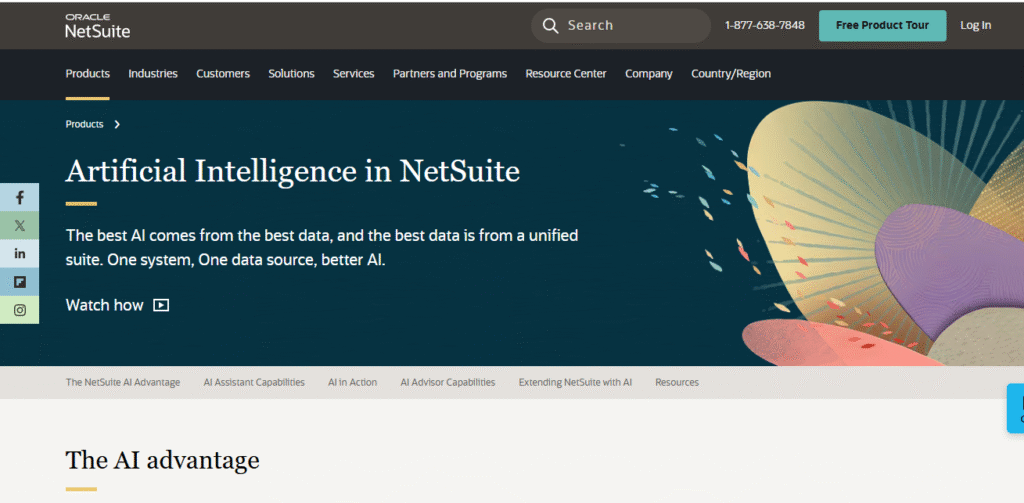
Oracle NetSuite AI stands out as one of the most comprehensive cloud-based ERP (Enterprise Resource Planning) solutions tailored to mid-sized businesses aiming for enterprise-level performance. As part of Oracle’s robust cloud ecosystem, NetSuite integrates advanced artificial intelligence to help organizations gain real-time visibility, automate manual processes, and make data-driven decisions with confidence.
Unlike many traditional ERP systems that require heavy customization or infrastructure investment, NetSuite is fully cloud-native, meaning it’s accessible anywhere, easily scalable, and continuously updated with the latest AI capabilities. Its intelligent automation tools analyze massive amounts of operational data to provide actionable insights that improve financial accuracy, optimize resource allocation, and enhance strategic planning.
Key Features
1. Automated Financial Management
NetSuite AI simplifies complex accounting and financial tasks by automating everything from billing and reconciliation to forecasting and compliance reporting. Its AI algorithms detect anomalies, predict cash flow trends, and reduce human error, ensuring faster month-end closings and more reliable data. Businesses can also leverage intelligent dashboards that highlight profitability metrics, expense patterns, and performance KPIs in real time.
2. Smart Inventory and Supply Chain Optimization
For businesses with inventory or manufacturing operations, NetSuite’s AI-powered inventory management system predicts demand fluctuations, automates reordering, and identifies inefficiencies in logistics. The result is a more resilient and cost-effective supply chain, particularly valuable for growing or globally distributed companies.
3. AI-Enhanced Business Insights
With embedded analytics and machine learning, NetSuite turns raw business data into strategic insights. The platform uses predictive analytics to identify trends in sales, expenses, and operations, helping decision-makers anticipate challenges before they arise.
Through customizable dashboards, leaders gain a clear picture of their company’s performance across departments, from finance and HR to supply chain and marketing.
4. Scalability and Global Reach
As mid-sized businesses expand, their operational demands grow more complex. NetSuite’s modular architecture and scalable AI infrastructure allow organizations to add new functionalities, users, and global subsidiaries without disrupting existing workflows. The platform also supports multi-currency, multi-language, and tax compliance, essential for international growth.
Why It Stands Out
Oracle NetSuite AI bridges the gap between small-business simplicity and enterprise-grade sophistication. It delivers the intelligence and automation capabilities of Oracle’s larger Fusion Cloud system but in a package that’s optimized for agility, cost-efficiency, and rapid deployment.
For mid-sized organizations, this means:
- Access to enterprise-level tools without the heavy IT overhead.
- Real-time visibility into every aspect of the business.
- AI-driven accuracy and foresight for smarter strategic decisions.
In short, Oracle NetSuite AI empowers businesses to scale confidently, operate efficiently, and compete intelligently in a rapidly evolving digital economy.
5. Oracle Fusion Cloud
Best for: Enterprise resource planning and intelligent finance
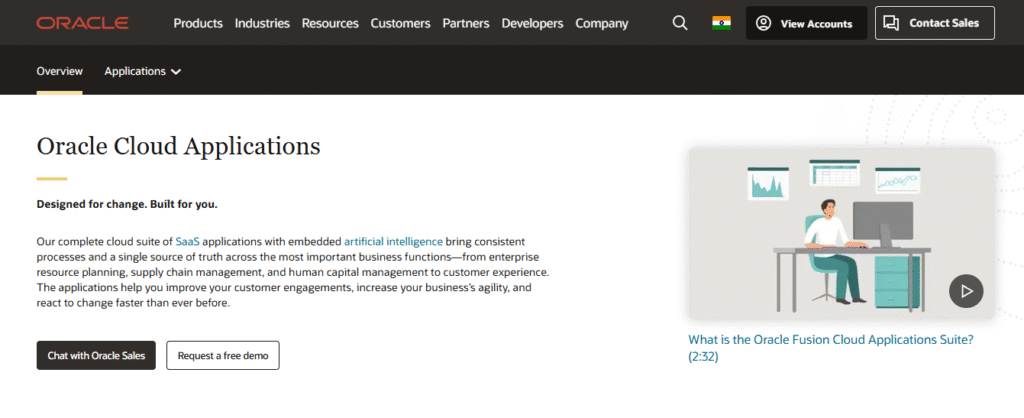
Oracle Fusion Cloud is one of the most advanced and integrated ERP (Enterprise Resource Planning) platforms available today. Designed for large enterprises, it combines the power of cloud computing, artificial intelligence (AI), and automation to create a unified system that connects finance, human resources, supply chain, and procurement.
At its core, Oracle Fusion Cloud helps organizations simplify complex operations and make smarter, data-driven decisions. By embedding AI directly into its core applications, the platform automates repetitive tasks, predicts financial outcomes, and provides executives with real-time insights — enabling faster, more confident decision-making across the enterprise.
Unlike legacy ERP systems that rely on manual inputs and static reports, Oracle Fusion Cloud’s intelligent features deliver continuous updates, predictive analytics, and adaptive processes that evolve with business needs. This allows organizations to operate with agility while maintaining governance, compliance, and operational consistency.
Key Features
1. AI-Powered Financial Forecasting and Planning
Oracle Fusion Cloud brings intelligence to finance by automating forecasting, budgeting, and performance tracking. Its AI models analyze historical and real-time financial data to predict revenue trends, cash flow fluctuations, and cost-saving opportunities. This gives CFOs and finance leaders a proactive, data-backed view of the organization’s fiscal health.
Additionally, its predictive planning tools help finance teams create dynamic scenarios testing the impact of market shifts, pricing changes, or policy decisions before they happen. This capability makes strategic planning more accurate and adaptable to real-world conditions.
2. Intelligent Automation for Procurement and HR
One of the key differentiators of Oracle Fusion Cloud is its ability to connect procurement and HR workflows through automation. In procurement, AI streamlines supplier management, purchase orders, and contract approvals, reducing cycle times and minimizing human errors.
In HR, intelligent automation assists with workforce planning, recruitment, onboarding, and performance analysis. The system’s built-in analytics can identify workforce trends, suggest retention strategies, and automate administrative processes, allowing HR teams to focus more on strategy and employee engagement.
3. Autonomous Cloud Database with Real-Time Analytics
Oracle’s Autonomous Database is at the heart of Fusion Cloud’s reliability and performance. It automatically manages, tunes, and secures data with minimal human intervention, significantly reducing downtime and operational risk.
This AI-driven database enables real-time analytics across multiple business units, giving decision-makers up-to-the-minute visibility into performance metrics, operational bottlenecks, and opportunities for improvement. The database’s self-optimizing features also ensure scalability and security at the enterprise level.
Why It Stands Out
Oracle Fusion Cloud is purpose-built for enterprises that demand intelligence, reliability, and scalability across their business operations. Its embedded AI, autonomous systems, and integrated suite of business applications eliminate silos and create a unified digital foundation for growth.
Key advantages include:
- Real-time, predictive insights that support smarter business decisions
- Reduced manual workload through automation and AI
- Seamless integration across all business functions: finance, HR, supply chain, and procurement
- High levels of performance, uptime, and data security powered by Oracle’s autonomous cloud infrastructure
In essence, Oracle Fusion Cloud empowers enterprises to transform data into strategy, automation into efficiency, and AI into measurable business outcomes. It’s a platform designed not just to manage operations but to elevate them with intelligence and precision.
6. SAP Business Technology Platform (BTP)
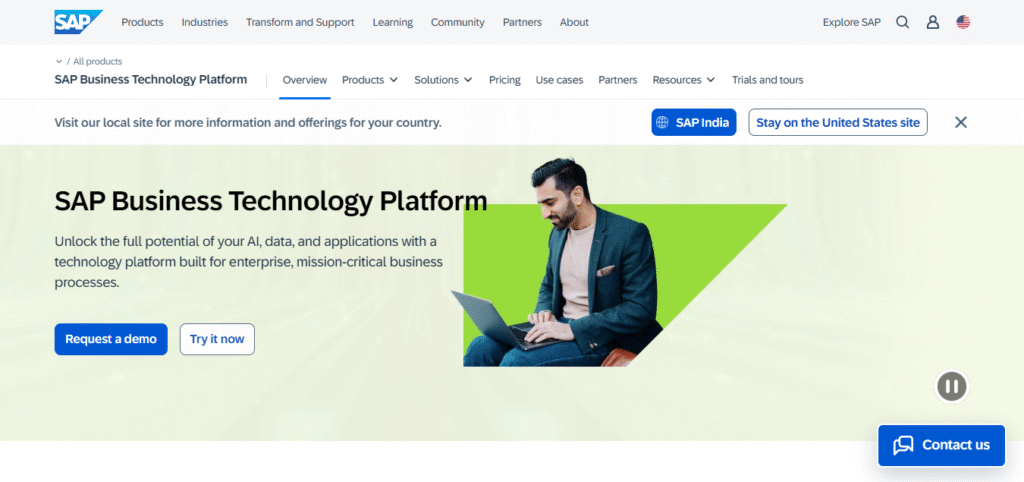
Best for: Global enterprises with complex operational workflows
SAP Business Technology Platform (BTP) is at the heart of SAP’s intelligent enterprise strategy, a powerful, cloud-based foundation that brings together data management, analytics, AI, and automation to help organizations streamline their operations and drive digital transformation at scale.
Built to support complex global enterprises, SAP BTP connects every corner of the business from finance and logistics to manufacturing and supply chain management, enabling real-time visibility, agility, and intelligent decision-making. The platform integrates seamlessly with SAP S/4HANA Cloud, SAP’s flagship ERP solution, providing a unified ecosystem that turns raw data into actionable insights.
Unlike traditional ERP systems that operate in silos, SAP BTP unifies business data and processes across departments and regions. It allows organizations to not only digitize their
workflows but also enhance them with AI-driven intelligence, ensuring consistency, compliance, and operational excellence across multi-region environments.
Key Features
1. Predictive Analytics and Machine Learning
SAP BTP empowers businesses to move from reactive decision-making to predictive intelligence. Its built-in machine learning and analytics tools identify trends, detect anomalies, and forecast future outcomes across various business areas.
For example, finance teams can predict cash flow variations, manufacturing departments can forecast equipment maintenance needs, and supply chain leaders can anticipate disruptions before they occur. These predictive insights enable companies to optimize operations proactively rather than responding after the fact.
Why it matters: Predictive analytics helps global enterprises make faster, smarter, and more resilient business decisions in an increasingly uncertain marketplace.
2. Intelligent Process Automation (IPA)
One of SAP BTP’s most powerful capabilities lies in its Intelligent Process Automation (IPA) suite. By combining AI, robotic process automation (RPA), and workflow orchestration, it automates repetitive and manual tasks from invoice processing and order fulfillment to HR onboarding and compliance reporting.
This automation not only saves time but also improves accuracy and scalability, freeing employees to focus on strategic initiatives rather than routine administrative work. Over time, the system learns from user behavior and business data to further optimize and refine these automated workflows.
Why it matters: Intelligent automation enhances efficiency, reduces operational costs, and minimizes human errors essential for large organizations managing thousands of transactions daily.
Seamless Integration with SAP S/4HANA Cloud
SAP BTP is designed to work hand-in-hand with SAP S/4HANA Cloud, ensuring all business functions, finance, supply chain, logistics, HR, and customer experience share a single source of truth.
Through pre-built connectors, APIs, and integration tools, SAP BTP allows organizations to easily connect both SAP and non-SAP systems. This means enterprises can unify their entire IT landscape, consolidating data from multiple sources into a central, intelligent platform.
Why it matters: Unified integration eliminates data silos, ensures consistency across global operations, and enables end-to-end visibility from production to profit.
Why It Stands Out
SAP Business Technology Platform is more than just a tool; it’s an enterprise-grade digital foundation built for scale, complexity, and intelligence. It enables organizations to harness the full power of their data, connect departments seamlessly, and automate processes intelligently, all within a secure, compliant, and globally supported cloud ecosystem.
What sets SAP BTP apart:
- Unmatched scalability for multinational and enterprise environments
- Deep industry expertise across sectors like manufacturing, logistics, and finance
- Embedded AI and automation designed for mission-critical operations
- Proven reliability and support through SAP’s global network
In essence, SAP BTP transforms complex business ecosystems into agile, data-driven, and future-ready enterprises. For organizations managing vast supply chains, multi-region operations, and intricate financial networks, SAP BTP stands as the industry benchmark for intelligent digital transformation.
7. Workday AI Cloud
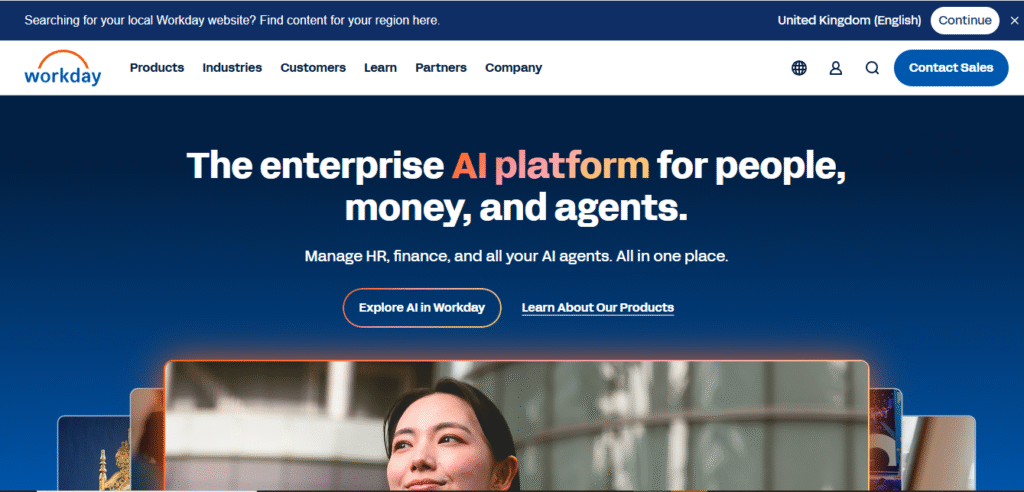
About:
Workday AI Cloud is a comprehensive, enterprise-grade business management platform that combines artificial intelligence, machine learning, and cloud-based ERP functionality to transform how organizations manage their human resources, finance, and operations.
Originally known for its cutting-edge HR and financial management software, Workday has integrated advanced AI models into nearly every part of its ecosystem, from recruitment and payroll automation to predictive analytics for workforce planning.
Using AI, the platform can forecast employee turnover, optimize scheduling, analyze workforce productivity, and even detect anomalies in financial transactions. Workday’s AI tools also help HR departments identify skill gaps, streamline hiring decisions, and create personalized employee experiences, all while ensuring data privacy, fairness, and compliance.
Why it stands out:
Workday AI Cloud stands out for its human-centric approach to artificial intelligence. Unlike many platforms focused solely on automation, Workday emphasizes ethical AI, ensuring transparency in decision-making and protecting sensitive workforce data.
It also integrates seamlessly with other enterprise tools, offering intuitive dashboards and real-time analytics that enable executives to make smarter, faster decisions. With continuous AI training on anonymized business data, Workday delivers predictive accuracy and business insights that evolve with each organization’s unique operations.
Key AI Features:
- AI-powered talent intelligence and skills mapping
- Predictive workforce analytics for retention and hiring
- Automated financial insights for budgeting and forecasting
- Built-in governance and data security controls
- Natural-language-enabled dashboards for HR and finance leaders
Ideal for:
Enterprises and large organizations are seeking an all-in-one, AI-optimized HR and finance system that improves efficiency, compliance, and employee engagement.
8. ClickUp AI

Best for: Teams focusing on productivity and project management
ClickUp AI has emerged as one of the most innovative productivity and project management platforms designed for modern, agile teams. ClickUp takes traditional project management to the next level by integrating artificial intelligence directly into daily workflows, empowering teams to plan, execute, and deliver projects faster and smarter.
Unlike conventional task management tools, ClickUp AI combines automation, intelligent task generation, and smart content assistance into a single, easy-to-use workspace. Whether you’re managing product development, marketing campaigns, or client deliverables, ClickUp AI acts as a digital project assistant that helps organize priorities, streamline collaboration, and eliminate busywork.
Built with versatility in mind, ClickUp AI adapts to the unique needs of teams across industries from startups to large enterprises ,allowing them to centralize tasks, communication, and documentation all in one intuitive platform.
Key Features
1. AI Task Generation and Smart Summarization
ClickUp AI assists teams by automating content creation and summarization directly within project workflows. With just a few prompts, it can generate project outlines, task lists, meeting summaries, or even detailed documentation.
For example, after a meeting, ClickUp AI can automatically produce a concise summary with key takeaways and assignable action items. Similarly, when planning a new project, it can generate structured task lists and deadlines based on your input or templates.
This not only saves time but also ensures that important information doesn’t get lost in lengthy email threads or scattered notes.
Why it matters: Teams can reduce administrative overhead and focus on meaningful work, improving speed, clarity, and productivity.
2. Customizable Project Dashboards
ClickUp’s dashboard system is highly flexible, allowing users to create custom, real-time visualizations of tasks, timelines, workloads, and key metrics. With AI-enhanced insights, teams can automatically identify project bottlenecks, missed deadlines, or overworked team members.
The dashboards can be tailored to individual users or teams, giving managers visibility into high-level progress while team members track their daily tasks. The AI can also provide smart recommendations to rebalance workloads or adjust priorities for better project flow.
Why it matters: Dynamic dashboards transform raw task data into actionable intelligence, keeping teams aligned and projects on schedule.
Deep Integrations with Productivity Tools
ClickUp AI integrates seamlessly with popular business tools like Slack, GitHub, Google Workspace, Zoom, and Microsoft Teams, ensuring smooth communication and workflow continuity across platforms.
For developers, ClickUp’s GitHub integration allows automatic linking of code commits and pull requests to tasks. For marketers or remote teams, Slack and Google Workspace integrations enable instant updates and AI-generated summaries of team conversations or shared documents.
Why it matters: These integrations eliminate the friction of switching between multiple apps, giving teams a centralized hub for collaboration, communication, and project visibility.
Why It Stands Out
ClickUp AI stands out for its unique balance of simplicity, intelligence, and versatility. It combines advanced AI features such as task automation, content generation, and smart analytics with the intuitive usability of a modern productivity app.
While many enterprise tools focus on heavy-duty project management or specialized analytics, ClickUp AI caters to the everyday needs of cross-functional teams. It’s lightweight enough for startups and creative teams, yet robust enough for enterprise-grade project coordination.
What sets it apart:
- AI-powered assistance: Drafts tasks, emails, and summaries instantly.
- End-to-end visibility: Combines project planning, execution, and reporting in one place.
- Collaborative efficiency: Enhances teamwork with real-time communication and integration tools.
- Affordability and scalability: Suitable for small teams yet scalable for large organizations.
In essence, ClickUp AI transforms how teams work — enabling them to think less about processes and focus more on outcomes. It’s a productivity companion that adapts to the way your team works, helping you achieve better results with less effort.
9. DataRobot
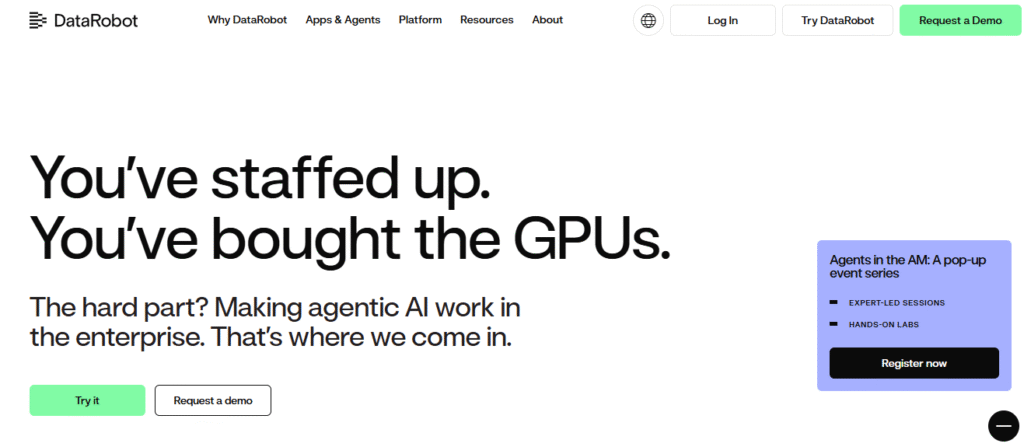
Best for: Predictive analytics and machine learning automation
DataRobot stands out as one of the most powerful AI cloud platforms for predictive analytics and machine learning automation (AutoML). It’s designed to empower organizations of all sizes from startups to global enterprises to build, deploy, and manage machine learning models without needing deep data science expertise.
At its core, DataRobot democratizes AI by automating the most complex parts of model development from data preparation and feature engineering to model selection, training, and deployment. This enables business users, analysts, and data engineers alike to harness the power of AI for forecasting, optimization, and strategic decision-making.
Whether predicting customer churn, optimizing supply chains, or managing financial risk, DataRobot allows businesses to transform raw data into accurate, actionable intelligence faster and more efficiently than traditional methods.
Key Features
1. Automated Model Building and Deployment
DataRobot’s flagship feature is its AutoML (Automated Machine Learning) capability. Users simply upload their data, and the platform automatically analyzes it, tests dozens of potential algorithms, and selects the most accurate and reliable models for the task at hand.
Once the model is trained, DataRobot streamlines the deployment process, turning AI models into real-time prediction engines that can be integrated directly into business systems or dashboards. The platform continuously monitors model performance to ensure predictions remain accurate as conditions change.
Why it matters: Businesses can build and deploy production-grade AI models in days instead of months without needing a full data science team.
2. Predictive Analytics for Forecasting and Risk Management
DataRobot excels at generating predictive insights that help businesses anticipate future
outcomes and make proactive decisions. Organizations use it for a wide range of applications, such as sales forecasting, fraud detection, inventory optimization, and credit risk assessment.
The AI models built by DataRobot provide detailed explanations for each prediction through model interpretability tools, helping users understand not just what the system predicts but why. This transparency is essential for building trust in AI-driven recommendations — particularly in regulated industries like finance, healthcare, and insurance.
Why it matters: Predictive analytics enables businesses to stay ahead of trends, reduce risks, and seize opportunities with confidence and clarity.
3. Integration with Major Data Platforms
DataRobot is built to work seamlessly with existing business ecosystems. It integrates with popular data storage and analytics platforms such as Snowflake, Databricks, Google BigQuery, AWS, Azure, and Tableau.
This deep integration means that teams can use DataRobot to train and deploy AI models directly where their data already resides, minimizing friction and maximizing efficiency. Additionally, it supports APIs for embedding predictive models into CRM systems, ERP software, and custom applications.
Why it matters: Integration flexibility ensures that businesses can adopt AI without disrupting their existing workflows or technology stack.
Why It Stands Out
DataRobot stands out as a leader in automated machine learning (AutoML) because it bridges the gap between data science and business intelligence. It provides non-technical users with the ability to create enterprise-grade AI solutions while giving data experts the advanced tools they need for deeper customization and performance tuning.
Its user-friendly interface, robust automation, and explainable AI features make it one of the most accessible yet powerful AI platforms available today.
What sets it apart:
- No-code and low-code AI modeling for non-technical users
- Enterprise-grade accuracy and scalability
- Continuous model monitoring for long-term reliability
- Transparency and explainability in every prediction
In short, DataRobot enables organizations to move beyond descriptive analytics and embrace predictive, intelligent decision-making, all without the steep learning curve of traditional AI development. For businesses ready to harness the full potential of their data, DataRobot delivers a future-proof platform that makes advanced AI both practical and impactful.
10. IBM Watsonx
Best for: Enterprises needing strong data governance and AI compliance
IBM Watsonx is a next-generation enterprise AI and data platform designed to help organizations build, scale, and govern AI solutions with trust and transparency. As businesses increasingly adopt AI to drive decisions, the need for explainability, security, and ethical compliance has never been greater and Watsonx was built precisely to meet those needs.
Combining IBM’s decades-long legacy in enterprise computing with cutting-edge AI capabilities, Watsonx enables organizations to leverage data responsibly while maintaining strict control over privacy and governance. It’s particularly suited for regulated industries such as finance, healthcare, government, and energy, where accountability, traceability, and compliance are mission-critical.
The platform is composed of three core components: Watsonx.ai, Watsonx.data, and Watsonx.governance, which together provide a unified environment for developing, deploying, and managing AI and machine learning models securely at scale.
Key Features
1. Model Governance and Explainable AI
IBM Watsonx’s governance layer is one of its defining features. It ensures that every AI model whether built in-house or sourced from external vendors ,is auditable, transparent, and explainable.
Through Watsonx.governance, organizations can automatically track model lineage, monitor performance drift, and enforce ethical standards throughout the model lifecycle. This allows teams to identify potential biases, ensure fairness, and meet compliance requirements for regulations such as GDPR, HIPAA, and AI Act frameworks.
Why it matters: In industries where transparency and accountability are non-negotiable, Watsonx provides peace of mind that every AI decision can be traced, justified, and trusted.
2. Predictive Insights and Process Automation
Beyond governance, Watsonx enables businesses to harness AI for predictive analytics and automation. Using Watsonx.ai, teams can develop and train foundation models or integrate pre-trained large language models (LLMs) tailored to their industry needs.
These models help uncover insights from structured and unstructured data, enabling use cases such as customer churn prediction, fraud detection, supply chain optimization, and intelligent document processing. Combined with IBM’s automation tools, Watsonx helps organizations streamline workflows, reduce operational costs, and enhance productivity.
Why it matters: Watsonx transforms raw enterprise data into strategic intelligence, empowering leaders to make faster, data-driven decisions while maintaining full control over model performance and compliance.
3. Strong Compliance and Data Protection
Data security is at the heart of the Watsonx platform. It provides enterprise-grade encryption, access control, and auditability ensuring that sensitive information remains protected at every stage of the AI lifecycle.
Through Watsonx.data, IBM offers a flexible, open data lakehouse architecture that allows businesses to manage and analyze large-scale data securely across hybrid and multi-cloud environments. Its architecture supports compliance with complex data residency and sovereignty requirements, an essential feature for global enterprises operating in regulated markets.
Why it matters: Organizations can confidently deploy AI in high-stakes environments without compromising on privacy, compliance, or ethical responsibility.
Why It Stands Out
IBM Watsonx stands apart as the most trusted enterprise AI platform for organizations that prioritize governance, compliance, and accountability. While many AI tools focus on performance or automation, Watsonx emphasizes responsible AI adoption, ensuring that businesses can innovate confidently within ethical and legal boundaries.
What sets it apart:
- End-to-end model governance to ensure AI accountability
- Explainable, bias-detecting AI models for ethical transparency
- Secure data management across hybrid and multi-cloud infrastructures
- Enterprise reliability backed by IBM’s legacy in data and AI innovation
In essence, IBM Watsonx empowers enterprises to lead with trustworthy, transparent AI systems that deliver value without sacrificing security or integrity. It’s the ideal choice for organizations that see AI not just as a tool for growth but as a responsibility.