Referring domains and backlinks are related, but they are not the same thing.
- A backlink is a single link pointing from one page to another
- A referring domain is the website that provides those links
- Multiple backlinks can come from one domain, but it still counts as only one referring domain
Search engines pay close attention to this difference because rankings depend not just on how many links you earn, but on how many unique and trusted websites link to you.
Understanding the concept of referring domain vs backlinks gives you immediate clarity on why some websites with fewer total backlinks often outrank competitors with thousands of links. It is not about the raw number of links alone; it is about the diversity, quality, and trustworthiness of the websites pointing to you. A healthy SEO profile is built when many different high-quality websites choose to link to your content, each one acting as an independent vote of confidence for your brand.
This is why focusing only on increasing backlink numbers can be misleading and even dangerous. If most of your backlinks come from the same few domains, search engines may view your link profile as weak or manipulated. On the other hand, earning backlinks from a growing number of unique referring domains signals natural popularity, authority, and relevance, three pillars of modern SEO.
By the time you finish reading this guide, you will clearly understand:
- what backlinks are,
- what referring domains are,
- how they differ,
- why the balance between them matters so much,
- and how mastering the referring domain vs backlinks relationship can dramatically improve your rankings, traffic, and long-term search visibility.
Whether you are building links for the first time or refining an existing SEO strategy, this distinction is one of the most powerful pieces of knowledge you can apply.
Why Do People Confuse Referring Domains and Backlinks?
People often confuse referring domains and backlinks because both are about other websites linking to your website, and at first glance, they look like the same thing.
When someone sees a report that says,
“Your website has 5,000 backlinks,”
they naturally assume that means
“5,000 different websites are linking to me.”
But that is usually not true.
The confusion happens because most SEO tools show both numbers side by side, and beginners don’t realize that one website can create many backlinks, but it will still count as only one referring domain.
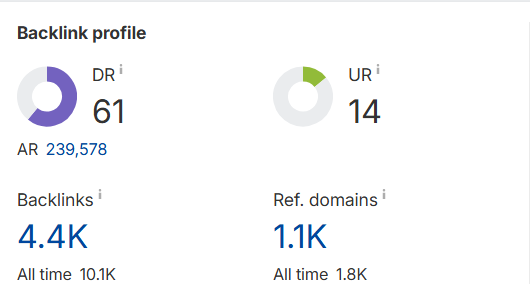
Here’s a simple example:
Imagine one blog writes ten different articles and each article links to your website.
You now have 10 backlinks,
but only 1 referring domain, because all those links came from the same website.
So when people see many links, they assume their site is very popular. But in reality, search engines care much more about how many different websites are linking to you, not just how many total links you have.
Another reason for the confusion is the wording:
- Backlink sounds technical and abstract.
- Referring domain sounds even more technical.
Since both talk about links, people naturally mix them up.
Once you understand this small difference, the whole topic of referring domain vs backlinks becomes much easier.
Backlinks tell you how many links you have.
Referring domains tell you how many different websites trust you.
That’s why they are not the same,and why confusing them can lead to poor SEO decisions.
What Is a Backlink?

A backlink is simply a link from another website that points to your website.
When one website places a clickable link that sends visitors to your page, that link is called a backlink. It is also commonly called an inbound link because it brings people into your site from somewhere else. In SEO, backlinks are extremely important because they act like recommendations.
Every time another site links to you, it is telling search engines:
Different Forms of Backlinks
Backlinks can appear in many different formats, not just regular text.
Here are the most common types:
1. Text links
These are the most common. The link is placed inside text, and the clickable words are called anchor text.
Example:
Learn more about SEO strategies here.
2. Image links
Sometimes an image is clickable and leads to another website. That image itself becomes the backlink.
3. Button links
Call-to-action buttons like “Visit Website,” “Read More,” or “Download Now” can also work as backlinks.
4. Infographic links
When other websites embed your infographic and link back to your site as the source.
5. Directory and profile links
Links from business directories, forums, author bios, and social profiles.
Role of Backlinks in Crawling, Indexing, and SEO
Backlinks are how search engines find and understand your website.
When Google’s crawler (Googlebot) discovers a backlink on another site, it follows that link to reach your page. This helps Google:
- Crawl your page
- Index your content
- Understand what your page is about
- Decide how high your page should rank
Backlinks also pass authority and trust from one site to another.
If a respected website links to you, some of its credibility is transferred to your site.
In simple terms:
More high-quality backlinks = more trust = better rankings.
Difference Between Internal Links and Backlinks
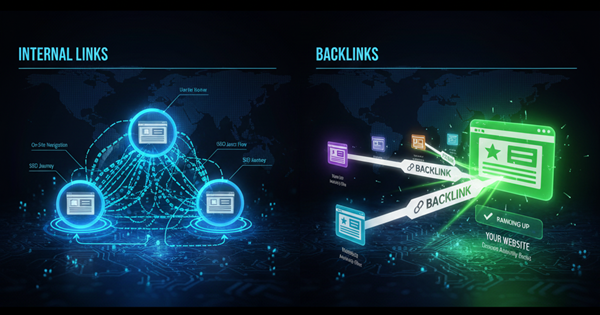
Not all links are backlinks.
- Internal links connect pages within the same website.
Example: A blog post on your site linking to another page on your site. - Backlinks come from other websites linking to your website.
Internal links help with navigation and structure,
but backlinks are what build your site’s authority in search engines.
Example for Clarity
Let’s say:
- Your website is example.com
- A blog on techblog.com links to your article
That link from techblog.com to example.com is a backlink.
If techblog.com adds five more links to your site from different articles:
- You now have 6 backlinks
- But only 1 referring domain (because all links came from the same site)
This is the core idea behind referring domain vs backlinks.
What Is a Referring Domain?
A referring domain is the website that sends links to your website.
While a backlink is the actual clickable link, a referring domain is the source website that provides that link.
So if any page on another website links to your site, that website becomes a referring domain for you.
In SEO terms, referring domains represent the number of unique websites that trust your content enough to link to it.
Relationship Between Referring Domains and Backlinks
Backlinks and referring domains are closely connected, but they measure different things.
- Backlinks measure how many links point to your site.
- Referring domains measure how many different websites are linking to you.
This is the main difference in the referring domain vs backlinks concept.
You can receive many backlinks from one website, but that website will only count as one referring domain.
How Backlinks Are Counted vs How Referring Domains Are Counted
Let’s break it down simply:
- Every time a page links to your website, you gain one backlink.
- No matter how many times a single website links to you, it still counts as only one referring domain.
So:
- 100 links from the same website = 100 backlinks
- But only 1 referring domain
Search engines pay more attention to how many different websites are linking to you, because that shows broader trust and popularity.
Example for Clarity
Imagine this situation:
Website newsblog.com publishes 10 articles,
and each article links to your website mywebsite.com.
Your results:
- 10 backlinks
- 1 referring domain (newsblog.com)
Now imagine 10 different websites each link to you once.
Your results:
- 10 backlinks
- 10 referring domains
Even though the number of backlinks is the same, the second situation is much stronger for SEO, because more unique websites are supporting your content.
Why Are These Differences Important?
Understanding the difference between referring domains vs backlinks is critical because it directly affects how strong, natural, and trustworthy your website looks to search engines. Many people focus only on increasing their backlink count, but without paying attention to where those links are coming from, they can end up building a weak or even risky SEO profile.
Let’s break down why this matters.
How Backlink Count Alone Can Be Misleading
A high number of backlinks may look impressive at first, but the number alone does not tell the full story.
For example, you could have 10,000 backlinks, but if 9,500 of them come from just a handful of websites, your site does not actually have broad support across the web. Search engines are smart enough to recognize this pattern and will not value those links as highly.
This is why backlink count by itself is often misleading.
What really matters is how many different websites are choosing to link to you.
Importance of Growing Referring Domains
Every new referring domain acts as an independent vote of confidence for your website.
When many unique websites link to your content, it signals that your site is:
- Useful
- Relevant
- Trusted
- Worth ranking higher
Growing your number of referring domains shows that your authority is spreading naturally across the internet. This is far more powerful for SEO than collecting many links from the same few websites.
Backlink-to-Referring-Domain Ratio and SEO Risk
Search engines evaluate the relationship between your total backlinks and your referring domains.
This is often called the backlink-to-referring-domain ratio.
If your site has:
- A very high number of backlinks
- But a very low number of referring domains
This pattern can look unnatural and suspicious.
It may suggest link manipulation, paid links, private blog networks, or other black-hat SEO tactics, even if that was not your intention.
A healthy SEO profile typically shows:
- A steady increase in backlinks
- Along with a steady increase in referring domains
How Poor Ratios Can Lead to Penalties or Weak Link Profiles
When your backlink profile is unbalanced, two problems can occur:
- Search engines may reduce the value of your links
If Google believes many of your links are unnatural, it may simply ignore them. This results in a weak link profile that fails to support your rankings. - In severe cases, you risk manual or algorithmic penalties
Sites that rely heavily on unnatural link patterns can be penalized, losing rankings or visibility altogether.
In short, focusing only on backlinks without growing referring domains can leave your SEO fragile, unstable, and vulnerable to future algorithm updates.
Referring Domain vs Backlinks: How Do They Impact SEO?
Both backlinks and referring domains play a major role in how search engines evaluate and rank your website. While they are closely connected, they influence SEO in different but complementary ways. Together, they shape how trustworthy, relevant, and authoritative your site appears to Google.
How Backlinks Act as Ranking Signals
Search engines treat backlinks as votes of confidence.
When one website links to another, it is essentially saying,
“This page is useful and worth recommending.”
The more quality backlinks your site receives, the more trust it builds in the eyes of search engines. This trust directly influences:
- How high your pages rank
- How easily your pages get indexed
- How competitive keywords you can rank for
However, not all backlinks provide the same value, their impact depends on quality.
Quality Factors of Backlinks
Several key factors determine how powerful a backlink is.
Relevance
A backlink is far more valuable when it comes from a website or page related to your topic.
For example, a marketing blog linking to your SEO guide is much stronger than a random cooking site linking to the same guide. Relevance helps search engines understand the context and topic of your page more accurately.
Anchor Text
Anchor text is the clickable text of a backlink.
Search engines use anchor text to understand what the linked page is about.
Descriptive, natural anchor text strengthens SEO signals. However, over-optimized or repetitive keyword-rich anchors can look manipulative and may lead to penalties.
Authority of the Linking Site
Links from trusted, established, high-authority websites pass much more value than links from new or unknown sites.
A backlink from a major publication, industry leader, or respected blog can have a significant impact on your rankings.
Why Low-Authority Backlinks Still Matter
Low-authority backlinks are not useless.
They help create a natural-looking link profile, support crawl discovery, and contribute to steady growth. In real-world link profiles, most sites naturally earn a mix of high, medium, and low-authority links.
This diversity strengthens your SEO foundation and protects you from looking manipulative.
How Referring Domains Strengthen Backlink Value
While backlinks show how many links you have, referring domains show how many different websites trust you.
When many unique websites link to you, each backlink carries more weight because it is supported by broader external validation. A growing number of referring domains amplifies the overall strength of your backlink profile.
Evaluating Referring Domain Quality
Not all referring domains are equal.
High-quality referring domains are:
- Relevant to your niche
- Trusted by search engines
- Well-established with strong authority
- Free from spam and manipulation
SEO tools help evaluate referring domains using metrics such as domain authority, trust score, and spam indicators. The stronger your referring domains, the more powerful your overall SEO becomes.
How to Check Backlinks and Referring Domains
Monitoring your backlinks and referring domains is a crucial part of maintaining a healthy SEO profile. It helps you understand how your site is growing, spot potential problems early, and improve your link-building strategy over time.
Using SEO Tools to Analyze Backlinks and Referring Domains
The easiest way to check your backlinks and referring domains is by using professional SEO tools such as Ahrefs, Semrush, Moz, or Ubersuggest.
These tools allow you to:
- See the total number of backlinks pointing to your site
- Track how many referring domains you have
- View which websites are linking to you
- Analyze the strength and quality of each link
By entering your website URL, you get a full picture of your site’s link profile in one place.
Viewing New and Lost Referring Domains
SEO tools also show you which referring domains you are gaining and which ones you are losing over time.
Tracking new referring domains helps you measure the success of your link-building efforts.
Tracking lost referring domains is equally important, as losing quality links can negatively impact your rankings.
Sudden drops in referring domains can signal technical issues, content changes, or even penalties.
Understanding Domain Authority & Page Authority
SEO platforms use authority scores to estimate how strong a website or page is.
- Domain Authority (DA) measures the overall strength of an entire website.
- Page Authority (PA) measures the strength of a specific page.
Higher authority usually means a link carries more SEO value. These metrics help you judge which backlinks are helping your site the most.
Identifying and Handling Spammy Links
Not all backlinks are good. Some come from low-quality, spammy, or suspicious websites that can hurt your SEO.
SEO tools help you identify these by showing:
- Extremely low authority domains
- Unrelated websites
- Suspicious anchor text patterns
- Sites known for spam or manipulation
Once identified, these links should be removed or neutralized.
Using Google Disavow Tool When Needed
If you cannot get spammy links removed manually, Google provides the Disavow Tool.
This tool allows you to tell Google:
“Ignore these links when evaluating my website.”
It helps protect your site from negative SEO and harmful backlinks. However, it should be used carefully and only when truly necessary.
Best Practices for Building Referring Domains and Backlinks
Building strong backlinks and referring domains is not about shortcuts or tricks — it’s about creating real value and forming genuine connections across the web. Below are the most effective long-term strategies.
1. Create High-Quality Content
Great content is the foundation of earning backlinks naturally. When your content is useful, unique, and better than what already exists, other websites link to it without you even asking.
Types of Content That Naturally Earn Links
Original Studies & Data
Publishing original research, surveys, or case studies makes your site a primary source.
Journalists, bloggers, and marketers frequently link to data to support their content.
In-Depth Guides
Long, detailed guides that fully explain a topic attract consistent backlinks because they become go-to reference resources in your niche.
Thought Leadership
Content that offers unique opinions, fresh perspectives, or expert insights builds authority and attracts links from industry publications and professionals.
Roundups
Roundup posts collect expert opinions, tools, or resources in one place. Since many contributors are featured, they often link back and share the content.
Infographics
Visual content is highly shareable. When websites embed your infographic, they usually credit your site with a backlink.
Importance of Outperforming Existing Content
To earn links, your content must be better than what’s already ranking, more detailed, more accurate, more updated, and more useful. This is what makes other websites choose your content as their preferred reference.
2. Guest Posting on Relevant Websites
Guest posting is one of the most reliable ways to build both backlinks and referring domains.
Benefits of Guest Posting
- Earns high-quality backlinks
- Builds brand authority
- Reaches new audiences
- Strengthens industry relationships
How to Find Guest Post Opportunities
- Using Competitor Backlink Analysis
By checking where your competitors are getting their backlinks, you can find websites that already accept guest contributions and approach them with your own content ideas.
- Using Google Search Operators
You can manually find guest posting sites with searches like:
“write for us” + your niche
“guest post” + your topic
“submit an article” + industry
These searches reveal websites actively seeking contributors.
3. Manual Outreach & Skyscraper Technique
Reaching Out for Links
Direct outreach involves contacting website owners, editors, or bloggers and offering them valuable content they can link to.
Using Competitor Content Gaps
Find popular content in your niche, create something significantly better, then reach out to the websites already linking to the weaker content.
Offering Superior Resources to Earn Links
When your content provides more value, better explanations, updated data, or clearer visuals, website owners are far more willing to replace old links with yours.
Frequently Asked Questions
Are backlinks and referring domains the same?
No, they are not the same.
A backlink is the actual clickable link that points to your website from another page.
A referring domain is the website that provides those links.
One referring domain can give you many backlinks, but it will still count as only one referring domain. This is the key distinction in the referring domain vs backlinks relationship.
What Does Referring Domain Mean in SEO?
In SEO, a referring domain is any unique website that links to your website.
The number of referring domains shows how many different websites trust your content and recommend it to their audience.
The more high-quality referring domains your site has, the stronger your website appears to search engines, which helps improve rankings and visibility.
Are Backlinks Considered Referrals?
Backlinks do send referral traffic and authority to your website, but they are not referring domains.
A backlink is the link itself.
A referring domain is the website that owns that link.
They work together, but they are not the same thing.
How Can I Increase Referring Domains for SEO?
You can grow referring domains by:
- Publishing high-quality, link-worthy content
- Guest posting on relevant websites
- Reaching out to bloggers and publishers
- Creating original research, guides, and tools
- Using the skyscraper technique to replace weaker content
The key is earning links from many different websites, not just collecting more links from the same few sources.
How Do I Find Referring Domains?
The best way to find referring domains is by using SEO tools like Ahrefs, Semrush, Moz, or Ubersuggest.
These tools show:
- All the websites linking to your site
- Your total referring domains
- New and lost referring domains
- Link quality metrics
You can also analyze competitor sites to discover potential referring domains for your own link-building strategy.
Conclusion
Understanding the difference between referring domain vs backlinks is one of the most important foundations of successful SEO.
Backlinks show how many links your site has, while referring domains show how many unique websites trust and recommend your content. Focusing on only one of these metrics creates an incomplete strategy. Real SEO growth happens when both increase together.
By building high-quality content, earning links from authoritative sources, and growing your number of referring domains steadily, you create a strong, natural link profile that supports higher rankings, stable traffic, and long-term search visibility.