Modern businesses depend on technology the way factories once depended on electricity. When systems run well, work flows. When they fail, everything stops.
Managed IT support exists to prevent those stops and to make technology a steady tool instead of a daily risk. This article explains what managed IT support is, how it works, and why it matters for companies that value stability and growth.
What Managed IT Support Really Means
Managed IT support is a long-term service model. A dedicated team takes responsibility for your IT systems instead of reacting only when something breaks. They monitor, maintain, and improve your infrastructure on an ongoing basis.
Think of it like regular maintenance for a car. Oil changes and inspections prevent breakdowns on the highway. Managed IT support works the same way. It focuses on prevention, not panic.
At its core, managed IT support usually includes:
- Continuous system monitoring
- Regular updates and patching
- Help desk support for users
- Security management and backups
- Strategic planning for future needs
Each part supports the others. Together, they create a stable environment where technology supports work instead of slowing it down.
How Managed IT Support Differs From Break-Fix IT
Traditional break-fix IT only reacts after a problem appears. A server crashes. A technician gets called. The company loses time and money while waiting.
Managed IT support flips that model. The provider watches systems in real time. They detect unusual behavior early and act before users feel the impact.
A simple analogy helps. Break-fix IT is like calling a plumber after your basement floods. Managed IT support is like maintaining pipes so they never burst. One approach limits damage. The other avoids it.
This difference changes costs, stress levels, and long-term outcomes.
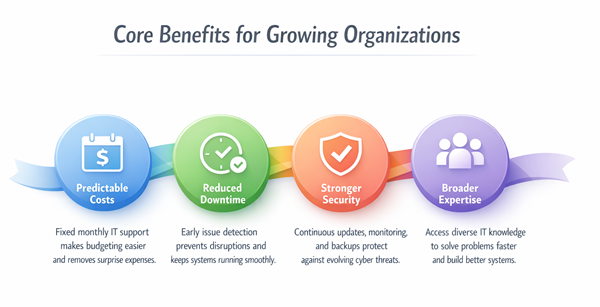
Core Benefits For Growing Organizations
1. Predictable Costs
Managed IT support usually runs on a fixed monthly fee. This makes budgeting easier. Companies avoid surprise invoices after emergencies. Financial planning becomes clearer and calmer.
2. Reduced Downtime
Downtime interrupts work, delays customers, and damages trust. Managed services reduce downtime by catching issues early. Monitoring tools alert technicians before small problems grow large.
3. Stronger Security
Cyber threats evolve daily. Managed IT teams track these changes and apply updates fast. They configure firewalls, manage antivirus tools, and test backups. Security becomes a process, not a one-time task.
4. Access To Broader Expertise
Most internal IT teams specialize in a few areas. Managed providers bring diverse experience from many environments. That shared knowledge helps solve problems faster and design better systems.
What A Managed IT Provider Actually Does Each Day
Managed IT support is not passive. Teams work constantly behind the scenes.
They review system logs. They check backup integrity. They apply security patches. They answer support tickets. They document changes. Each task may seem small, but together they keep systems reliable.
When users call with issues, help desk staff respond quickly. Clear processes guide troubleshooting. Problems get fixed once, then documented to prevent repeats.
Over time, this steady work reduces noise. Technology becomes quieter and more dependable.
Strategic Value Beyond Daily Support
Managed IT support is not only about today’s problems. Good providers also help plan for tomorrow.
They assess current infrastructure and identify risks. They suggest upgrades before hardware fails. They align technology choices with business goals.
For example, a company planning remote work needs secure access tools. A growing team needs scalable systems. Managed providers help design these changes step by step, without disruption.
This planning role often matters more than emergency support.
When Managed IT Support Makes The Most Sense
Managed IT support fits best when technology plays a critical role in daily operations. That includes most modern businesses.
It becomes especially valuable when:
- Internal IT resources are limited
- Downtime directly impacts revenue
- Security requirements are strict
- Systems are growing in complexity
Small and mid-sized companies often gain the most. They get enterprise-level support without building a large internal team.
Common Misunderstandings To Avoid
Some believe managed IT support replaces internal staff. In reality, it often supports them. Internal teams focus on business-specific tools while the provider handles infrastructure and maintenance.
Others fear losing control. Good providers work transparently. They document actions and explain decisions clearly. Control stays with the business.
If any provider promises “no problems ever,” that is incorrect. Technology always carries risk. Managed IT support reduces risk and response time. It does not eliminate reality.
Choosing The Right Partner
Selecting a managed IT provider requires careful thought. Look for clear service descriptions, defined response times, and strong communication habits.
Ask how they handle security incidents. Ask how they document work. Ask how they plan improvements.
Most importantly, check whether they explain ideas in plain language. Clear communication often signals disciplined work.
For a deeper understanding of professional standards and expectations, review the principles behind Managed IT Support as defined by RedStag Labs.
Final Thoughts
Managed IT support turns technology from a fragile dependency into a reliable foundation. It reduces surprises, supports growth, and frees teams to focus on meaningful work.
The value lies not in flashy tools, but in consistent care. Like good infrastructure, the best managed IT support often goes unnoticed. That silence signals systems working as they should.