The way people discover brands online is changing, fast. Instead of typing keywords into Google and digging through results, more users are simply asking ChatGPT for answers, recommendations, and guidance.
And when a brand shows up in those responses, it instantly earns attention and trust. When it doesn’t, it can disappear from the conversation entirely.
That’s why businesses are beginning to look beyond traditional rankings and traffic. A new priority is emerging: visibility inside AI-generated answers. Many teams are now turning to ChatGPT Visibility Tracker to measure how often their brand is mentioned, how it’s portrayed, and how it stacks up against competitors.
Platforms like Wellows make this shift measurable. They reveal where brands appear, where they’re missing, and how strong their presence really is in an AI-driven discovery world, replacing guesswork with clarity.
What does ChatGPT visibility actually mean?
ChatGPT visibility refers to how often a brand is mentioned when users ask questions inside AI tools. These questions usually focus on recommendations, comparisons, or explanations.
For example, users may ask:
- Which tools are best for a specific task
- Which platforms agencies trust
- Which brands lead a particular category
AI tools usually mention only a small number of options. Being included matters because users often treat these answers as guidance rather than standard search results. If your brand is not mentioned, it is often ignored completely.
Why are people using ChatGPT for discovery?
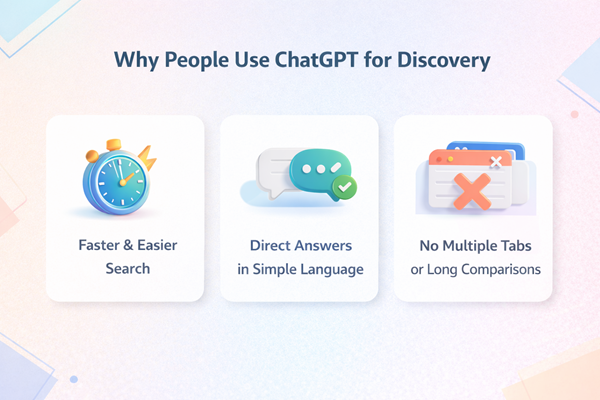
ChatGPT feels faster and easier than traditional search. Users do not need to open multiple tabs or compare long articles. They get a direct response written in simple language.
This behavior is common when people are:
- Researching software
- Comparing service providers
- Exploring new tools
- Trying to understand unfamiliar topics
For many users, ChatGPT feels like asking a knowledgeable person for advice. That makes the brands mentioned in those answers more influential during decision-making.
How is AI-driven discovery different from traditional SEO?
Search engines guide users to content. AI tools summarize information and decide what to mention directly.
Traditional SEO focuses on rankings, keywords, and backlinks. AI-driven discovery focuses on whether the system understands what your brand represents and when it should appear in an answer.
AI tools look for signals such as:
- Clear and focused explanations
- Consistent brand mentions across the web
- References from credible sources
- Strong alignment with user questions
A brand can perform well in search results and still remain invisible inside AI answers if these signals are weak or unclear.
Why does a ChatGPT mention feel more trustworthy?
When ChatGPT mentions a brand, it often feels like a recommendation rather than promotion. Users assume the brand was included because it genuinely fits the question.
This influences decisions in practical ways:
- Buyers shortlist tools suggested by AI
- Agencies reference AI answers during client discussions
- Founders validate vendors mentioned by ChatGPT
Trust often forms before a user even visits a website. That makes AI visibility a credibility signal, not just awareness.
How can brands know what ChatGPT says about them?
Most AI tools do not offer visibility reports. Brands cannot easily see how often they are mentioned or which questions trigger those mentions.
This creates a blind spot.
AI visibility platforms solve this by tracking brand mentions across AI tools, analyzing how brands are described, and comparing results with competitors. Instead of manually testing prompts, teams can identify clear patterns over time.
Does content still matter for AI visibility?
Yes, but the approach has changed.
AI tools prefer content that answers questions clearly and stays focused. Pages that explain one idea well are easier for AI systems to reference than broad or unfocused content.
Content that supports AI visibility usually:
- Addresses one specific problem
- Uses clear, direct language
- Matches real user questions
- Avoids vague messaging
Clarity now matters more than volume.
Why is competitor visibility important in AI responses?
AI tools often compare brands automatically. When users ask for recommendations, multiple options usually appear in the same answer.
Tracking competitors helps brands understand:
- Which brands appear most often
- Who is positioned as a leader
- Where their own brand is missing
Sometimes competitors show up more simply because their messaging is clearer. Seeing this early helps brands adjust before the gap grows.
Can AI visibility influence traffic and leads?
Yes, and often sooner than expected.
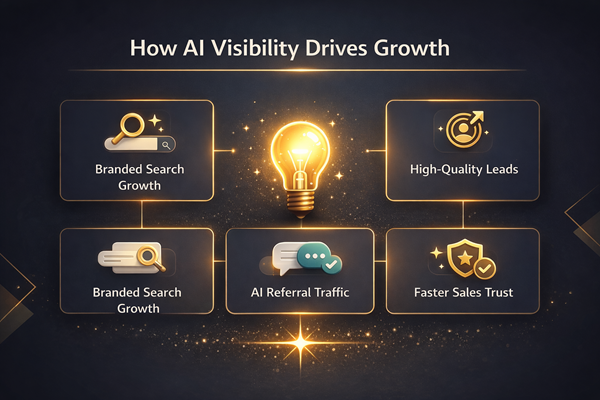
Brands that appear consistently in AI answers often notice:
- Growth in branded searches
- Referral traffic from AI tools
- Higher-quality inbound inquiries
- Faster trust during sales conversations
Even when traffic numbers are small, the intent behind those visits is usually strong.
How are teams adapting to AI-driven discovery?
Teams that recognize the impact of AI visibility are changing how they work.
Common actions include:
- Reviewing how AI tools describe their category
- Identifying questions where they do not appear
- Creating content aligned with those questions
- Tracking visibility changes over time
This helps brands stay relevant as discovery behavior continues to evolve.
Why is ChatGPT visibility now part of digital presence?
Digital presence once focused on websites, rankings, and social media. Today, it also includes how AI systems describe your brand when someone asks a question.
If ChatGPT does not recognize your brand, many users may never encounter it. Visibility inside AI answers has become a public signal of relevance and trust.
Conclusion: Why ChatGPT Visibility Can No Longer Be Ignored
The way people discover and evaluate brands has already changed. ChatGPT and other AI tools are now shaping opinions, narrowing choices, and influencing decisions long before someone visits a website.
ChatGPT visibility is no longer optional. It reflects whether a brand is recognized, understood, and trusted when users ask real questions. Brands that appear consistently in AI responses gain early attention and credibility. Brands that do not often remain unseen, even if their traditional marketing efforts look strong.
Tracking AI visibility brings clarity. It shows where a brand stands, how competitors are positioned, and what needs improvement. With this understanding, teams can create clearer content, strengthen positioning, and stay present where modern discovery happens.
As AI-driven discovery continues to grow, the brands that succeed will be the ones that understand how they are represented inside AI answers, and take action to remain part of those conversations.