Offshore outsourcing is one of the top strategies for businesses in 2026 that focus on innovation and rapid growth. The offshore software development market is expected to reach USD 305.52 billion in 2029, indicating that most tech-enabled companies will reap the unique benefits this model provides.
This business model of cooperation offers competitive offshore software development rates and efficient resource allocation. However, hidden costs of offshore development can arise, causing budget overruns, communication issues, and missed business opportunities if not carefully managed.
With a smart strategy, you can maximize the benefits of offshore software development. This guide will help you understand hidden offshore development costs and share proven ways to ensure timely delivery and a strong ROI.
What Are Hidden Costs in Offshore Development?
Hidden offshore software development costs are unexpected expenses that arise beyond direct costs, such as developers’ salaries or clear contract charges, when you outsource software development. They can add up quickly, significantly boosting your overall spending over time.
Indirect costs usually include:
- Communication and project coordination overhead due to time zone differences.
- Software project management costs (e.g., specific tools or platforms).
- Rework fees when deliverables don’t meet the specified criteria.
- Legal and compliance offshore development risks.
- Onboarding and training fees.
Understanding the Total Cost of Ownership (TCO) helps you see the whole picture. TCO covers all direct, indirect, and lifespan costs throughout your offshore project, proving that the developer’s hourly rate or monthly salary (depending on a pricing model) is just one piece of the true cost of offshore development.
Hidden Costs Breakdown
Offshore development hidden costs may inflate your budget or cause delays. Here, we’ll break down these costs and share strategies to keep your project on track.
1. Communication & Time Zone Misalignment
Time zone differences enable companies to achieve an around-the-clock development cycle. Still, they hinder real-time communication and slow decision-making.
Additionally, some IT outsourcing regions have inconsistent levels of English proficiency and cultural nuances, which, when not handled correctly, may lead to missed deadlines or costly rework. This problem is relevant and costly, every year, miscommunication costs US companies $12,506 per employee.
How to avoid:
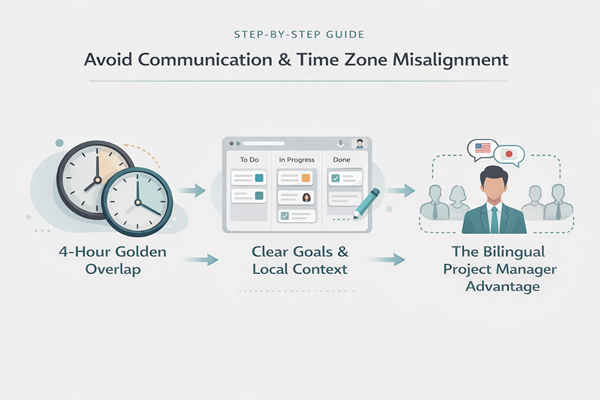
The first step is to overlap business hours. For productive software collaboration, a 4-hour overlap is more than sufficient. Then use Jira or Trello to set clear goals, translate your business needs into a developer’s local context if necessary, and ensure everyone is on the same page.
Additionally, it’s better to hire bilingual project managers who can clearly outline all requirements in the needed language, avoiding misinterpretation.
2. Legal, Compliance & IP Protection Costs
Software development across borders requires a unified compliance system and strict adherence to all crucial regulations, including GDPR, IP protection, the EU AI Act, and other laws. For instance, for particularly serious GDPR infractions, the fine can reach 20 million euros.
How to avoid:
Sign an NDA to safeguard your sensitive information, include an EU or US jurisdiction clause in your contract, comply with SOC 2 or ISO 27001 standards, and implement the best security practices during software development.
3. Talent Quality Gaps & Rework Costs
Developers typically end up reworking around a quarter of their code. For mid-sized companies, these costs can exceed $4.7 million, depending on the project’s size and complexity. Moreover, developers offering the lowest rates may deliver subpar solutions, leading to costly, time-consuming rework.
Therefore, seasoned professionals applying rigorous quality assurance ensure code reliability and save time and money on complex projects.
How to avoid:
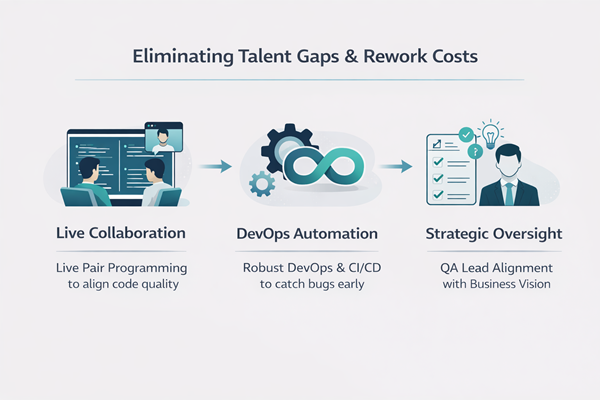
Focus on code quality by running live coding sessions where in-house and offshore developers collaborate on the same tasks. Invest in robust DevOps services that ensure automation with CI/CD tools to reduce manual errors and catch bugs early on. Additionally, assign a QA lead to ensure alignment among all teams with your business vision and technical requirements.
4. Scope Creep
A PMI report shows that half of all projects experience scope creep. The main reasons are vague initial requirements, changing client needs, and poor communication among all parties.
How to avoid:
Create a detailed project roadmap with milestones, acceptance criteria, and clear deliverables. If any changes are required, they should go through approval and budget adjustments.
Furthermore, Agile development helps efficiently manage evolving requirements, and clear communication keeps everyone aligned. Moreover, we recommend documenting all changes and decisions to reduce misunderstandings.
5. Hidden Costs of Scaling Offshore Teams
Though many tech firms use offshore development for efficient resource and cost optimization, there can be specific bottlenecks when scaling your workforce. Developers often need longer ramp-up periods, which can slow delivery and increase indirect expenses. Additionally, additional training, a lack of crucial product knowledge, and a need for further oversight can increase the total offshore development cost.
How to avoid:
Provide structured training and onboarding with clear documentation for knowledge transfer. To guarantee efficient development, establish clear communication protocols, organize regular check-ins, and conduct regular code and performance reviews to avoid instability.
Furthermore, to eliminate replacement expenses, invest in effective retention strategies. They typically involve competitive compensation and benefits, clear career advancement paths, recognition programs, a perfect work-life balance, and a positive working environment.
How to Avoid Hidden Costs in Offshore Development
To avoid significant offshore development challenges before a project starts, conduct a detailed cost analysis. Moreover, establish strong communication channels and quality standards to minimize risks during development. Here is a handy checklist you may use before launching your digital initiative.
- Define your project scope upfront, but add a 20-30% buffer to your budget to cover indirect costs like communication, project management, and rework.
- Carefully select a partner you’ll work with by evaluating case studies, testimonials, security protocols they follow, technical expertise, and cultural fit.
- Pay special attention to the effectiveness of retention strategies your potential business partner uses to mitigate turnover costs.
- Choose the right pricing model, depending on your goals. An offshore development team is ideal for complex, long-term projects, whereas a fixed price is suitable for well-defined initiatives. If you have evolving requirements, opt for time and materials (T&M) contracts.
- Set up clear communication channels and plan overlapping hours.
- Implement a quality assurance strategy to maintain project progress and reduce rework.
- Start with a small task to evaluate how smoothly all processes work, and then scale gradually.
Offshore Done Right Saves More Than It Costs
Offshore development is a practical strategic tool if used wisely. With offshore software development, B2B leaders can tap into a global talent pool, build high-end solutions, and achieve significant cost savings. However, without awareness of the hidden costs, you can end up with project delays, reduced product quality, legal and regulatory compliance issues, and budget overruns.
To drive innovation and achieve success, choose a trustworthy partner with transparent workflows, a clear pricing structure, robust compliance and security, and the expertise required to meet your project’s needs. With comprehensive support, you can meet all your business goals while maintaining the highest level of quality.