Coming up with the domain name is considered an important milestone in creating a website. However, it seems like many website creators spend more time perfecting the name than think about the extension portion of their domain.
This seemingly trivial detail could affect how you are perceived as a brand, or how easily you are remembered as well as how confident someone will be when clicking your link.
Before we go any further, however, it is a good idea to check your domain’s availability. The point is not to fall in love with a domain type to then find out it is already taken.
According to this article as Register.Domains shared, your choice of domain extension must involve more than its availability because the choice of the right domain extension forms an essential part of your branding and your trustworthiness. It can even affect your identity in a subtle way.
Below are eight tips to assist you in finding the best extension for your domain.
1. Start with .com – If It Makes Sense
The most recognized and trusted domain is still the .com. For most people, it is second nature to type “.com.” .com is still the best choice if your audience is international or if you plan on building a commercial brand.
Nevertheless, availability is becoming scarce. So, first check domain availability. If your desired domain is already taken with the extension .com and it is not viable to purchase it, it would be better to choose another similar domain instead of a complicated or unnecessarily long domain name.
2. Match the Extension to Your Industry
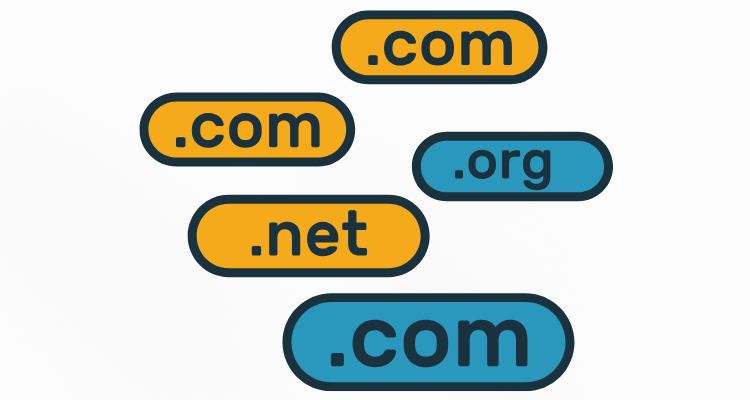
Domain extensions these days are quite specific. For instance, you can choose .tech, .store, .agency, or .design for your domain name. It will give the impression of being a tech-related company, a store, an agency, or a design one, respectively.
The trick is to align with your brand story; the domain extension should enhance the story, not detract from it. Industry-specific extensions have the potential to enhance the memorability of your domain.
3. Use Country Code Extensions to Reach Locally
If you run your business within a specific country, a country code top-level domain can be stronger in building local trust, as for example, .bd, .uk, or .ca. Visitors often feel more at ease with a website that clearly reflects the region they belong to.
Search engines also utilize geographic signals to personalize results for locals. While extensions on their own don’t guarantee higher rankings, they can reinforce your local positioning when combined with relevant content and SEO practices.
4. Consider Brand Perception
A domain extension carries some subtle psychological weight. For example, .org is primarily for nonprofit entities, while .edu is used only for institutions of higher learning. Using an inappropriate extension may lead to confusion.
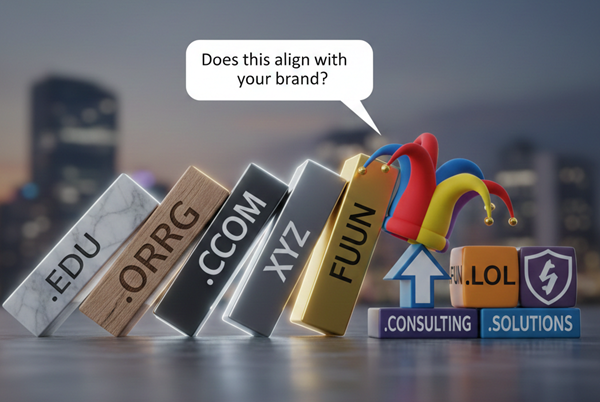
Ask yourself, does this extension align with how you want your brand perceived? If you’re building a consultancy, for example, where you want perceptions of premium service, perhaps a more playful extension undermines that tone.
5. Keep It Simple and Memorable
Clarity does matter. When it’s shorter, it seems to be simpler to share orally. Think about giving your site’s address to a friend over the phone. Will they know what you mean right away, or will you have to spell it out to them?
In general, simplicity reduces friction. In business, small friction points exist, and they all contribute to user behavior.
6. Evaluate Long-Term Scalability
The temptation with this is to select an extremely specific one that exactly matches your existing service. What if you are in a changing business, though?
For instance, a company that uses a name ending in “.photography” may wish to change their business to a video production service or a consulting firm. A domain name like “.com” or “.studio” may offer greater future flexibility. Where will your company be five or ten years from now?
7. Be Mindful of SEO Realities
One major misconception is that various extensions will generate different search results. However, the truth of the matter remains that search engines rank most generic top-level domains equally.
What is far more important is high-quality content, technical optimization, backlinks, and user experience. However, an extension can indirectly help with SEO by increasing user trust and click-through rates. If users are more inclined to click on your domain, this could be beneficial.
8. Protect Your Brand with Multiple Extensions
Once your main extension is registered, it is worthwhile to register variations if possible. For instance, if you have yourbrand.com registered, it may be worthwhile to register yourbrand.net as well as yourbrand.co to prevent malicious users from registering similar variations.
This strategy is especially relevant to growing businesses and e-commerce brands. This helps avoid any risks associated with brand dilution and customer confusion.
A Practical Perspective
Numerous entrepreneurs have over the years had the same narrative of trying the business with a lack of thought towards the domain extensions only to change later at a cost. Domain changes impact search engines, emails, marketing, along with customer awareness.
Choosing the right extension from the outset doesn’t have to be perfect, but it needs to be intentional. Consider your audience, your goals, and where you’re going. Balance creativity with clarity. Most importantly, make certain your extension will strengthen your brand and not complicate it.
A domain name is far more than a technical address, but often the first impression your audience meets. Choosing the best domain extension is not simply a technical choice, but a branding one worth some attention.