Some of us still use the internet mostly out of necessity, for bare essentials like banking, shopping, or staying in touch with friends and family. However, being minimally invested doesn’t automatically come with immunity to various digital dangers. If anything, people who pay the least attention are more likely to put their privacy at risk.
These are the most common privacy risks that affect internet users regardless of their involvement, followed by actionable tips you can follow to protect your privacy and digital safety.
Tracking and Profiling
Behavioral metrics are now baked into most apps and websites, so merely using the internet can reveal a lot about you. For example, website owners know how much time you spend on their site and which elements you engage with. Small bits of code called cookies persist across websites, feeding data into sophisticated advertising networks which then infer what you’re interested in and serve appropriate ads.
Many people choose to sign into websites with their social media or Google accounts for convenience’s sake. This augments the usage and search data they already collect for each user. It allows such companies to make surprisingly deep inferences about your habits, interests, and beliefs, even if the profiles they created aren’t tied to your real name.
Public Wi-Fi
Being able to access the internet for free from almost anywhere is another exploitable convenience. Legitimate public Wi-Fi networks, like those you’d find in airports or bars, make unencrypted data vulnerable to interception.
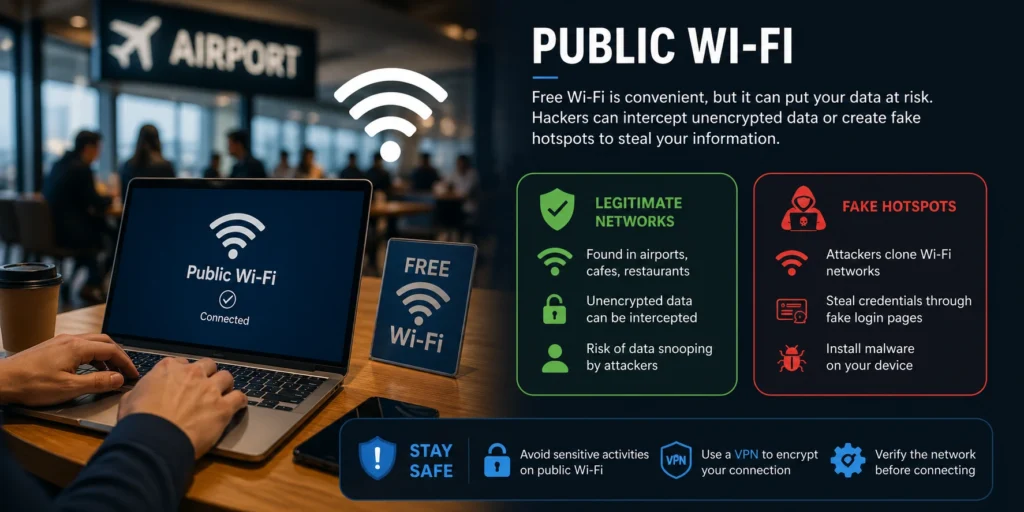
More importantly, it’s easy for attackers to clone Wi-Fi hotspots that mimic legitimate ones. Connecting to such a network lets them do more harmful things, like stealing credentials through fake captive portals or downloading malware onto your device.
Phishing and Social Engineering
Casual internet users will still have at least one email address and social media account. These are attackers’ favorite channels for conducting phishing and social engineering campaigns.
They’ll send you emails or messages pretending to be from banks, shipping services, etc., claiming an urgent problem needs resolving. These messages typically come with links leading to harmful websites or fake login portals that steal personal and account information.
Data Breaches
These are particularly frustrating since they depend on the cybersecurity of companies users entrust their data to. Data breaches vary in severity and scope. At best, they may leak the usernames and passwords tied to a long-dead forum. At worst, data breaches can expose credentials, email addresses, company secrets, as well as personally identifiable and financial information for millions of people.
Casual users might make things worse by reusing passwords. Attackers can try to gain access to other accounts using a leaked email or username and password combination and take it over if these match.
Identity Theft
Everything discussed so far, along with casually sharing personal information online, can have serious consequences. Once there’s enough information available, attackers can use it to piece together someone’s identity and impersonate them, whether online or in real life.
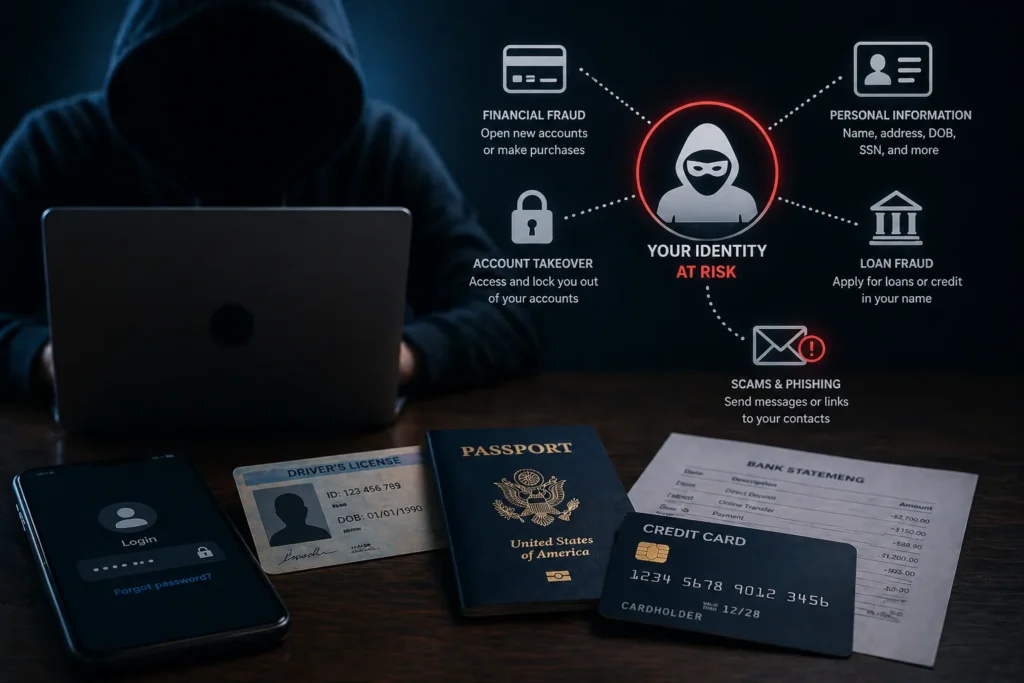
Identity theft can range in severity. Someone might obtain login details to a social media site, lock the victim out of their account, and proceed to send harmful links to their contacts. Alternatively, attackers may get enough personal information to commit financial fraud or tie your name to other criminal activities like illegally applying for benefits or passing background checks under false pretenses.
How to Protect Yourself
Maintaining one’s privacy online isn’t difficult, and it doesn’t require much technical expertise. It comes down to a layered approach that combines straightforward habits and sophisticated yet easy-to-use cybersecurity tools.
- Virtual private networks – VPNs are essential when connecting to public Wi-Fi. Fastest VPNs will encrypt your connection and prevent others from eavesdropping or extracting the information you send or receive while connected, all without compromising your internet speed.
- Privacy-focused browsers and ad blockers – While it’s impossible to eliminate tracking altogether, these tools minimize the passive data websites collect while shielding you from targeted ads.
- Conscious login management – Avoiding sign-ins through third-party apps, using separate emails when creating accounts, and ensuring that each one has a strong, unique password makes a difference.
- Scam awareness – Phishing and social engineering scams follow recognizable patterns, like urgency or offers that seem too good to be true. Familiarize yourself with the telltale signs and the latest scams, as well as how to follow up on and report them.
- Identity theft protection services – Since your data might already be compromised, it’s also useful to consider tools that help mitigate the situation after the fact. The best identity theft protection services monitor the dark web, data breach databases, credit activity, and public records. They also provide support for resolving identity theft issues more effectively if and when they show up.
Conclusion
Online privacy doesn’t require complex skills. Just a bit of awareness and a few smart habits go a long way. Combine cautious behavior with cybersecurity tools so that you can sharply reduce your risk without changing how you normally use the internet. A small effort now can spare you from the stress and damage of future security issues.