When comparing Ahrefs vs Majestic vs Moz, the short answer is this: Ahrefs is the best all-in-one SEO tool for most businesses, Majestic excels in deep backlink and trust analysis, and Moz stands out for site audits, local SEO, and beginner-friendly optimization.
While all three platforms help improve search visibility through keyword research, backlink insights, and competitor analysis, they approach SEO very differently, Ahrefs focuses on competitive growth and traffic opportunities, Majestic prioritizes link authority and brand trust, and Moz emphasizes technical health and actionable recommendations.
Choosing the right tool depends on your goals, experience level, and whether you need a complete SEO suite, advanced link intelligence, or guided optimization. This guide breaks down their features, strengths, limitations, and ideal use cases to help you decide which SEO platform aligns best with your strategy.
Understanding How SEO Platforms Differ
Not all SEO platforms are built with the same purpose, even when they appear to offer similar features on the surface. While most tools provide keyword research, backlink data, and competitor insights, the way they collect data, prioritize metrics, and present insights varies significantly.
Some tools focus on massive data depth and competitive intelligence, while others prioritize usability, guidance, and actionable recommendations. This is why two platforms can analyze the same website yet produce very different results and suggestions.
Why No SEO Tool Works the Same Way
Each SEO platform relies on its own crawling technology, data sources, algorithms, and scoring systems. For example, backlink metrics like Domain Authority, Trust Flow, or URL Rating may sound comparable, but they are calculated differently and should not be used interchangeably.
Some tools update data faster, others retain deeper historical records, and some emphasize accuracy over volume. These differences influence how insights are generated and how reliable they are for specific SEO tasks, such as competitive analysis, link building, or content planning.
Aligning SEO Tools With Business Goals
Choosing an SEO platform should start with your business objectives, not feature lists. A startup aiming to increase organic traffic quickly may benefit more from a tool that highlights keyword opportunities and competitor gaps.
On the other hand, an established brand focused on authority and reputation may prioritize backlink quality and trust metrics.
When the tool aligns with your goals, whether it’s traffic growth, brand visibility, technical optimization, or local rankings, it becomes a strategic asset rather than just a reporting dashboard.
Key Factors to Consider Before Selecting an SEO Platform
Team Size and Skill Level
The experience of your team plays a major role in tool selection. Advanced platforms with dense datasets and technical metrics are powerful but can overwhelm beginners.
Smaller teams or solo marketers often need intuitive interfaces and guided insights, while experienced SEO professionals may prefer raw data and deeper control.
Budget Constraints
SEO tools vary widely in pricing, and higher cost does not always equal better value. Businesses must evaluate whether they need an all-in-one suite or a specialized tool. Paying for advanced features that go unused can drain resources, whereas a well-matched tool can deliver a strong return on investment even at a lower price point.
Primary Focus Areas
Different tools excel in different areas. Some are built primarily for keyword research and content planning, others for backlink analysis and authority building, and some for technical SEO and local search optimization. Identifying your main SEO priorities, keywords, links, audits, or local visibility, helps narrow down the right platform.
Ease of Implementation vs. Data Depth
There is often a trade-off between ease of use and the level of data provided. Beginner-friendly tools simplify insights and suggest clear actions, while advanced platforms deliver extensive datasets that require interpretation. The best choice depends on whether you value quick implementation and clarity or detailed analysis and customization.
Quick Overview of the Contenders
Before diving into in-depth comparisons, let’s take a high-level look at the three major SEO platforms, Ahrefs, Majestic, and Moz. This snapshot will help you instantly understand each tool’s core strengths, ideal user base, and what sets it apart in the crowded SEO landscape.
1. Ahrefs – The All-in-One SEO Powerhouse
Ahrefs is a comprehensive suite designed to help businesses and SEO professionals manage all major aspects of search optimization from one central platform. It combines extensive keyword research, competitive analysis, backlink insights, rank tracking, and content exploration tools.
What makes Ahrefs stand out:
- Broad, interconnected feature set covering virtually every SEO need
- Excellent competitive benchmarking tools
- Large and frequently updated database of keywords and backlinks
Best for:
Startups, small to medium businesses, SEO consultants, and in-house marketers who want a single platform for research, optimization, and reporting.
How it’s positioned:
All-in-one solution
Balanced between power and usability
Strong focus on organic growth strategy
2. Majestic – The Specialist in Link Intelligence
Majestic takes a narrower but deeper approach, focusing heavily on backlink discovery and link authority metrics. It doesn’t try to do everything; instead, it excels at helping users understand link profiles, trust metrics, and how sites are connected across the web.
What makes Majestic different:
- Unique metrics like Trust Flow and Citation Flow
- Specialized insights into link quality and topical authority
- Historical backlink data for deeper trend analysis
Best for:
Experienced SEOs, link builders, and digital PR professionals who need detailed insights into backlink profiles and domain trust.
How it’s positioned:
Specialist backlink and authority tool
Not beginner-friendly without training
Excellent for in-depth link research
3. Moz – Beginner-Friendly SEO with Practical Guidance
Moz balances usability with powerful SEO functionality. Known for being approachable and educational, Moz combines keyword research, rank tracking, technical audits, and SEO recommendations. It also includes strong local SEO tools that make it popular with businesses focused on localized search visibility.
What makes Moz appealing:
- Easy-to-navigate interface and beginner-friendly features
- Actionable recommendations for site improvements
- Local SEO support through Moz Local
Best for:
Small business owners, local marketers, and SEO beginners who want a guided experience without feeling overwhelmed.
How it’s positioned:
Beginner-friendly full-suite tool
Great for site audits and usability recommendations
Focuses on actionable insights more than deep analysis
Quick Tool Positioning Summary
| Tool | Strength | Best For |
| Ahrefs | Broad, powerful SEO research | Growth-oriented SEO teams |
| Majestic | Deep backlink and authority insights | Link builders and veteran SEOs |
| Moz | Simple, guided SEO & site audits | Beginners and local businesses |
In essence:
- Ahrefs is your go-to if you want a complete SEO toolkit with competitive data.
- Majestic is ideal when your priority is backlink authority and trust metrics.
- Moz suits those who want clarity, ease of use, and actionable optimization steps without complexity.
Ahrefs: A Comprehensive SEO Powerhouse
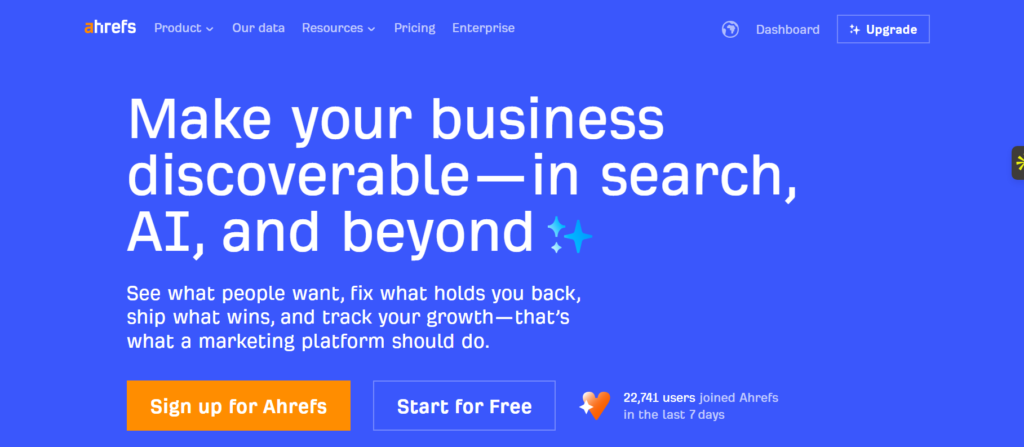
Ahrefs has earned its reputation as one of the most powerful SEO tools in the industry by offering a complete view of how websites perform in search engines. It is widely used by businesses, agencies, and SEO professionals who want clear insights into keywords, competitors, backlinks, and content performance all in one place.
Background and Evolution
Ahrefs originally entered the SEO space as a backlink analysis tool. At a time when link data was difficult to access and often unreliable, Ahrefs focused on building its own web crawler to map how websites were connected through links.
This early focus on backlinks allowed the platform to gain trust among SEO professionals who relied heavily on link-building strategies.
As search engine optimization evolved, Ahrefs expanded beyond backlinks to address the growing need for keyword research, content analysis, and competitor intelligence. Over time, it transformed into a full-scale SEO suite that supports nearly every stage of an organic growth strategy.
Today, Ahrefs is no longer just a link checker but a comprehensive platform designed to help users research, execute, monitor, and refine SEO campaigns.
Core Features
One of Ahrefs’ strongest capabilities is keyword research. The platform provides extensive global search insights, allowing users to analyze keywords across different countries and search engines. This helps businesses understand how search behavior varies by region and identify opportunities that align with their target markets.
Ahrefs also offers a clear view of keyword difficulty and ranking potential. Instead of vague scores, it estimates how competitive a keyword is based on existing search results and backlink profiles. This allows users to prioritize keywords that offer realistic ranking opportunities rather than chasing highly competitive terms with low chances of success.
Competitor traffic and content analysis is another major strength. Ahrefs enables users to see which pages drive the most traffic to competing websites, what keywords they rank for, and how their content performs over time. This insight makes it easier to identify content gaps, uncover proven topics, and build strategies based on what already works in a given niche.
Backlink profile analysis remains a core pillar of Ahrefs. Users can explore who is linking to their website or competitors, evaluate link quality, and understand how backlinks influence rankings. This feature is particularly valuable for link-building campaigns and for identifying toxic or low-value links that may affect performance.
SERP tracking and volatility insights allow users to monitor how keyword positions change over time. By analyzing ranking fluctuations, users can detect algorithm shifts, seasonal trends, or the impact of recent SEO changes. This helps businesses respond quickly and adjust strategies before traffic declines become severe.
Technical Strength and Data Scale
Ahrefs operates one of the most robust crawling infrastructures in the SEO industry. It continuously scans the web to discover new pages and update existing data, ensuring that users receive fresh insights rather than outdated metrics. While exact figures change frequently, the platform maintains a massive content index that spans billions of pages.
Its global keyword and backlink coverage makes Ahrefs particularly valuable for international SEO. Users can research search behavior across numerous countries and languages, making it easier to plan expansion strategies or manage multi-region websites. This depth of data allows Ahrefs to provide reliable insights regardless of industry or geographic focus.
Pros and Cons
Ahrefs offers a wide range of advantages that make it a preferred choice for many SEO professionals. As an all-in-one SEO toolkit, it eliminates the need to rely on multiple platforms for keyword research, backlink analysis, competitor tracking, and rank monitoring. Its competitor intelligence features are especially strong, giving users a clear understanding of what works in their industry. Additionally, its backlink data is widely regarded as some of the most accurate and comprehensive available.
However, Ahrefs is not without limitations. For beginners, the volume of data and number of features can feel overwhelming at first. Without a basic understanding of SEO concepts, users may struggle to interpret the insights correctly. Additionally, while Ahrefs excels at analysis and research, it offers limited built-in content optimization guidance, meaning users may need additional tools or expertise to fully optimize on-page content.
Majestic: Deep-Dive Backlink Intelligence
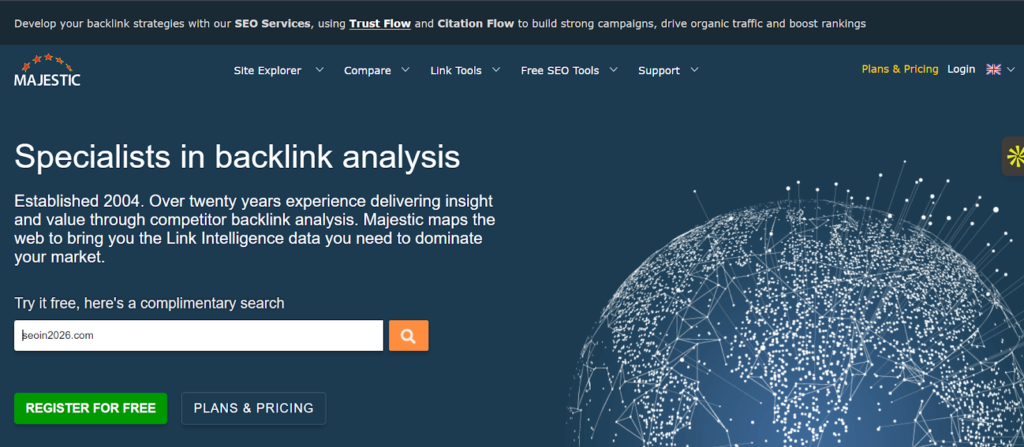
Majestic is built for one primary purpose: understanding backlinks at a deeper level than most general SEO tools. Unlike platforms that attempt to cover every aspect of SEO, Majestic concentrates on link intelligence, authority signals, and trust evaluation. This makes it especially valuable for experienced SEO professionals who rely heavily on link-building and authority-driven strategies.
Company Background
Majestic originated as an ambitious large-scale crawling initiative aimed at mapping the web through links. Its early development focused on building a powerful crawler capable of discovering how websites are connected and how authority flows across the internet.
Rather than competing directly with search engines, Majestic positioned itself as a data provider that could analyze link relationships in detail.
From the beginning, the platform placed strong emphasis on trust and authority rather than raw link volume. This philosophy shaped Majestic’s unique metrics and made it a specialized tool for evaluating link quality. Over time, Majestic became widely recognized for its ability to measure how trustworthy a website is based on the links pointing to it.
Key Features
One of Majestic’s most well-known features is its Trust Flow and Citation Flow metrics. Citation Flow measures the quantity of links pointing to a website, while Trust Flow evaluates the quality of those links based on how closely they are connected to authoritative and trusted sources.
When a site has a higher Trust Flow relative to Citation Flow, it generally indicates a healthier and more credible backlink profile.
Topical Trust Flow adds another layer of insight by categorizing websites into specific subject areas. This allows users to see not only how trusted a site is, but also how relevant it is within a particular niche. For example, a website may have strong authority in the technology category but minimal influence in health or finance.
Majestic also provides detailed link quality and authority insights. Users can analyze where backlinks are coming from, how influential those linking sites are, and whether the links are editorial, contextual, or directory-based. This information is crucial for building high-quality backlinks and avoiding links that may harm search rankings.
Historical backlink tracking is another key strength. Majestic allows users to view how a website’s backlink profile has evolved over time. This helps identify long-term trends, sudden link spikes, or link losses that may indicate SEO issues or successful campaigns. For competitor analysis, this historical data can reveal link-building strategies that have worked in the past.
Data and Crawling Capabilities
Majestic maintains both fresh and historical link indexes, giving users access to recent backlink discoveries as well as long-term data. The fresh index focuses on newly discovered links and recent changes, while the historical index provides a broader view of link patterns over time.
The platform performs regular crawling updates to keep its backlink database current. Although it may not always reflect new links instantly, its strength lies in the depth and reliability of its data. This makes Majestic particularly useful for strategic analysis rather than short-term monitoring.
Pros and Cons
Majestic offers several advantages for users who prioritize backlinks. It is excellent for in-depth backlink analysis and provides some of the strongest trust and authority metrics available in the SEO industry. Its data is especially useful for competitive link research, allowing users to understand not just who links to competitors, but why those links matter.
On the downside, Majestic has a steep learning curve, particularly for beginners. The interface feels technical and data-heavy, which can be intimidating without prior SEO experience. Additionally, backlink updates may not always appear immediately, making it less suitable for users who need real-time link tracking.
Moz: User-Friendly SEO and Site Optimization
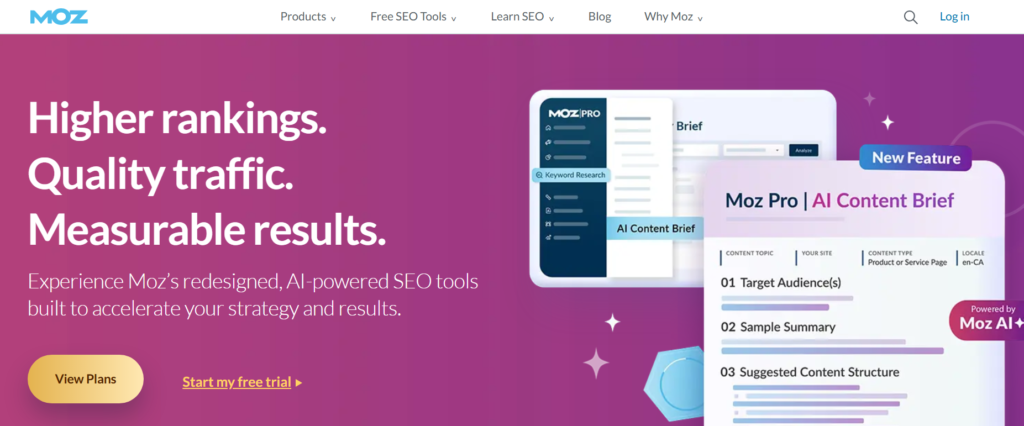
Moz is widely recognized for making SEO more accessible without stripping away its core value. While it offers a broad range of SEO tools, its true strength lies in simplifying complex concepts and guiding users toward meaningful improvements. This approach has made Moz a popular choice among beginners, small businesses, and marketers who want clarity rather than overwhelming data.
How Moz Entered the SEO Space
Moz began as an SEO-focused blog and online community created to educate marketers about search engine optimization. At a time when SEO knowledge was fragmented and often confusing, Moz stood out by explaining concepts in a clear and approachable way. This early emphasis on education helped build a strong following and positioned Moz as a trusted voice in the SEO industry.
As demand for practical tools grew, Moz transitioned from content and consulting into software development. The launch of its SEO tools marked its evolution into a full-fledged SEO software provider. Despite this shift, Moz retained its core focus on accessibility, ensuring that its platform remained understandable even for users with limited technical expertise.
Main Features
Moz offers a well-rounded set of features designed to support both research and optimization. Its keyword research tools provide insights into search volume, keyword difficulty, and priority scoring. These metrics help users identify keywords that balance traffic potential with realistic ranking opportunities, making it easier to plan effective content strategies.
Rank tracking is another key feature. Moz allows users to monitor keyword performance across multiple search engines and locations. This is particularly useful for businesses that operate in different regions or rely on local search visibility to attract customers.
Domain Authority and backlink analysis are central to Moz’s approach. Domain Authority is one of the most widely recognized metrics in SEO and helps users quickly assess the relative strength of a website. Moz also provides backlink data that shows linking domains, anchor text, and link quality, helping users understand how authority is built over time.
Technical site audits and crawl diagnostics are where Moz truly differentiates itself. The platform scans websites to identify technical issues such as broken links, missing metadata, slow-loading pages, and crawl errors. More importantly, it explains these issues in plain language and offers actionable recommendations, making it easier for users to implement fixes.
Moz Tool Suite Breakdown
Moz Pro is the core platform designed to support ongoing SEO campaigns. It includes tools for keyword research, rank tracking, site audits, and backlink analysis, making it suitable for businesses focused on improving overall search performance.
Moz Local is tailored for businesses that depend on local visibility. It helps distribute accurate business information across online directories and search platforms, reducing inconsistencies and improving local search rankings. This is especially valuable for brick-and-mortar businesses and service providers targeting specific geographic areas.
STAT is Moz’s enterprise-level solution for large-scale SERP tracking. It is designed for advanced users who need to monitor thousands of keywords across multiple locations and devices. STAT provides high-volume data and deeper insights suited for agencies and large organizations.
Pros and Cons
Moz offers several advantages that appeal to a wide range of users. Its interface is beginner-friendly and easy to navigate, making it accessible even for those new to SEO. The platform provides clear technical SEO recommendations, helping users understand not just what is wrong with their site, but why it matters. Its local SEO tools are also among the strongest in the market, offering reliable support for businesses targeting local audiences.
However, Moz does have some limitations. Reporting customization options can feel restrictive, especially for agencies or advanced users who require highly tailored reports. Additionally, while Moz simplifies many SEO tasks, fixing complex technical issues may still feel daunting for users without development experience.
Side-by-Side Feature Comparison
While Ahrefs, Majestic, and Moz all fall under the SEO tools category, they serve different purposes and user types. Comparing them side by side highlights where each platform excels and where it may fall short, making it easier to choose the right tool based on specific needs.
Feature Comparison Overview
| Feature Area | Ahrefs | Majestic | Moz |
| Keyword Research Depth | Very strong with global data, difficulty scores, and traffic potential | Limited keyword functionality | Strong, with difficulty and priority scoring |
| Backlink Analysis Accuracy | Extensive and frequently updated backlink data | Highly specialized and trust-focused backlink insights | Solid backlink data with authority metrics |
| Competitor Research Capabilities | Advanced competitor traffic, content, and keyword analysis | Focused mainly on competitor backlink profiles | Moderate competitor insights |
| Technical SEO and Site Audits | Basic technical insights | Minimal technical SEO support | Strong site audits with clear recommendations |
| Ease of Use | Moderate learning curve | Steep learning curve | Very beginner-friendly |
| Best Fit by Business Size and Experience | Startups, agencies, and in-house SEO teams | Experienced SEOs and link-building specialists | Small businesses and SEO beginners |
1. Keyword Research Depth
Ahrefs offers the deepest keyword research capabilities among the three tools. It provides extensive global keyword data, realistic difficulty scores, traffic estimates, and insights into how keywords perform across different regions. This makes it ideal for businesses focused on content planning and organic traffic growth.
Moz also performs well in keyword research, especially for users who want guidance. Its priority scoring helps users decide which keywords to target first, making it easier for beginners to build a strategy. Majestic, on the other hand, offers very limited keyword research, as it is not designed for this purpose.
2. Backlink Analysis Accuracy
Majestic stands out when it comes to backlink analysis accuracy and trust evaluation. Its Trust Flow and Topical Trust Flow metrics are specifically designed to assess link quality and authority. This makes it highly valuable for deep link audits and authority-driven strategies.
Ahrefs provides a broader backlink dataset with frequent updates and detailed link insights, making it excellent for ongoing link monitoring and competitor analysis. Moz offers reliable backlink data and Domain Authority metrics, but its backlink index is not as deep or specialized as the other two.
3. Competitor Research Capabilities
Ahrefs leads in competitor research by offering detailed insights into competitor traffic, top-performing pages, ranking keywords, and content gaps. This allows businesses to reverse-engineer successful strategies and identify new growth opportunities.
Majestic focuses competitor research almost entirely on backlinks, helping users understand where competitors earn authority and trust. Moz provides basic competitor insights, mainly through keyword overlap and backlink comparisons, but lacks the depth offered by Ahrefs.
4. Technical SEO and Site Audits
Moz excels in technical SEO and site audits. It scans websites for issues such as crawl errors, broken links, missing metadata, and performance problems, then explains how to fix them in simple terms. This makes it especially useful for users who need guidance.
Ahrefs offers some technical insights but is not as fix-oriented as Moz. Majestic provides minimal support for technical SEO, as its primary focus remains on links rather than on-site optimization.
5. Ease of Use
Moz is the easiest platform to use, particularly for beginners. Its clean interface and explanatory recommendations reduce confusion and make SEO tasks more approachable. Ahrefs is user-friendly once familiar, but the volume of data can be overwhelming at first. Majestic has the steepest learning curve, with a technical interface that assumes prior SEO knowledge.
6. Best Fit by Business Size and Experience
Ahrefs is best suited for startups, growing businesses, agencies, and in-house teams that need a complete SEO toolkit. Majestic is ideal for experienced SEO professionals and link-building specialists who want advanced authority insights. Moz is a strong choice for small businesses, local brands, and beginners who need structured guidance and clear optimization steps.
How Each Tool Approaches SEO Differently
Although Ahrefs, Majestic, and Moz often appear in the same conversations, they are built on very different SEO philosophies. Each tool prioritizes a specific aspect of search optimization, which influences how users plan, execute, and scale their SEO strategies.
Ahrefs: Competitive Growth and Traffic Scaling
Ahrefs approaches SEO from a growth and competition-first mindset. Its tools are designed to uncover what already works in your industry and help you outperform competitors by improving on proven strategies.
One of Ahrefs’ key strengths is identifying content gaps. By analyzing competing websites, Ahrefs reveals keywords and topics that competitors rank for but your site does not. This allows businesses to create targeted content that fills those gaps and captures untapped organic traffic.
Ahrefs also excels at identifying high-performing competitor strategies. Users can see which pages drive the most traffic to competitors, which keywords contribute to that traffic, and which backlinks support those rankings. This insight makes it easier to prioritize content, refine keyword strategies, and focus efforts on areas with the highest return on investment.
Majestic: Authority and Trust Building
Majestic approaches SEO through the lens of authority and credibility. Rather than focusing on traffic growth alone, it emphasizes building trust through high-quality backlinks that signal reliability to search engines.
The platform helps businesses establish brand credibility by analyzing backlinks from trusted and authoritative sources. Majestic’s metrics allow users to determine whether links contribute genuine authority or simply inflate link counts without meaningful impact.
A key distinction Majestic makes is between editorial links and directory-style links. Editorial links, which are earned naturally through high-quality content, carry more trust and relevance. Directory-style links, while sometimes useful, generally contribute less authority. Majestic’s data helps users identify and prioritize links that strengthen long-term rankings rather than short-term gains.
Moz: Technical Health and Sustainable Rankings
Moz takes a foundational approach to SEO by focusing on website health and long-term sustainability. It emphasizes fixing technical issues and improving on-page structure before scaling traffic and content efforts.
Site optimization is central to Moz’s strategy. The platform audits websites to uncover technical problems that may prevent search engines from properly crawling or indexing pages. By addressing these issues early, businesses create a stronger foundation for future growth.
Moz also stands out for its clear recommendations for fixes. Instead of simply identifying problems, it explains what needs to be done and why it matters. This guided approach makes Moz especially valuable for teams that want step-by-step direction rather than raw data alone.
Which SEO Tool Is Right for You?
Choosing the right SEO tool depends on your goals, experience level, and the specific challenges your business faces. Each platform serves a different type of user and use case.
Choose Ahrefs if
You want an all-in-one SEO solution that covers keyword research, backlink analysis, competitor insights, and rank tracking in one platform. Ahrefs is ideal if competitive analysis is a priority and you want to understand exactly how others in your industry are driving traffic. It is also well suited for teams that manage content, paid ads, and SEO together and need a unified view of performance.
Choose Majestic if
Backlinks are the core focus of your SEO strategy and you want deep insights into link trust and authority. Majestic is best for experienced SEO professionals who understand link-building principles and need advanced metrics to evaluate backlink quality. If your goal is to build credibility and authority rather than manage full-scale SEO campaigns, Majestic is a strong choice.
Choose Moz if
You need structured site audits that clearly explain technical issues and how to fix them. Moz is especially valuable if local SEO matters to your business and you want stronger visibility in location-based searches. It is also ideal for users who prefer guided recommendations and an easy-to-use interface over complex datasets.
Final Verdict: Is There a Clear Winner?
When all factors are considered, Ahrefs often emerges as the overall winner for most businesses. Its ability to combine keyword research, competitor analysis, backlink insights, and performance tracking into a single platform makes it highly practical for day-to-day SEO work. For teams that want a broad view of organic growth and clear visibility into what competitors are doing, Ahrefs delivers consistent value across multiple SEO areas.
That said, Majestic and Moz continue to excel in specific use cases. Majestic remains unmatched when it comes to understanding backlink trust, authority, and link quality at a deep level. For experienced SEO professionals focused on link-building and brand credibility, its specialized metrics provide insights that general SEO tools cannot fully replicate.
Moz stands out for its emphasis on usability, education, and technical site optimization. It is particularly effective for beginners, small businesses, and local brands that need clear guidance rather than complex datasets. Its ability to explain technical SEO issues and offer actionable recommendations makes it a strong choice for building a solid foundation.
Ultimately, the best SEO tool depends on how it supports your workflow and goals. SEO is not a one-time setup but an ongoing process that requires continuous monitoring, adaptation, and refinement. Algorithms change, competition evolves, and user behavior shifts, which means your tools must support long-term growth rather than quick wins.