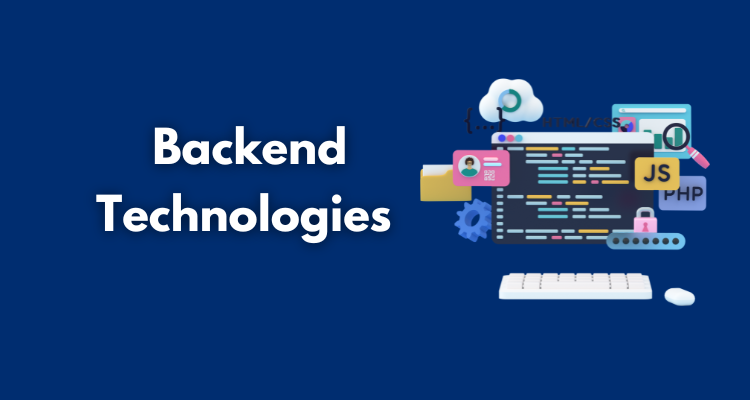
When it comes to choosing the right tools for your web or app development project, the backend is where the real magic (and complexity) happens. Even though there’s this buzz around new languages and tools, many backend technologies from years past continue to hold their ground.
Why? Because stability, scalability, and a strong developer ecosystem matter more than shiny new trends. Trying-and-tested backend frameworks can give you a competitive advantage if you’re launching a startup or scaling an enterprise solution. And there wouldn’t be any guesswork.
Let’s take a look at the most popular backend frameworks that are still very much relevant in 2026.
PHP + Laravel: Time-Tested and Still Evolving
Someone can dismiss PHP as a relic of the early internet. That would be a mistake. It powers nearly 75% of websites globally. Thanks to Laravel, it continues to evolve in smart, modern ways.
Laravel is more than just a PHP framework. It’s a full-fledged ecosystem that includes everything from routing and templating to advanced features like authentication, API resources, and queue management. Newcomers and experienced coders love it for its developer-friendly syntax and robust documentation.
If your team lacks in-house PHP expertise, you can hire a dedicated PHP development team to help you unlock Laravel’s full potential. It’s still a top choice for businesses that want to launch quickly without sacrificing performance or security.
Why it’s still relevant
- Mature ecosystem and large community;
- Rapid development with MVC architecture;
- Constant updates and feature expansions;
- Ideal for startups and mid-size businesses.
Node.js + Express: Scalable and Real-Time Ready
If you’re after scalability and real-time capabilities,Node.js paired with Express is hard to beat. Huge players like Netflix, Uber, and LinkedIn use them. That’s why this JavaScript-based stack continues to dominate in 2026 for a reason. For some, it might be the best backend framework.
Express is lightweight and unopinionated. It gives developers the freedom to build exactly what they need. Meanwhile, Node.js’s non-blocking and event-driven architecture makes it perfect for handling concurrent connections. It’s especially useful for chat apps, live notifications, or streaming services.
Why it’s still relevant
- JavaScript on both frontend and backend (full-stack synergy);
- High performance for I/O-heavy tasks;
- Massive npm package ecosystem;
- Great for real-time applications.
Node.js and Express are a natural fit if your project is time-sensitive and requires quick iterations.
Python + Django: Clean, Fast, and Secure
Python has a reputation for being clean and readable. When paired with Django, it becomes a backend powerhouse. It was designed to help developers move fast and build securely. Django offers a “batteries-included” approach that’s still incredibly appealing in 2026.
Django is ideal for startups that need to launch fast without building everything from scratch. It has features like built-in admin panels, ORM, and authentication.
Why it’s still relevant
- Excellent for rapid development;
- Highly secure by default;
- Clean syntax and great readability;
- Thriving community and support.
Python’s rise in data science and AI also means that Django often plays well in projects that require a backend for ML models or analytics dashboards.
Java + Spring Boot: Reliable at Scale
Some developers consider Java old-school. In enterprise environments, it’s the gold standard. Java becomes faster, more flexible, and easier to deploy with Spring Boot. That’s what makes it one of the best backend frameworks for large-scale applications.
It simplifies Java development by offering auto-configuration, embedded servers, and production-ready features like monitoring and health checks. It’s especially popular in industries like finance, healthcare, and e-commerce where performance and reliability are non-negotiable.
Why it’s still relevant
- High performance at scale;
- Enterprise-level security and stability;
- Massive developer community;
- Rich ecosystem for microservices and REST APIs.
If you’re building for the long haul with lots of traffic and sensitive data, Spring Boot is a smart bet.
Ruby on Rails: Still Loved by Developers
Rails may not be as trendy as it once was. It still has a passionate developer base. In 2026, it will continue to shine in areas like MVP development and startup ecosystems.
It’s all about convention over configuration. It’s opinionated, yes, but that’s what makes it fast. You can build and deploy applications incredibly quickly. The code is often elegant and maintainable.
Why it’s still relevant
- Great for startups and MVPs;
- Strong conventions and code structure;
- Excellent documentation and developer tools;
- Built-in testing framework.
If you want to get your product to market quickly and cleanly, Rails is still one of the most popular backend frameworks among seasoned developers.
Go (Golang): Performance-First Architecture
Go is a backend language you can’t ignore, especially if speed and efficiency are your top priorities. It was designed by Google. It has become known for its simplicity, fast compile times, and excellent performance.
In 2026, Go is increasingly used for backend systems where performance matters most (APIs, microservices, and tools for handling large-scale data operations).
Why it’s still relevant
- Compiled language = blazing-fast performance;
- Easy to learn and write;
- Ideal for building microservices and APIs;
- Scales well with minimal resource usage.
More companies are choosing Go to power backend infrastructure because it’s lean, fast, and dependable. Even a heavy load is not a problem.
Choosing the Right Backend Stack in 2026
There are plenty of powerful options. The question is how to choose the best backend framework for your project. You can start by asking the following questions:
- What’s your app’s primary function: real-time, data-heavy, or content-driven?
- Do you need to launch fast, or are you optimizing for scale?
- What’s your team’s existing skill set?
- Do you need support from a dedicated PHP development team or another specialized partner?
Whenever you decide on the right backend, it’s not about the trendiest language. It’s about long-term maintainability, community support, and how well the technology fits your product goals. Sometimes the “boring” choice is the smartest one.
Final Thoughts
The backend world in 2026 is as vibrant as ever. It’s filled with both legacy giants and modern contenders. The aforementioned backend technologies continue to power the digital world behind the scenes.
The most popular backend frameworks today are mature, stable, and well-supported. They’re ready to take on whatever your next project throws their way.