Managing an e-store is like trying to maintain a never-ending list of work. Customers post reviews everywhere, Google, social networks, your site and it is difficult to keep up. Reviews influence the development of trust and spur purchases, but having to manage them in a manual manner is a nightmare.
Here is where feedback management software comes in to automate the process of collecting feedback and responding to it to increase brand reputation. The tools are game-changers to businesses in 2026.
Best 13 Review Management Software
1. Yotpo for Review Management
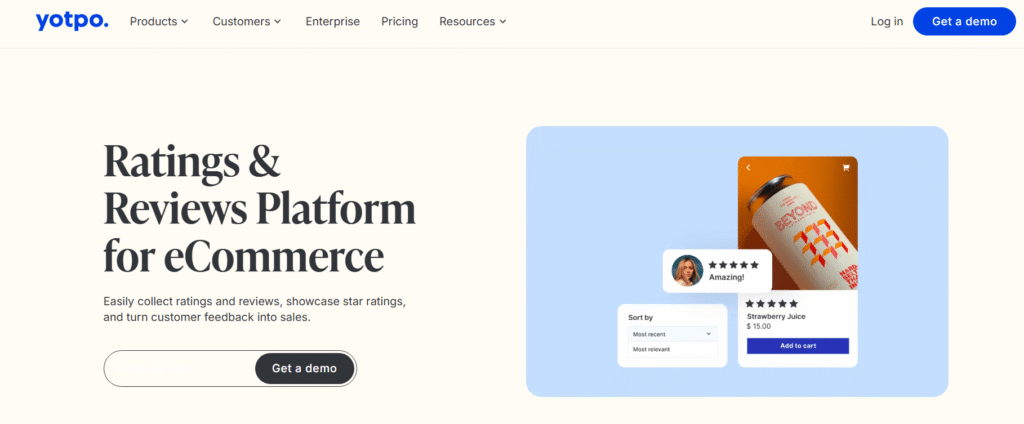
Yotpo for review management excels with its AI-driven automation. It also connects through e-commerce platforms through REST APIs and aggregates reviews collected on Google, Shopify, and social media sites to a single dashboard. It has machine learning algorithms to optimize the timing to request review and attain a higher response rate.
The sentiment analysis available in Yotpo determines positive and negative feedback so that responses can be given towards this end. Widgets recommend reviews on the product pages, which leads to an increase in conversions by up to 20%.
Yotpo’s customer loyalty management shines through its loyalty module. It awards reviewers with points where it seamlessly works with referral programs.
The JavaScript SDK available on the platform supports rewards with custom triggers (such as gaining points with photo uploads). The impact of review on sales is tracked through real-time analytics, response templates to be A/B tested. This promotes individual interactions, which facilitate re-purchasing and brand loyalty.
2. BirdEye
BirdEye integrates APIs to concentrate the responses across platforms. It draws the reviews of Yelp, Google Maps, and TripAdvisor to one dashboard. It has its natural language processing (NLP) engine that breaks down the sentiment and groups feedback into actionable insights.
Follow-up requests to review after purchase are created in automated email and SMS campaigns, leading to higher response rates. Reporting tools of BirdEye create client sentiment heatmaps.
The platform supports customer loyalty management with response automation. It has ready-made templates to respond fast and personally to reviews. Customer names are used to make these templates credible because they are inserted through dynamic fields. The CRM integrations of BirdEye work to sync feedback with customer profiles and perform targeted marketing. This enhances retention through the ability to deal with pain points quickly.
3. Trustpilot
Trustpilot has automated requests for reviews in e-commerce websites as well as review sites. It has an API that integrates with websites such as WooCommerce, drawing reviews to a single platform. Spam is filtered through machine learning to verify authenticity of review.
Review widgets of Trustpilot become embedded on websites, and star ratings are displayed to increase trust. Its dashboard for analytics follows the review volume and sentiment trends.
For customer loyalty management, Trustpilot offers response automation. It saves time by providing drafts of a reply based on the tone of the review using AI. Through integration with email platforms, there is an option to conduct targeted campaigns of reviews. These campaigns exploit behavioral triggers such as post-purchase emails to make the response maximal. The NPS tracking at Trustpilot allows measuring loyalty.
4. Reviews.io
Reviews.io uses AI to maximise review gathering. It has an API match with Magento and Shopify, which accumulates feedback in a dashboard. Sentiment analysis reviews give the identification of themes in reviews that helps in strategic decisions.
The QR code technology applied on the platform allows making requests in-store to leave reviews online, filling the gap between offline and online response. A rich-media review is shown by widgets and improves their use.
Customer loyalty management benefits from Reviews.io’s automation. It sends a customized review reminder via text messages or email with dynamically-loaded content to increase participation. The templates of response make replying easier, and AI suggests responses appropriate to the tone of the message. The analytics of the platform also measure the effect of reviews to conversions assisting in the implementation of loyalty campaigns.
5. Podium
Podium is a real-time review management company. It has an API that aggregates Google and Facebook feedback into a single inbox. NLP algorithms classify reviews in terms of emotion which makes prioritization possible.
Surveys themselves are delivered automatically on SMS after the chat is over, thus getting high response rates. The widgets provided by Podium list reviews on websites, which creates conversions.
For customer loyalty management, Podium’s response automation stands out. It can create customized responses with dynamically-written templates, and it uses CRM APIs to input customer data. Business is informed about new reviews in real-time, and new reviews can be replied to in a timely manner. The analytics dashboards monitor the trends of reviews by associating feedback with loyalty attributes such as subsequent purchases.
6. GatherUp
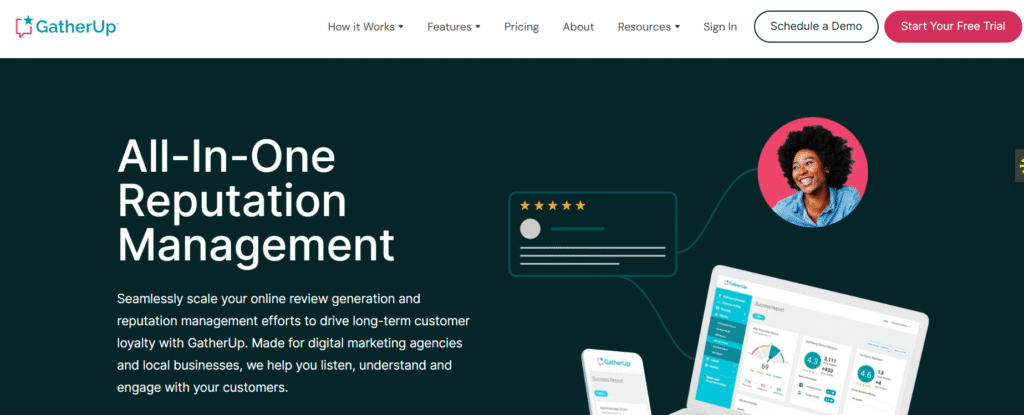
The GatherUp platform makes collecting reviews easier due to API connections. It is integrated with Google My Business and Yelp and allows centralizing feedback on a dashboard. Its sentiment analytics helps analyse pain points of customers through NLP.
Responsive rates are enhanced through automated email campaigns that initiate review requests depending on data about purchases.
Reviews are embedded on sites and facilitate trust by using widgets.
Customer loyalty management benefits from GatherUp’s NPS tracking. It assesses loyalty by using the standardized surveys and combines the results with CRM systems. The automation of responses relies on AI that can recommend response consistency. The analytics on the platform measure the impact of review on retention and insights that guide special campaigns.
7. Reputation
Reputation uses APIs to get reviews of several sites. It applies machine learning to sentiment analysis, coming up with something actionable.
Automated review requests make use of SMS and email and there is dynamic triggering of requests according to the customer behaviour. Widgets on reputation are used to show rich media reviews to improve the credibility of sites.
For customer loyalty management, Reputation’s response automation excels. It employs AI to create custom responses, and works with CRM to provide context. Timely notifications through an immediate connection help improve loyalty. Review analytics dashboards can help follow the trending moves and connect the feedback to retention indicators such as LTV.
8. Stamped
It integrates with Shopify and BigCommerce and gathers feedback in a dashboard. Its sentiment analysis based on the AI breaks down the reviews into categories, with trends showing. Review requests are sent automatically via email after a purchase to stimulate the most significant responses. Widgets show photos and reviews that increase conversions.
Customer loyalty management benefits from Stamped loyalty module. It gives rewards to reviewers as points, which combine with referral programs. Response automation applies customized templates that contain customized responses. Review analytics monitor the effect on sales, which determine the focus of loyalty campaigns.
9. ReviewTrackers
ReviewTrackers summarizes the reviews on sites such as TripAdvisor through APIs. Its NLP engine parses sentiment with important themes being detected.
Review requests are sent on automated SMS and email campaigns, with behavioral triggers to be more engaging. These review widgets place the reviews on the websites, increasing conversions and trust.
For customer loyalty management, ReviewTrackers offers response automation. AI will propose drafts of replies according to the tone of review, guaranteeing consistency. CRM integrations allow feeding back to customer details and then sending the marketing. Analytics keep with trends in reviews and measure feedback to other loyalty signs such as NPS.
10. Zonka Feedback
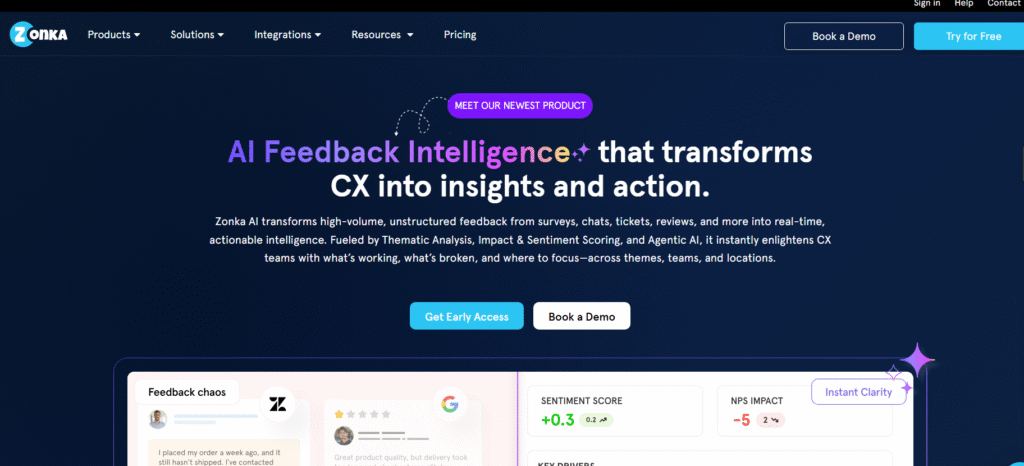
Zonka Feedback makes review gathering easy through API. It integrates with Google and social networks to make all the feedback central. It leverages NLP capabilities to perform review categorization and glean insights that can assist in actions.
The review requests are initiated by automated email campaigns, where purchase data is used to increase the response. Reviews are shown on sites through widgets.
Customer loyalty management benefits from Zonka’s NPS surveys. They even gauge loyalty with the incorporation of outcomes with CRM systems. AI is used in auto-responding when it comes to making the responses in time.
Analytics monitor the effects of reviews on retention, and this helps when it comes to promotional targeted loyalty initiatives.
11. Okendo
Okendo does this by aggregating reviews through API connections with Shopify and Magento. It uses its expendable sentiment analysis powered by AI to show the trend of feedback.
The engagement is executed by moving through the triggers using the dynamic review request of automated SMS campaigns. The reviews are shown as snazzy widgets that augment credibility and conversion of a site.
For customer loyalty management, Okendo’s response automation excels. AI recommends drafts of personal replies and combines it with CRM. Loyalty is enhanced by being made aware of things in real-time and being able to respond to them. Impact on LTV is tracked by analytics that can be used to optimize specific campaigns.
12. Feefo

Feefo automates reviews by having strong APIs. It integrates with the e-commerce channels, drawing the feedback across various sources into a central platform.
The sentiment analysis of its reviews is done by an AI-based approach with natural language processing to define types of reviews by categorization such as positive or negative sentiment; it is able to recognize trends such as the satisfaction of a product or the problems of a service.
Behavioral data is used to ensure review requests are sent automatically as post-purchase emails. The widgets of Feefo integrate reviews into websites and show star rankings and customer-generated content to increase conversions. It is both scalable and low-latency, with thousands of reviews per day being processed with its cloud-based system.
13. Judge.me
Judge.me makes the review management process smooth using efficient API integrations. It links to e-commerce websites and is used to combine feedback sources across social media and review sites in a dashboard. The spam is detected through its machine learning algorithms, and only authentic reviews are shown.
Automatic SMS and Email campaigns prompt review requests by sending at opportune times with the help of purchase data. The widgets provided by Judge.me have rich media embedded into them, in the form of photos, which improve the credibility of product pages and facilitate conversions. It has a lightweight design, which guarantees quick loading.
Conclusion
In 2026, review management software is crucial in order to create a sense of trust and loyalty. Platforms like Yotpo for review management lead with AI-driven automation, seamless integrations, and robust analytics.
These tools streamline feedback collection, response, and display, driving conversions and customer loyalty management. Workflow automation and using insights, the businesses also increase the reputation and retention in an efficient way.