Projects start bleeding cash the moment contracts slip outside the ERP system. McKinsey reports that 80 percent of large construction projects overrun budgets by at least 20 percent because cost data lives in disconnected tools. When change orders stay buried in spreadsheets, finance sees the damage only after it’s too late.
This guide closes that gap. We compare six contract-management platforms that sync in real time with SAP, Oracle, Microsoft Dynamics, and other ERPs, so every commitment, variation, and invoice hits the general ledger instantly, keeping your projects visible and controllable from day one.
1. InEight Contract – linking field contracts with enterprise financials
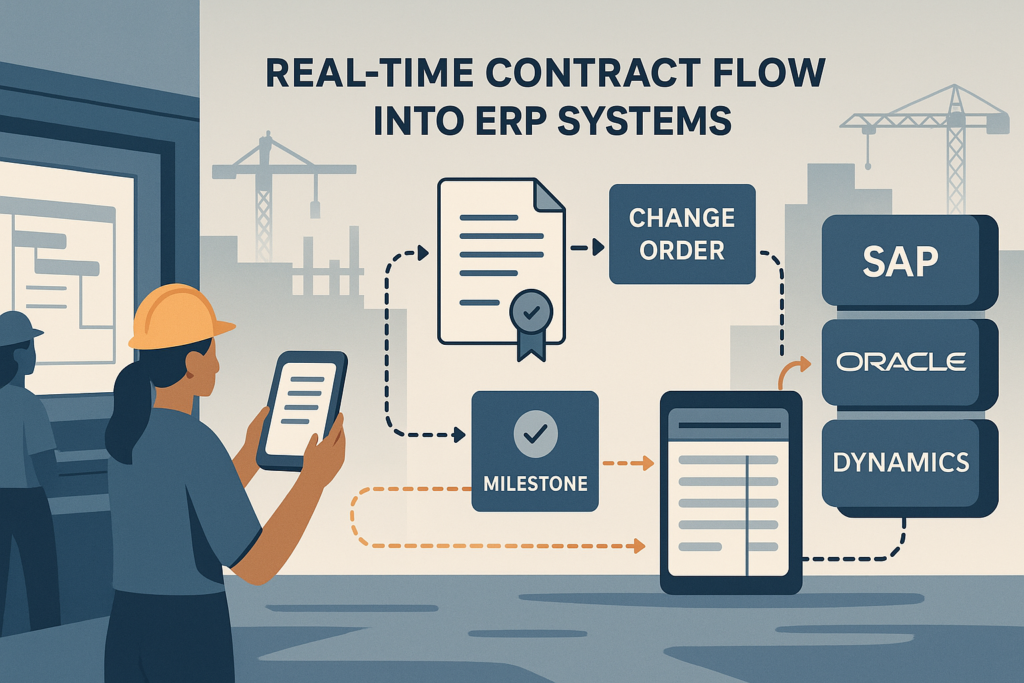
When your superintendent approves a change order in the trailer, the cost impact should reach finance before the crew breaks for lunch. Yet in many firms, that update takes days: emails drift, spreadsheets stall, and the ERP stays blind.
InEight Contract closes that gap. The cloud module lives inside InEight’s project controls suite and pushes every commitment, retention amount, and change order to SAP, Oracle JD Edwards, or Microsoft Dynamics through bidirectional. The same feed pulls vendor and cost-code data back, so project managers and the CFO read one ledger, not two.
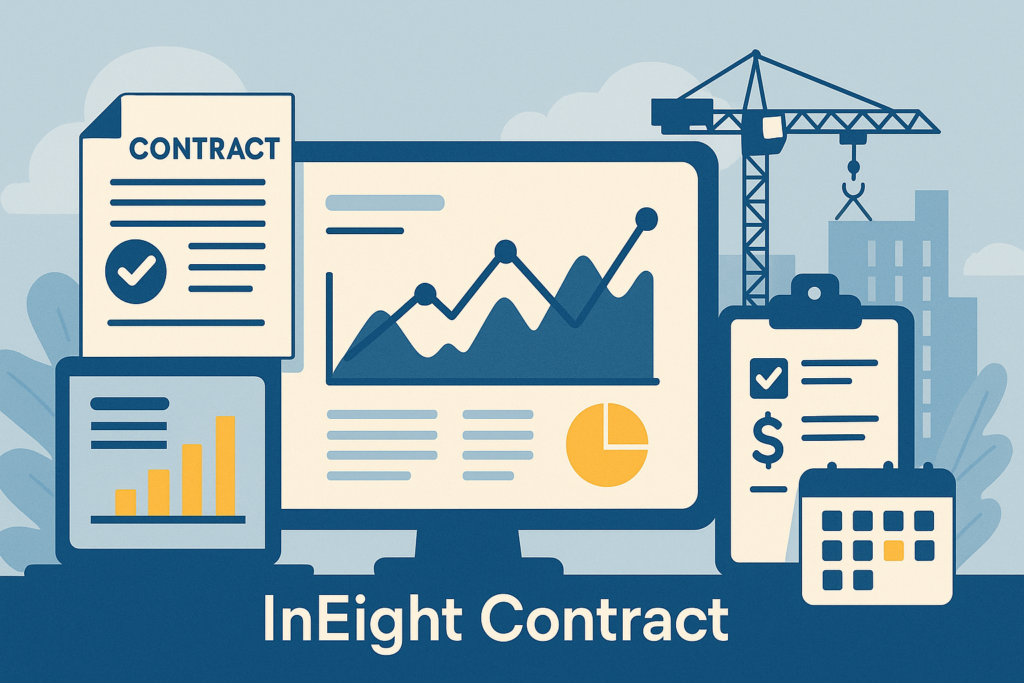
Key project-control wins:
- Real-time budget protection. If a variation pushes a contract past its allowance, InEight updates the forecast and sends an alert before overruns snowball.
- Lean deployment. Connector mappings install in days, not months, because common fields and authentication are already templated.
- Audit-ready history. Every create, amend, or sign action carries a timestamp and user ID, satisfying ISO-style compliance checks without extra spreadsheets.
Results feel tangible. Industrial contractor CCC Group says the platform helped shrink margin variance on a cement-plant project worth several hundred million dollars and improve forecast accuracy across its portfolio.
Explore the full feature set on the official InEight Contract page.
2. SAP Ariba Contracts – built-in harmony for SAP ERP shops
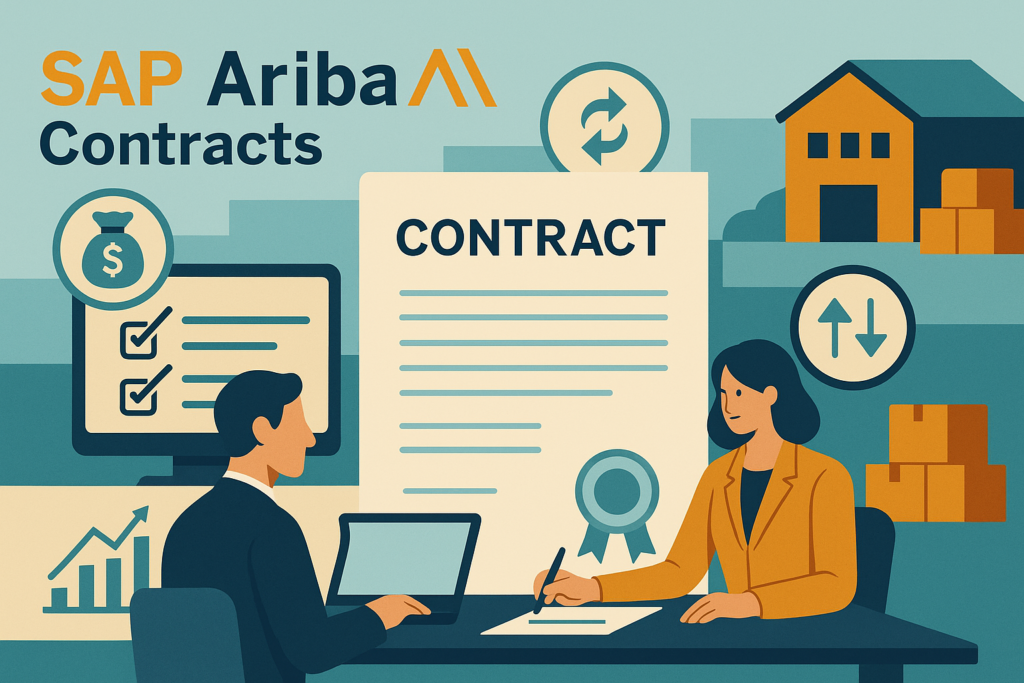
Running SAP already puts your contracts, suppliers, and spend in the same orbit. Ariba Contracts makes that reality concrete: agreements flow straight into SAP ECC or S/4HANA with no middleware, giving you a single ledger for commitments and cash.
Workflow example: create or negotiate a contract in Ariba’s procurement workspace, route approvals, click “publish.” Within seconds the signed document creates purchase orders, vendor-master updates, and budget reservations inside the ERP, with no CSVs and no double entry.
Since 2024, SAP’s alliance with Icertis has added AI clause discovery and risk scoring while writing back to S/4HANA records, according to an SAP News release. When an escalation clause is flagged, planned costs in SAP Project System update automatically, so controllers see the impact before it becomes an overrun.
Scale is another advantage. SAP Business Network, the successor to Ariba Network, supports more than US$6.5 trillion in annual transactions and millions of trading partners across 190 countries, according to an SAP press release. Supplier onboarding seldom slows a project because most vendors already use the network.
Pricing is quote based and aimed at large organizations, yet SAP customers often find the total cost lower than combining a third-party CLM, AI add-ons, and custom integration.
If SAP is your financial backbone and you want contract intelligence that speaks native SAP, fluently and at scale, Ariba Contracts fits the brief.
3. Oracle Primavera Unifier – one source for cost, schedule, and contract truth
Project-driven firms often juggle separate systems for budgets, schedules, and contracts. Unifier gathers them in one database and synchronizes the result with Oracle ERP Cloud or E-Business Suite.
In the contract workspace you create an agreement, tag cost codes, and link payment milestones to P6 activities. After approval, the commitment posts automatically to Oracle Financials while vendor and budget data flow back to the project, so controllers and project managers share the same numbers.
Field changes stay just as connected. Approving a change order updates the P6 schedule, revises the project budget, and amends the ERP ledger in one step. Brazilian utility CPFL saw planning efficiency rise 40 percent and project-approval time fall 25 percent after rolling out Unifier with Oracle Integration Cloud, according to a Peloton Group case study.
Deployment rides on Oracle Integration Cloud’s library of preinstalled adapters, avoiding custom APIs and brittle spreadsheets, according to Oracle documentation. Security inherits Oracle Cloud’s stack, including single sign-on, role-based permissions, and full audit logs, which helps public-sector and regulated industries maintain compliance.
If you already run Oracle at the core, Unifier ties contract, cost, and schedule data into one auditable record with no exports, no surprises, and clear project truth.
4. Procore – field-friendly contracts that sync with your back office
Construction schedules shift hourly, yet your ERP ledger may not catch up for days. Procore closes that gap by letting field teams create subcontracts, change orders, and invoices while its ERP Integrations tool pushes the data to more than fifteen accounting platforms, including Sage 300 CRE, Viewpoint Vista, QuickBooks, NetSuite, and Workday, with no CSV exports or re-keying, according to Procore documentation.
A typical flow: open a subcontract in Procore, tag cost codes, adjust scope. Once you save, the commitment appears in the connected ERP. When Accounts Payable records a payment, the status flows back to Procore, so project managers start each morning with real-time spend.
Change events follow the same path. Approving a change order in the trailer updates the ERP ledger within minutes and keeps forecasts accurate down to the penny.
Deployment stays light. Guided wizards install each connector, and Procore keeps mappings current as vendor APIs evolve, which suits mid-size contractors that lack deep integration staff. And for firms running broader project-controls environments, solutions like project controls software Ineight serve a similar purpose by centralizing field, cost, and contract data so the ERP receives consistent, structured information.
The reach is proven: more than three million projects across 150 countries have run on Procore, according to a Procore press release. That breadth means many vendors already know the system, shortening onboarding and training.
For crews in the field and finance teams anchored in ERP, Procore turns contract data into one continuously updated record that stays current with the pace of the jobsite.
5. Icertis Contract Intelligence – the CLM hub that plays well with every ERP
Most enterprises run more than one ERP. Icertis meets that reality by acting as a global system of record for contracts while feeding obligations to SAP today, Oracle tomorrow, and Microsoft Dynamics next quarter.
Integration is baked in, not bolted on. Certified connectors map clause libraries, supplier IDs, and milestone dates to leading ERPs, while open APIs cover edge cases, so even a legacy mainframe can join without custom workarounds. SAP now resells an endorsed version, Icertis Contract Intelligence for SAP S/4HANA, which deepens source-to-pay integration across the SAP stack, according to a 2024 SAP press release.
The platform’s AI lives up to its name. It scans agreements for risky terms, flags mismatched pricing, and pushes alerts to the ERP when a clause triggers new spend, helping you avoid quarter-end surprises. One global electronics maker saved 45 million dollars across twenty ERP instances, according to an Icertis case study.
Scale supports the claims: more than 30 percent of the Fortune 100 use Icertis, and 93 percent of users recommend the platform on Gartner Peer Insights 2025, according to Icertis press releases. Role-based permissions and regional data centers satisfy compliance teams from Berlin to Bangalore.
Implementation takes a focused project, not a quick plug-in, yet the payoff is a single, searchable repository that keeps each ERP honest. If you juggle multiple back-office systems, Icertis provides the connective tissue that turns static contracts into live, value-generating assets.
Conclusion
When contracts operate outside your ERP, project visibility collapses, budgets drift, forecasts lose accuracy, and overruns surface only after they’ve compounded, especially if you lackreal-time data integration for ERP systems. Each of the six platforms in this guide offers a different path to eliminating that blind spot, but they all share one outcome: a single, real-time version of commercial truth.
Whether you choose an ERP-native solution like SAP Ariba, a project-control powerhouse like InEight or Unifier, or a flexible enterprise CLM such as Icertis, the goal remains the same, tight control of commitments, changes, and cash flow from day one. Consider your ecosystem, deployment capacity, and integration demands. With the right fit, contract data stops being a lagging indicator and becomes a proactive driver of predictable, profitable project delivery.
Frequently Asked Questions
1. What is ERP-integrated contract management?
It’s a system where contract data—commitments, change orders, invoices, milestones—flows automatically between your contract platform and ERP. This removes manual re-entry, eliminates discrepancies, and keeps forecasts continuously updated.
2. Why is real-time sync with the ERP so important?
Because construction and capital projects change constantly. If commitments or change orders sit in email or spreadsheets for days, your ERP will project inaccurate budgets, leading to missed forecasts and overruns. Real-time sync ensures that finance, field teams, and executives work from the same ledger.
3. How does ERP integration reduce project overruns?
It immediately reflects contract changes in budgets, schedules, and forecasts. That means you catch cost drift early—before it burns margin. Field and finance stay aligned, and project controls become proactive rather than reactive.
4. Do these tools replace the ERP?
No. They extend your ERP.
ERP remains your financial system of record; the contract-management solution becomes the operational system where agreements are drafted, updated, approved, and executed—then posted back to the ERP automatically.
5. Which platform integrates best with SAP?
For SAP-native environments, SAP Ariba Contracts or Icertis Contract Intelligence for S/4HANA offer the deepest, most seamless integration. InEight and Procore also integrate well with SAP through prebuilt connectors.