Most web developers think about security at the application level. That usually means input validation, authentication flows, encryption, secure session handling, and ensuring data is stored and transmitted securely. These are all critical responsibilities. They are also the areas developers directly control.
What often receives less attention is the layer that sits between your application and the public internet:
the network security layer.
Every request to your production environment passes through infrastructure that can inspect, modify, delay, or reject traffic before your code ever executes.
Understanding that layer, even at a high level, can save hours of debugging and confusion when production behavior doesn’t match local testing.
Firewalls Are Not What They Used to Be
For many developers, a firewall is still imagined as something that blocks or allows traffic based on ports. While that description is technically accurate, it no longer captures how modern security enforcement works.
Today’s firewalls operate with application awareness. They inspect HTTPS traffic, identify application behavior patterns, integrate threat intelligence feeds, and apply contextual policies. Instead of simply allowing port 443, they evaluate what is happening over that connection.
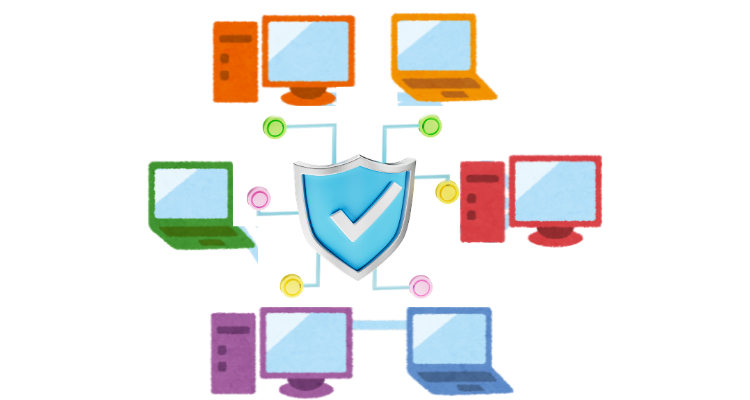
They can detect malicious payloads embedded in otherwise legitimate-looking requests and block them before they reach your web server.
This is what the industry refers to as a next generation firewall. The distinction lies in visibility. Rather than treating traffic as generic packets, these systems understand applications, user context, and behavioral patterns.
That additional context means traffic that looks valid from your application’s perspective may still be evaluated differently at the network layer.
For developers, this matters more than it may seem.
Why Production Behaves Differently Than Local
When you deploy a web application, it typically sits behind multiple layers of infrastructure. Load balancers, reverse proxies, content delivery networks, and security controls all handle traffic before it reaches your application runtime. Each of those components can alter or filter requests.
Consider a few common scenarios.
An API endpoint works perfectly in development but intermittently fails in production. A webhook occasionally times out. A file upload succeeds locally but fails under load in a live environment. These issues are often traced back to infrastructure rules rather than application bugs.
A firewall might enforce stricter header validation than your development server. It may block certain content types or reject unusually large payloads. Encrypted traffic inspection can introduce slight latency, exposing weaknesses in timeout handling. Some systems normalize headers or enforce protocol compliance in ways that your local environment does not.
Without awareness of the security layer, developers can spend significant time troubleshooting the wrong component.
The Perimeter Has Evolved
In older architectures, applications ran inside a clearly defined corporate network. Anything inside the perimeter was implicitly trusted. Firewalls primarily defend the outer boundary.
Modern applications do not operate within such a walled environment. They run in cloud platforms, interact with third-party APIs, and serve users from distributed locations. The concept of “inside” versus “outside” has become less meaningful.
Zero-trust principles have reshaped how infrastructure is designed. Every service call may be authenticated and inspected. Internal traffic between microservices can be subject to the same scrutiny as external traffic. The perimeter is now distributed across regions, providers, and infrastructure layers.
For teams building and deploying cloud-native applications and services, this shift changes how security should be viewed. The network layer is not a distant boundary. It is an active participant in how your application behaves.
What a Modern Firewall Actually Does
A modern firewall does more than filter ports. It performs deep packet inspection, integrates threat intelligence, detects bot traffic, enforces rate limiting, and analyzes behavioral anomalies over time. These controls are designed to identify attacks that cannot be detected by simple signature matching.
It may inspect encrypted traffic to detect malicious patterns before forwarding requests. It may block traffic from known malicious IP ranges. It may limit request frequency to protect against automated abuse. It may analyze API usage to identify suspicious deviations from normal behavior.
These capabilities are particularly important for protecting against common web application threats.
Developers are encouraged to familiarize themselves with resources such as the OWASP Top 10 list of common web vulnerabilities, which outlines issues including injection attacks and broken authentication.
While your application code should defend against these threats directly, network-level controls provide an additional layer of protection that filters malicious traffic before it reaches your logic.
The most effective environments treat application security and network security as complementary rather than separate concerns.
Collaboration Between Dev and Infrastructure
As DevOps practices have matured, the line between development and infrastructure responsibilities has narrowed. Developers are increasingly involved in deployment pipelines, container orchestration, and cloud configuration. Security is no longer entirely abstracted away.
That does not mean developers must configure firewalls directly. It does mean having informed conversations with infrastructure teams.
Knowing what sits in front of your application helps prevent avoidable issues. Are there request size limits? Are certain headers blocked? Is encrypted traffic being inspected? Are there rate limits on API endpoints? Understanding these constraints allows you to design APIs and services that behave predictably in production.
It is also important to clarify responsibility boundaries. Application code should enforce input validation, authentication, and authorization rules. The network layer focuses on traffic inspection, anomaly detection, and blocking known attack patterns. Problems arise when each side assumes the other has full coverage.
Designing With Inspection in Mind
A practical mindset shift can reduce friction between development and security.
First, design APIs with the expectation that requests may be inspected or delayed. Implement robust timeout handling and clear error messaging. Avoid assumptions about unlimited payload size or unrestricted header usage.
Second, communicate early when deploying new features that significantly change traffic patterns. A sudden increase in outbound requests or a new webhook integration may trigger automated controls. Coordinating in advance prevents production surprises.
Third, test as closely as possible to production conditions. Staging environments that mimic network-level controls reduce the gap between local success and live failure.
These habits do not require deep security expertise. They require awareness.
Security as Part of the Delivery Pipeline
Modern web development is increasingly concerned with performance, reliability, and scalability. Security is often treated as an additional requirement layered on top of these goals. In reality, it is part of the same delivery ecosystem.
A firewall is not simply blocking traffic at the edge. It is enforcing policies that shape how requests reach your code. It may influence latency, connection handling, and error responses. When something behaves unexpectedly in production, the issue may lie in the network path rather than in your application logic.
Developers who understand this interaction are better positioned to debug issues efficiently and collaborate effectively with operations teams.
Final Perspective
You do not need to become a network engineer to build secure web applications. You do need to recognize that your code runs within a broader security architecture that actively evaluates every request.
The gap between “application concerns” and “infrastructure concerns” continues to narrow. Cloud platforms, containerization, and distributed systems all push developers closer to the environment in which their applications operate.
Understanding how a next generation firewall influences request handling gives you context. It helps you ask better questions, anticipate deployment differences, and design systems that cooperate with surrounding security controls.
The best development teams consider what happens after deployment. The network layer is part of that story. Even if you never configure it yourself, knowing how it works makes you a stronger developer and a more effective collaborator.