In 2026, medical billing software has become an essential tool for healthcare providers, clinics, and hospitals looking to streamline their administrative processes and maximize revenue efficiency. With the increasing complexity of healthcare regulations, insurance requirements, and patient billing expectations, relying on manual billing processes is no longer practical.
The right medical billing software not only reduces human errors in claims and coding but also accelerates the entire revenue cycle, from patient registration to claim submission and reimbursement. It helps practices maintain compliance with HIPAA and other industry standards, ensures timely and accurate payments, and frees up staff to focus on patient care rather than administrative tasks.
Modern solutions go beyond basic billing—they often integrate electronic health records (EHR), practice management, scheduling, and reporting tools, providing a comprehensive platform to manage all aspects of a medical practice efficiently.
With so many options available, choosing the right software can be challenging. To help you navigate this landscape, we’ve compiled a list of the top 10 medical billing software solutions in 2026, highlighting their features, benefits, and ideal use cases to help your practice improve operational efficiency and financial performance.
1. DrChrono
Overview
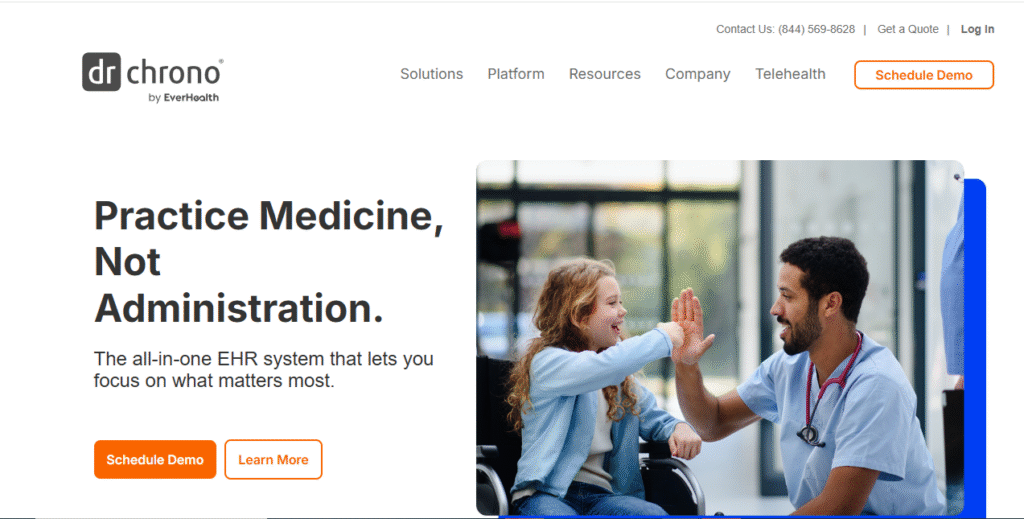
DrChrono is a leading cloud-based Electronic Health Record (EHR) and practice management platform that comes with fully integrated medical billing capabilities. Designed for practices of all sizes from solo practitioners to mid-sized clinics. DrChrono offers a complete end-to-end revenue cycle management solution. By combining EHR, scheduling, and billing in one platform, it helps practices reduce administrative workload, improve accuracy in claims processing, and enhance overall operational efficiency.
One of DrChrono’s biggest advantages is its flexibility and mobility. With robust mobile apps for iOS devices, providers can access patient records, submit claims, and track payments from virtually anywhere, ensuring that billing and documentation keep pace with the fast-moving demands of a healthcare practice.
Key Features
- Automated Claims Submission and Tracking
DrChrono streamlines the billing process by automatically generating and submitting claims to insurance providers. It also tracks the status of claims in real time, reducing delays and minimizing rejected or denied claims. - Insurance Eligibility Verification
The platform verifies patient insurance coverage before appointments, helping practices avoid claim denials and reduce billing errors. - Electronic Remittance Advice (ERA)
ERA integration allows providers to receive payment details directly from insurers electronically, accelerating reimbursement and improving cash flow. - Patient Statements and Payment Tracking
DrChrono simplifies patient billing with automated statements, online payment options, and clear tracking of outstanding balances. - Scheduling and EHR Integration
Scheduling, charting, and billing are seamlessly integrated within DrChrono, enabling providers to manage appointments and documentation without switching between multiple platforms.
Pros
- User-Friendly Interface: Easy to navigate, even for staff with limited technical experience.
- Mobile App Support: Full-featured iOS app allows providers to manage billing, charts, and patient records on the go.
- Real-Time Analytics and Reporting: Provides insights into revenue, claim performance, and practice efficiency, helping managers make data-driven decisions.
Cons
- Limited Customization for Large Enterprise Practices: While excellent for small to mid-sized practices, some larger healthcare organizations may find customization options limited.
- Learning Curve for Advanced Billing Features: Certain advanced functionalities may require additional training to use effectively.
Ideal For
Small to medium-sized practices seeking an all-in-one solution that combines EHR, practice management, and medical billing. DrChrono is particularly well-suited for providers who value mobility, ease of use, and seamless integration between clinical and financial workflows.
2. AdvancedMD
Overview
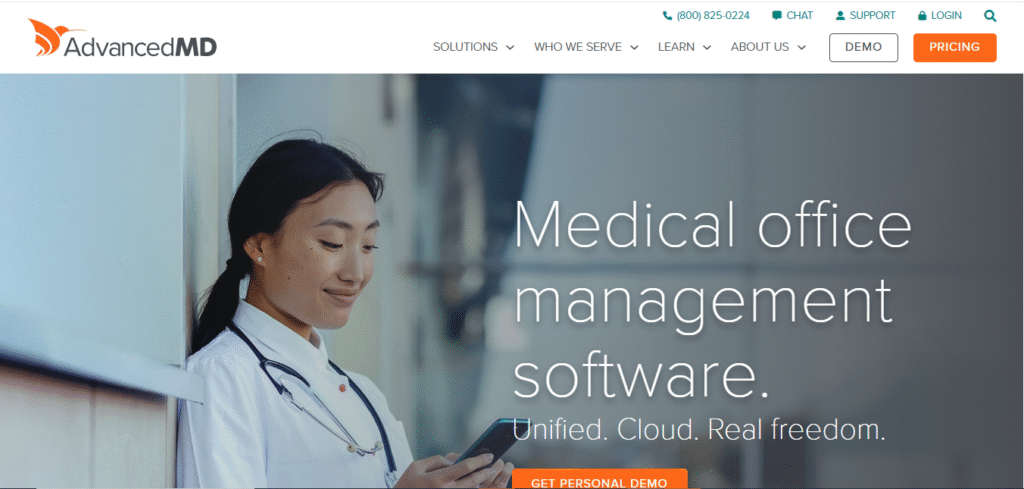
AdvancedMD is a comprehensive cloud-based platform designed for medical billing, practice management, and telemedicine. It caters to medium to large healthcare practices, helping streamline the entire revenue cycle, from patient scheduling to claims submission and reimbursement. By automating key billing tasks and integrating them with practice management and EHR systems, AdvancedMD enables practices to improve cash flow, reduce administrative errors, and enhance operational efficiency.
One of the platform’s standout features is its flexibility for multi-specialty practices, making it suitable for organizations that handle diverse patient populations and complex billing needs. In addition, AdvancedMD’s telemedicine capabilities allow providers to expand care delivery while maintaining accurate billing and documentation.
Key Features
- Electronic Claims Submission and Automated Scrubbing
AdvancedMD automates claims submission to insurance providers and performs claim scrubbing to detect errors before submission, minimizing rejections and accelerating reimbursements. - Patient Payment Processing and Online Bill Pay
The platform simplifies patient billing by allowing online payments, installment plans, and automated statement generation, reducing the burden on administrative staff. - Appointment Scheduling and Reminders
Integrated scheduling tools allow practices to manage appointments efficiently, send automated reminders to patients, and reduce no-show rates. - Financial and Operational Reporting
AdvancedMD offers in-depth analytics and reporting features, giving practices insights into revenue trends, claim performance, and overall operational efficiency. - Telemedicine Integration
Providers can conduct virtual visits and ensure that telemedicine encounters are seamlessly incorporated into billing and documentation workflows.
Pros
- Scalable for Growing Practices: Can accommodate medium to large multi-specialty practices, making it a long-term solution.
- Extensive Reporting and Analytics: Helps managers make data-driven decisions regarding revenue, staffing, and patient care efficiency.
- Good Multi-Specialty Support: Designed to handle complex billing scenarios across multiple specialties.
Cons
- Higher Pricing for Smaller Practices: While powerful, the platform may be expensive for smaller clinics or solo practitioners.
- Interface Can Feel Complex for New Users: The robust feature set comes with a learning curve; training may be required to use the system effectively.
Ideal For
Medium to large healthcare practices seeking a robust, all-in-one solution that combines medical billing, practice management, telemedicine, and analytics. AdvancedMD is particularly suitable for multi-specialty practices that require a scalable and feature-rich platform to manage complex billing and operational workflows.
3. Kareo(Tebra)
Overview
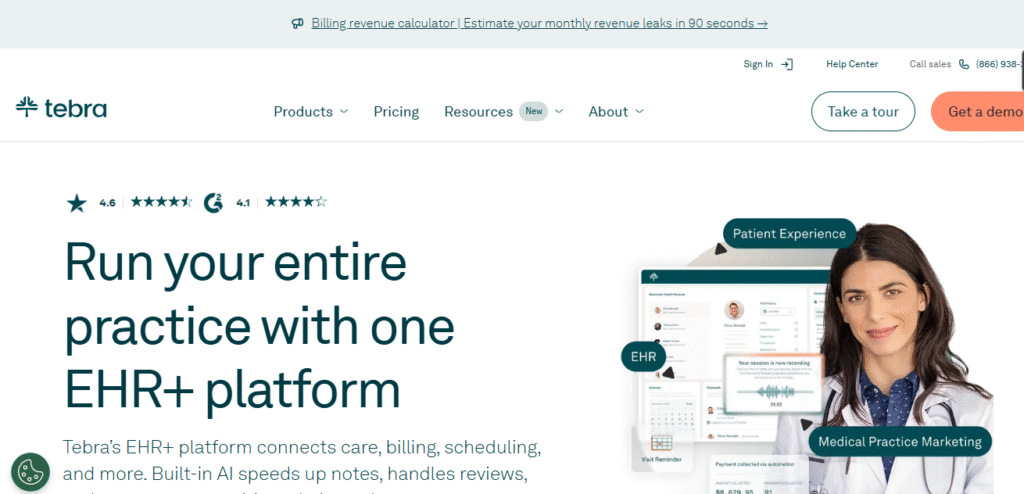
Kareo is a cloud-based medical billing solution specifically designed for small to mid-sized healthcare practices. It integrates medical billing, practice management, and electronic health records (EHR) into a single, intuitive platform, allowing providers to manage administrative, clinical, and financial tasks efficiently.
Kareo’s platform emphasizes simplicity and affordability, making it an ideal choice for practices that want to streamline their billing process without the complexity and high cost of enterprise-level systems. The software helps practices automate claims processing, improve revenue cycle efficiency, and reduce administrative errors, all while maintaining compliance with healthcare regulations.
Key Features
- Automated Claim Submission and Follow-Up
Kareo automates the submission of claims to insurance companies and provides tools to follow up on unpaid or rejected claims, reducing delays and ensuring timely reimbursement. - Real-Time Insurance Verification
The platform allows practices to verify patient insurance coverage at the point of care, minimizing claim denials and improving financial predictability. - Patient Billing and Online Payments
Kareo offers integrated patient billing, allowing patients to pay online securely. Automated statements and payment tracking help practices maintain transparency and reduce billing-related administrative work. - Reporting Dashboards and Revenue Insights
Kareo provides visual dashboards that track revenue, outstanding claims, and overall financial performance. This enables practice managers to make informed decisions and optimize cash flow.
Pros
- Affordable Pricing: Designed with small practices in mind, offering a cost-effective solution without sacrificing essential features.
- Simple, Easy-to-Navigate Interface: The platform is user-friendly, reducing the learning curve for staff and improving adoption rates.
- Excellent Customer Support: Kareo provides responsive support and training resources to help practices optimize their use of the software.
Cons
- Less Suited for Large or Multi-Location Practices: While great for small to mid-sized practices, Kareo may lack some advanced features needed by larger organizations.
- Limited Customization Options: The platform has fewer options for tailoring workflows compared to enterprise-grade solutions.
Ideal For
Small and mid-sized healthcare practices looking for an affordable, easy-to-use medical billing solution. Kareo is particularly suitable for providers seeking a cloud-based platform that combines billing, practice management, and EHR without the complexity of larger enterprise systems.
4. NextGen Healthcare

Overview
NextGen Healthcare is a comprehensive, fully integrated platform designed for healthcare organizations that require robust tools for medical billing, practice management, and electronic health records (EHR). With a strong focus on revenue cycle management, NextGen helps practices optimize billing workflows, improve cash flow, and reduce administrative burden.
What sets NextGen apart is its scalability and versatility. The platform is capable of supporting multi-location practices, multi-specialty workflows, and large healthcare organizations. Its tools are designed to handle complex billing scenarios, including specialty-specific coding, claim management, and patient engagement, making it a go-to solution for practices looking to streamline operations while maintaining compliance and efficiency.
Key Features
- Claim Scrubbing and Denial Management
NextGen automatically reviews claims for errors before submission, helping reduce rejections. It also provides tools to track and manage denied claims, improving the likelihood of reimbursement and minimizing delays. - Patient Self-Service Portals
The platform offers portals where patients can schedule appointments, access billing information, and make payments online, enhancing patient engagement and satisfaction. - Analytics and Revenue Tracking
NextGen provides detailed reports and dashboards, allowing practices to monitor revenue cycle performance, track claim status, and identify areas for operational improvement. - Multi-Location and Specialty Support
Designed for large organizations, NextGen supports multiple locations and diverse specialties. Its customizable workflows accommodate specialty-specific billing, documentation, and reporting requirements.
Pros
- Highly Scalable: Suitable for large practices and healthcare organizations with growing or complex operational needs.
- Strong Reporting and Analytics: Provides actionable insights into financial and operational performance.
- Supports Complex Specialty Workflows: Tailors workflows to meet the needs of multi-specialty practices, improving efficiency and compliance.
Cons
- Steep Learning Curve for New Users: Due to its extensive feature set, training is often required to utilize the platform effectively.
- Higher Cost Compared to Smaller Platforms: While feature-rich, NextGen’s pricing may not be ideal for small practices with limited budgets.
Ideal For
Large practices, multi-specialty clinics, and healthcare organizations that require a scalable, comprehensive platform for billing, practice management, and EHR. NextGen Healthcare is particularly beneficial for organizations handling complex billing scenarios and seeking robust reporting and analytics capabilities.
5. eClinicalWorks
Overview
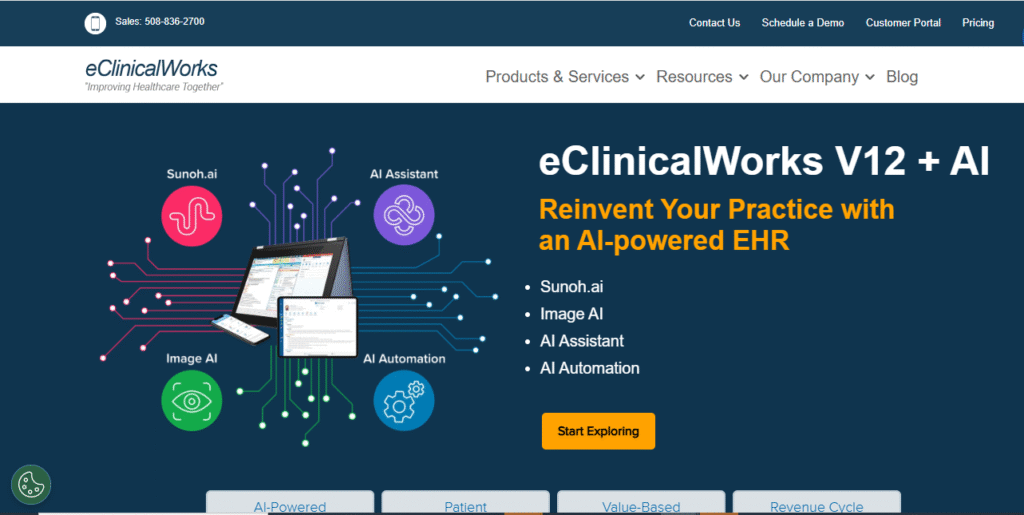
eClinicalWorks is one of the most recognized names in the healthcare technology sector, offering an integrated EHR, billing, and practice management system that caters to both small practices and large healthcare organizations. Known for its customization options and workflow optimization, eClinicalWorks enables healthcare providers to tailor their billing and administrative operations to fit their specific practice needs.
The platform offers a powerful set of tools for automated billing, patient engagement, analytics, and telehealth integration, allowing practices to streamline revenue management while maintaining an excellent patient experience.
Key Features
- Automated Billing and Claim Tracking – Simplifies billing with automated claim creation, submission, and status tracking to reduce manual effort and human error.
- Patient Engagement Tools – Features patient portals, reminders, and secure messaging, ensuring better communication and billing transparency.
- Revenue Analytics and Reporting – Offers advanced analytics to help practices monitor revenue cycle performance and identify bottlenecks.
- Telehealth and Mobile App Support – Enables providers to conduct virtual visits and manage billing directly from mobile devices.
Pros
- Highly Customizable: Adapts easily to unique practice workflows and specialty requirements.
- Supports All Practice Sizes: Scalable for small clinics to large multi-location organizations.
- Strong Analytics: Delivers actionable insights for optimizing revenue and reducing claim rejections.
Cons
- Complex Interface: May require training for new users to fully leverage advanced functions.
- Occasional Software Glitches: Some users report minor performance issues during system updates.
Ideal For
Practices of all sizes seeking a flexible, powerful, and data-driven platform that integrates billing, EHR, and analytics in one solution.
6. Epic Systems
Overview
Epic Systems is an industry leader in electronic health records (EHR) and medical billing solutions, widely used by large hospitals, healthcare systems, and academic medical centers. It delivers an enterprise-level, fully integrated platform that connects clinical, financial, and operational data in one ecosystem.
Epic’s billing tools are renowned for their accuracy, scalability, and compliance capabilities, making it one of the most trusted solutions for organizations that handle high claim volumes and complex billing workflows.
Key Features
- Claims Management and Tracking – Manages every step of the claims process, from creation to payment posting, ensuring efficiency and transparency.
- Patient Billing and Statements – Provides user-friendly statements and online payment options to simplify patient financial engagement.
- Insurance Verification – Real-time verification ensures eligibility before claim submission.
- Integrated EHR and Analytics – Deeply integrates clinical data with billing operations for end-to-end visibility and control.
Pros
- Extremely Scalable: Ideal for hospitals and enterprise-level healthcare networks.
- Comprehensive Integration: Connects patient care data directly with billing for accuracy.
- Strong Security and Compliance: HIPAA-compliant and known for data integrity and reliability.
Cons
- Expensive: Pricing makes it less accessible for smaller clinics.
- Complex Implementation: Setup and customization can be time-intensive and require dedicated IT support.
Ideal For
Large hospitals and healthcare systems that require a fully integrated, secure, and enterprise-grade billing solution connected to advanced EHR capabilities.
7. Practice EHR
Overview
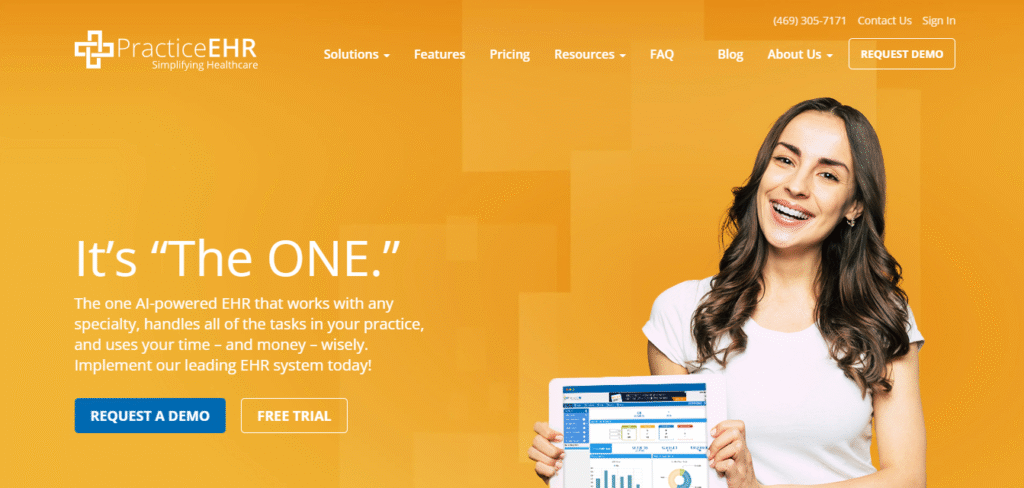
Practice EHR is a cloud-based platform that combines medical billing, EHR, and practice management in one simple and affordable solution. It’s designed to support small and medium-sized practices that want to automate administrative processes without dealing with technical complexity or high costs.
Practice EHR emphasizes ease of use, efficiency, and accessibility, allowing users to manage billing, track claims, and access patient data from any device with an internet connection.
Key Features
- Automated Claims Submission and Follow-Up – Submits claims electronically and tracks denials automatically for faster reimbursements.
- Eligibility Verification – Checks patient insurance eligibility in real time to prevent claim denials.
- Patient Billing and Online Payments – Simplifies billing and allows patients to make secure payments online.
- Reporting and Dashboards – Offers performance dashboards and financial analytics for better visibility into practice performance.
Pros
- Affordable and Efficient: Ideal for smaller practices with limited budgets.
- User-Friendly Interface: Minimal learning curve for staff.
- Cloud-Based Accessibility: Access your data from anywhere, anytime.
Cons
- Limited Advanced Features: May not meet the complex requirements of larger practices.
- Limited Telemedicine Integration: Basic support for virtual care workflows.
Ideal For
Small to medium-sized practices looking for a budget-friendly, simple, and reliable medical billing solution that covers essential practice management needs.
8. athenahealth
Overview
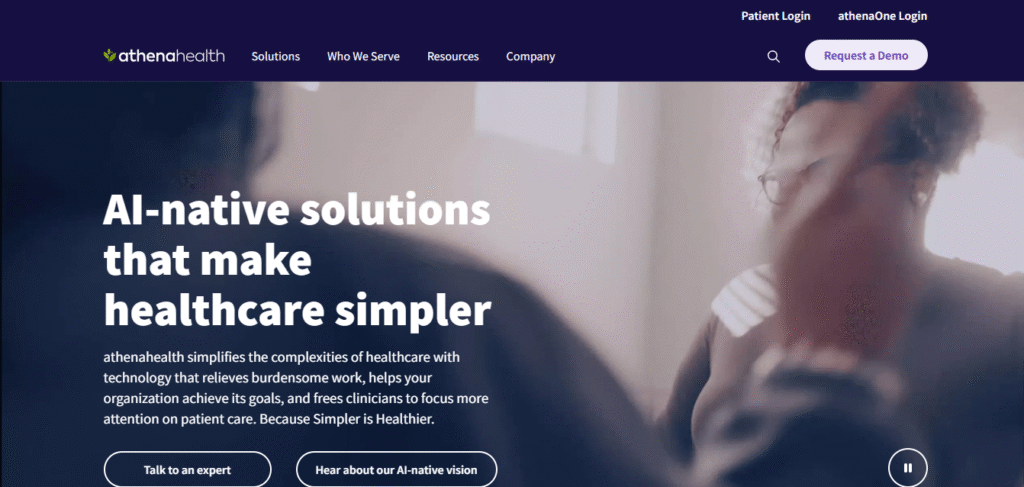
athenahealth is a cloud-based revenue cycle management and billing platform known for its scalability, reliability, and real-time insights. It helps practices manage everything from claim submission to payment reconciliation through automation and data analytics.
With seamless integration between EHR, practice management, and billing, athenahealth enables healthcare organizations to improve claim accuracy, reduce denials, and increase operational efficiency.
Key Features
- Claims Submission and Denial Management – Streamlines billing workflows by identifying and correcting claim errors before submission.
- Patient Payment Processing – Supports online payments, automated reminders, and patient-friendly billing options.
- Revenue Cycle Analytics – Offers real-time analytics for monitoring performance, collections, and denials.
- EHR and Practice Management Integration – Provides a connected experience across billing, scheduling, and patient documentation.
Pros
- Reliable and Scalable: Supports both single-location and multi-location practices.
- Robust Analytics: Provides powerful revenue and operational insights.
- Comprehensive Integration: Combines EHR and billing into one efficient platform.
Cons
- Training Required: Some advanced tools require onboarding and user training.
- Higher Cost for Small Practices: Pricing may be a barrier for very small clinics.
Ideal For
Practices seeking a reliable, scalable, and analytics-driven medical billing solution with deep EHR integration and real-time performance tracking.
9. CureMD
Overview
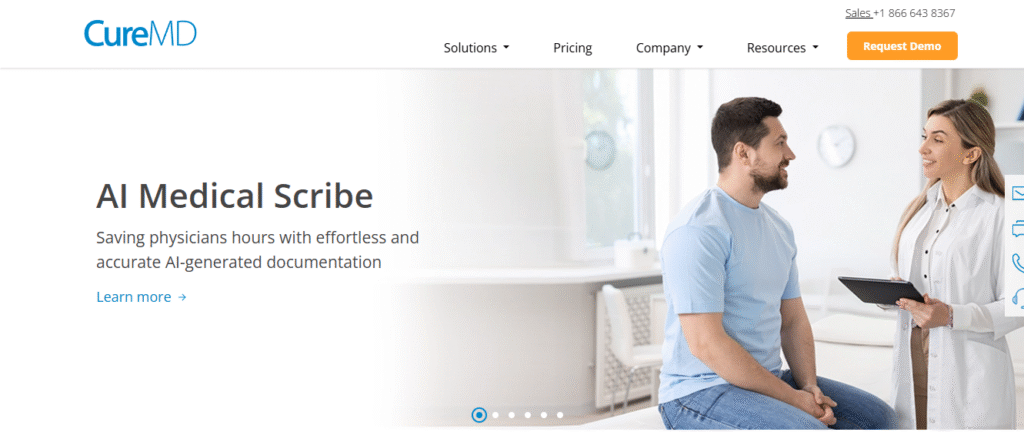
CureMD delivers an integrated suite of medical billing, EHR, and practice management tools focused on automation and simplicity. Its user-friendly interface and cloud-based deployment make it an excellent choice for practices seeking efficiency without complexity.
The platform combines automated billing, patient portals, and telehealth features, ensuring streamlined workflows and better patient engagement. CureMD’s flexibility and affordability make it especially appealing to smaller practices and independent clinics.
Key Features
- Automated Billing and Claim Scrubbing – Reduces errors and improves reimbursement rates with automatic claim validation.
- Patient Engagement and Portals – Allows patients to access bills, schedule appointments, and communicate securely.
- Reporting and Revenue Analytics – Generates real-time insights into financial performance.
- Telehealth Support – Offers built-in virtual visit tools with billing integration.
Pros
- Customizable Workflows: Adapts easily to different practice types and specialties.
- Affordable Pricing: Offers strong value for small to medium-sized practices.
- Cloud-Based and Easy to Deploy: Quick setup with minimal IT requirements.
Cons
- Add-Ons May Be Needed: Some advanced features are available only through additional modules.
- Older Interface Design: The user interface may feel dated compared to newer competitors.
Ideal For
Practices looking for a cost-effective, customizable, and easy-to-deploy medical billing platform that integrates seamlessly with EHR and telehealth tools.
10. RXNT
Overview
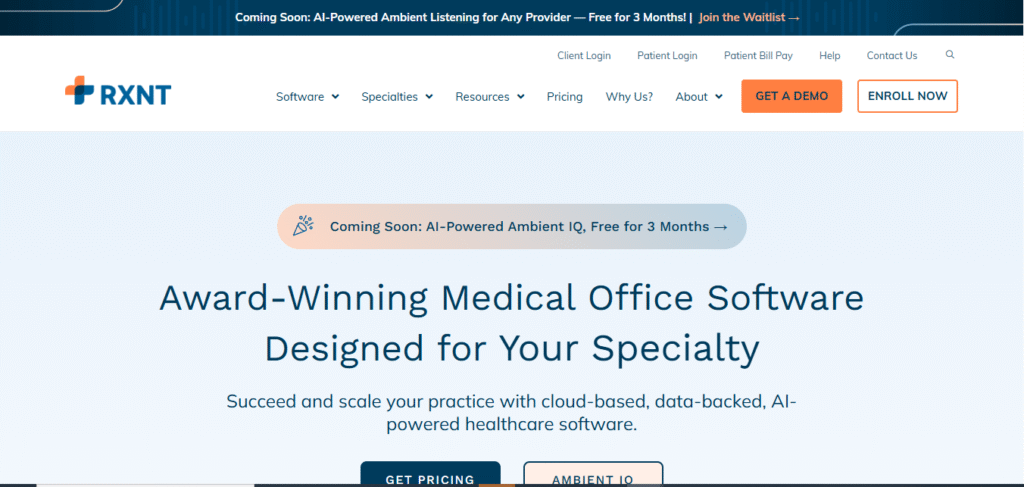
RXNT is a cloud-based medical billing, EHR, and practice management platform designed for healthcare providers who prioritize simplicity, accessibility, and affordability. It helps practices manage claims, payments, and patient scheduling with ease, ensuring efficient day-to-day operations.
With automated billing workflows, detailed reporting, and mobile-friendly access, RXNT provides an all-around solution for practices aiming to reduce manual processes and improve financial accuracy.
Key Features
- Automated Billing and Claims – Handles claim creation, submission, and tracking automatically to improve cash flow.
- Scheduling and Patient Management – Integrates appointment scheduling and patient data management with billing operations.
- Reporting and Analytics – Generates insights into billing performance, payments, and productivity.
- Online Payment Options – Simplifies patient billing and collections with secure online payment portals.
Pros
- Affordable and User-Friendly: Ideal for smaller practices seeking a budget-friendly yet powerful platform.
- Cloud-Based Access: Enables staff to work remotely and access data securely from anywhere.
- Excellent Customer Support: Known for responsive service and onboarding assistance.
Cons
- Limited Advanced Features: May lack the complexity required for enterprise-level operations.
- Occasional Update Issues: Some users report minor delays during software updates.
Ideal For
Small to mid-sized practices looking for an affordable, user-friendly medical billing solution with essential features for efficient claim management and financial reporting.
Conclusion:
Selecting the right medical billing software is one of the most critical decisions a healthcare practice can make. In today’s fast-paced healthcare environment, efficient billing and revenue cycle management are not just about financial performance — they directly impact patient satisfaction, operational efficiency, and compliance.
As explored above, the top 10 platforms — including AdvancedMD, Kareo, NextGen Healthcare, eClinicalWorks, Epic Systems, Practice EHR, athenahealth, CureMD, and RXNT — each bring unique strengths to the table. The right choice depends on your practice’s size, budget, and operational complexity.
For small and mid-sized practices: Solutions like Kareo, Practice EHR, CureMD, and RXNT offer affordability, ease of use, and essential features without unnecessary complexity.
For larger organizations and multi-specialty networks: Platforms like NextGen Healthcare, AdvancedMD, Epic Systems, and athenahealth provide scalability, deep reporting capabilities, and advanced automation suited for complex billing environments.
For flexible customization and analytics: eClinicalWorks stands out with its configurable workflows and data-driven insights.
When evaluating a system, consider the following key factors:
Automation and Accuracy – Ensure the platform supports automated claim submission, scrubbing, and follow-up to minimize denials.
Integration Capabilities – The best systems seamlessly connect EHR, practice management, and billing to create an all-in-one solution.
Scalability – Choose software that can grow with your practice’s patient volume and service range.
User Experience – A user-friendly interface saves staff time and reduces training needs.
Reporting and Analytics – Real-time dashboards and financial analytics help track revenue trends and uncover inefficiencies.
Patient Engagement – Online bill pay, reminders, and portals improve patient experience and payment collection rates.
As healthcare continues to move toward digital-first solutions and value-based care, investing in the right billing platform is more than a financial decision — it’s a strategic advantage. Whether you’re managing a small private clinic or a large hospital network, the ideal billing system will not only simplify revenue management but also empower your team to focus on what matters most: delivering quality patient care.