Scaling paid acquisition looks simple on the surface. Increase budgets, expand audiences, launch new creatives, and watch revenue grow. In reality, many brands hit a ceiling. Campaigns stall. Accounts face reviews. Performance swings without warning. Growth becomes unstable.
Some of these issues stem from strategy. Many come from infrastructure. Teams that rely on stable account frameworks, including solutions such as AdRevival agency accounts, often focus on preventing breakdowns before they happen.
If you want paid growth to compound, you need more than strong creatives and smart targeting. You need systems that can support scale.
Fragile Account Structures
As budgets rise, complexity increases. Campaigns multiply. Teams test new audiences and placements. Without clear structure, accounts become cluttered and hard to manage.
Disorganized naming conventions make reporting difficult. Overlapping audiences compete against each other. Conversion tracking fires inconsistently. Algorithms struggle to optimize when signals lack clarity.
To prevent this, build campaigns with long term management in mind. Use consistent naming standards. Separate testing from scaling campaigns. Audit tracking regularly. Clean structure supports efficient optimization and faster decision making.
Compliance Gaps and Policy Risk
At small spend levels, issues may go unnoticed. As you scale, scrutiny increases. Platforms rely on automated systems to detect policy violations. Minor inconsistencies in creatives or landing pages can trigger account reviews.
When an account faces restrictions, growth halts. Campaigns pause. Learning resets. Teams shift from optimization to damage control.
Prevention starts with understanding platform policies and applying them consistently. Review landing pages for compliance. Align messaging across ads and site content. Maintain stable billing details and clear ownership records.
Paid growth requires operational discipline, not only creative ambition.
Billing and Payment Interruptions
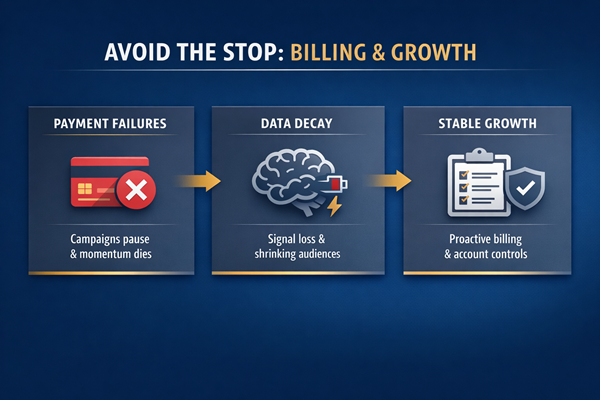
Payment failures create sudden stops in delivery. A declined card or disputed charge can pause campaigns at the worst time. For brands running aggressive scaling tests, this break in delivery disrupts momentum.
Algorithms depend on continuous data flow. When campaigns stop, performance signals decay. Retargeting pools shrink. Budget pacing resets.
Brands should treat billing setup as part of growth planning. Use reliable payment methods. Monitor transaction alerts. Ensure account permissions and access controls remain clear. These small steps reduce the risk of preventable interruptions.
Overreliance on One Channel
Many brands scale rapidly on a single platform. When results are strong, it feels efficient to concentrate spend. Yet dependence increases exposure.
Platform updates, policy shifts, or competitive pressure can change performance overnight. If all acquisition depends on one channel, revenue volatility rises.
Diversification does not mean spreading budgets thin. It means building parallel acquisition paths. Test new platforms gradually. Balance prospecting with retargeting. Support paid traffic with strong email capture and retention strategies.
Resilience grows when revenue sources remain flexible.
Weak Data Foundations
Scaling requires accurate data. Incomplete tracking distorts performance metrics. Misaligned attribution models create false signals. Teams may increase spend on campaigns that appear profitable but lack real margin.
To prevent this, audit analytics regularly. Confirm that conversion events reflect true business value. Align attribution windows with buying cycles. Integrate paid data with CRM insights when possible.
Reliable data allows teams to scale with confidence. It also prevents costly misjudgments that become magnified at higher budgets.
Reactive Instead of Proactive Management
As spend increases, stakes rise. Some teams respond to issues only after performance drops. This reactive approach leads to constant firefighting.
Proactive management focuses on monitoring account health indicators before problems escalate. Review policy notifications. Track billing stability. Audit creative approvals. Maintain documentation for compliance checks.
Growth at scale rewards steady oversight. It punishes neglect.
Building Durable Paid Systems
Preventing breakdowns requires a shift in mindset. Paid acquisition is not only about testing offers and adjusting bids. It is about building durable systems that support experimentation.
Strong infrastructure enables faster iteration. Stable accounts allow teams to focus on creative testing instead of recovery. Clear processes reduce human error as complexity grows.
When paid growth rests on reliable foundations, scaling becomes smoother. Teams gain confidence in their projections. Leaders can plan budgets with greater clarity.
Growth rarely collapses because a single ad underperforms. It breaks when systems fail under pressure. Brands that prepare for scale by strengthening structure, compliance, billing, and data create an environment where performance can compound.
Paid acquisition remains one of the most powerful growth levers available to digital brands. To unlock its full potential, treat operational stability as part of strategy. Build systems that can handle success before you chase it.