Many companies still treat SEO as a standalone marketing channel. They assign it to a specialist, track rankings, and review traffic reports. That approach limits its potential.
Modern search optimization works best when it functions as an integrated performance system.
A full-service Denver SEO agency often approaches search this way, aligning technical optimization, content strategy, analytics, and conversion design under one coordinated framework.
SEO Influences the Entire Customer Journey
Search touches every stage of the buying process. Early-stage users look for education. Mid-stage prospects compare options. High-intent visitors evaluate providers and make decisions.
When SEO operates in isolation, it often focuses on top-of-funnel content. A performance system maps keyword intent to each stage of the journey. Educational resources build authority and trust. Service or product pages capture transactional intent. Supporting assets address objections, pricing questions, and implementation concerns.
This structured alignment ensures that organic visibility supports revenue goals rather than traffic volume alone. It also creates consistency. Prospects encounter helpful content at every stage, which builds confidence and familiarity before they ever speak with sales.
Technical Foundations Drive Sustainable Growth
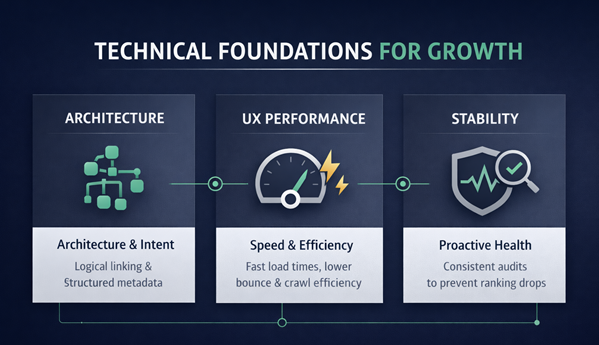
A performance system begins with technical health. Search engines reward sites that load quickly, offer clear navigation, and provide structured information that is easy to interpret.
Site architecture should reflect user intent. Pages must connect logically through internal links. Metadata should align with real search behavior, not assumptions. Structured data can help search engines understand entities, services, and relationships across the site.
Technical improvements also strengthen user experience. Faster load times reduce bounce rates. Logical navigation increases engagement. Clean code improves crawl efficiency and indexation.
Ongoing technical monitoring prevents small issues from becoming large setbacks. Instead of reacting to ranking drops, teams maintain performance through consistent audits and updates. This proactive mindset supports steady growth.
Content Connects Strategy to Revenue
Content plays a central role in a performance-driven SEO model. Each page should serve a defined purpose tied to business objectives.
Keyword research identifies demand patterns. Strategic planning determines which topics deserve focus based on revenue potential. Execution transforms those insights into structured, well-written pages that answer real questions.
High-performing organizations treat content as an evolving asset. They revisit and refine it based on data. They expand successful topic clusters. They consolidate overlapping pages. They update statistics and examples to maintain accuracy.
This disciplined approach turns content into a measurable growth lever rather than a publishing routine. It also strengthens authority. Over time, search engines recognize depth, clarity, and consistency within a specific domain of expertise.
Analytics Provide the Feedback Loop
Without measurement, SEO becomes guesswork. A performance system integrates analytics from the start and treats data as a guide.
Teams track rankings and traffic, yet they go further. They monitor engagement signals such as time on page, scroll depth, and return visits. They measure assisted conversions and form submissions tied to organic sessions. They evaluate how specific landing pages influence pipeline value.
Attribution models help clarify how organic search contributes to business outcomes. While no model is perfect, consistent tracking reveals trends. If certain service pages attract qualified leads, expand that theme. If traffic increases without conversion lift, refine messaging or calls to action.
This feedback loop creates accountability. SEO efforts tie directly to performance indicators that leadership understands. Over time, this alignment strengthens internal support for continued investment.
Conversion Optimization Strengthens Results
Traffic alone does not generate revenue. Visitors must take action in order for SEO to deliver measurable value.
A performance-focused SEO strategy pairs optimization with conversion design. Pages should present value clearly and quickly. Headlines must communicate relevance. Calls to action should align with user intent and stage of awareness.
Forms should minimize friction while collecting necessary information. Trust signals such as testimonials, certifications, or case summaries can reduce hesitation. Clear contact options provide flexibility for different preferences.
Testing supports continuous improvement. Teams can evaluate variations in layout, messaging, or call to action placement. Even incremental gains in conversion rate can produce meaningful revenue impact when traffic remains consistent.
When SEO and conversion optimization operate together, growth becomes more predictable and less dependent on constant traffic expansion.
Cross-Channel Coordination Enhances Impact
Search does not operate in isolation from paid media, email marketing, or social outreach. A performance system coordinates messaging and insights across channels.
Organic keyword data can inform paid advertising campaigns. High-converting queries may reveal themes that deserve additional investment. Content that performs well in search can support email campaigns or thought leadership initiatives.
This coordination creates alignment. Prospects encounter consistent language and value propositions across touchpoints. That consistency strengthens brand perception and shortens decision cycles.
Cross-channel insight also improves efficiency. Teams can identify which messages resonate most and replicate that success in multiple formats. Instead of separate efforts competing for attention, channels support one another.
From Rankings to Revenue Alignment
The most successful organizations redefine how they measure SEO success. Rankings provide directional signals. Revenue confirms real impact.
Leadership teams benefit from dashboards that connect organic visibility to business metrics. When decision makers see how search contributes to lead quality and sales performance, conversations shift. SEO moves from a tactical task to a strategic asset.
This shift changes resource allocation. Technical improvements, content development, and analytics integration receive proper attention because they support measurable outcomes. The organization views search as infrastructure rather than a marketing experiment.
Companies that adopt this systems mindset build resilience. They respond to algorithm updates with structured analysis rather than panic. They refine strategy based on performance data. They maintain focus on long-term growth instead of short-term fluctuations.
SEO performs best when it supports the entire digital ecosystem. Treat it as a performance system, and it can drive sustained visibility, stronger engagement, and consistent revenue contribution over time.