Credit card companies target young adults using a mix of rewards programs, sign-up bonuses, influencer marketing, student-focused offers, and digital-first campaigns. These tactics are built around how young people spend, what they value, and how they use the internet daily.
Instead of traditional advertising, companies focus on lifestyle-based marketing, offering cashback on food delivery, travel perks, shopping discounts, and subscription benefits. They also use limited-time bonuses and referral rewards to create urgency and encourage quick sign-ups.
At the same time, brands invest heavily in social media and influencer partnerships, where creators explain card benefits in a simple and relatable way. Many companies also design easy-to-get student cards with low limits and minimal fees to bring in first-time users.
On top of that, everything is made mobile-first, from instant approvals to real-time spending alerts, so the entire experience feels fast and simple.
In short, credit card companies don’t just sell a financial product, they promote a lifestyle, convenience, and rewards-driven experience that fits perfectly into the daily life of young adults.
Why Credit Card Companies Focus on Young Adults
Credit card companies see young adults as one of the most valuable customer groups. The earlier they acquire a user, the longer they can retain them and earn from their spending habits.
Here’s why this segment is so important:
- High lifetime value
A young customer today can stay with the same brand for years, generating long-term revenue through transactions, fees, and upgrades. - Early brand loyalty building
If a user starts with one card and has a good experience, they are more likely to stick with the same provider instead of switching later. - First-time credit users
Many young adults are using credit for the first time, which makes them more open to trying new financial products. - Strong influence on peers and family spending
Young people often share recommendations, trends, and experiences, which can influence others to choose the same card or brand.
In simple terms, credit card companies are not just targeting immediate users, they are investing in long-term relationships.
Top Marketing Tactics Used by Credit Card Companies
1. Attractive Rewards & Cashback Programs
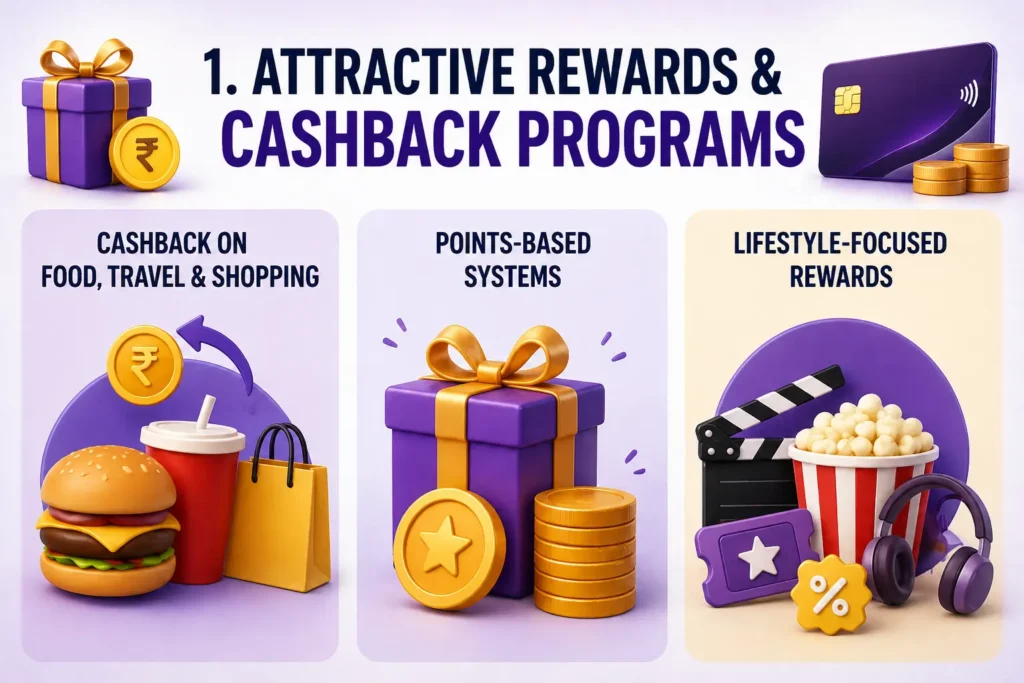
One of the most common ways credit card companies attract young adults is through rewards and cashback. These offers are built around everyday spending, so users feel like they are getting something back for purchases they already make.
- Cashback on food, travel, and shopping
Discounts and cashback on things like online food orders, flight bookings, and eCommerce purchases make the card feel instantly useful. - Points-based systems
Users earn points on every transaction, which they can redeem for products, vouchers, or even flight tickets. - Lifestyle-focused rewards
Benefits like movie tickets, dining deals, and subscription discounts (music, OTT platforms) connect directly with how young adults spend their time and money.
Why it works:
These rewards align closely with real spending habits, so instead of feeling like an extra feature, they feel like a natural extension of everyday life.
2. Sign-Up Bonuses & Welcome Offers
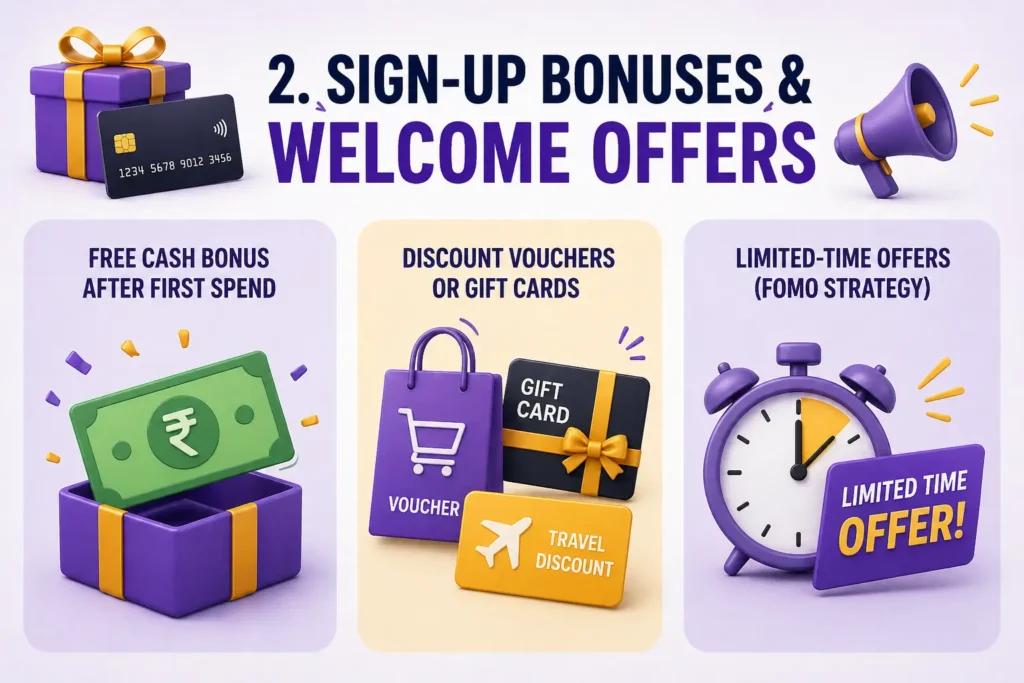
Another powerful tactic is offering strong incentives right at the start. These welcome benefits are designed to push users to apply quickly and start using the card immediately.
- Free cash bonuses after first spend
Users receive a fixed bonus once they spend a certain amount within the first few months. - Discount vouchers or gift cards
Offers may include shopping vouchers, travel discounts, or brand-specific gift cards. - Limited-time offers (FOMO strategy)
Time-bound deals create urgency and increase conversions by making users feel they might miss out.
Insight:
Promotional incentives like interest-free periods, zero annual fees, or bonus rewards reduce the entry barrier and make the card more appealing to first-time users.
3. Student & Beginner-Friendly Credit Cards
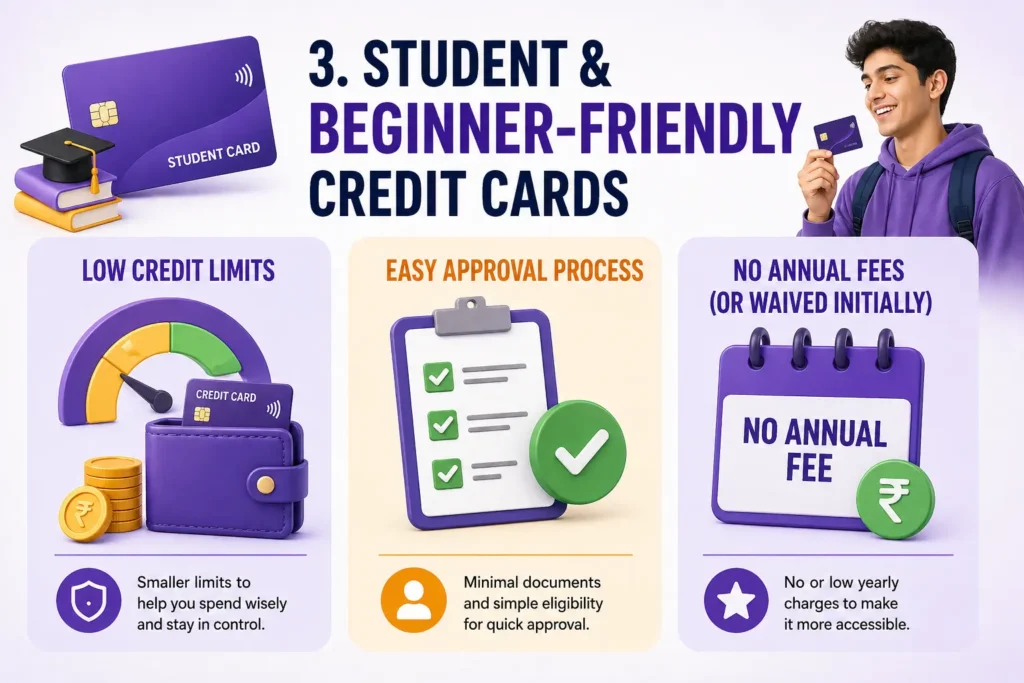
Credit card companies design special cards for students and first-time users to make entry into credit simple and low risk.
- Low credit limits
These cards come with smaller limits to reduce the risk of overspending and make it easier to manage repayments. - Easy approval process
Minimal documentation and relaxed eligibility criteria help users get approved even without a credit history. - No annual fees (or waived initially)
Many beginner cards remove or reduce yearly charges, making them more accessible.
Purpose:
These cards are built to help users start their credit journey, build a credit history, and learn responsible usage without heavy financial pressure.
4. Influencer & Social Media Marketing
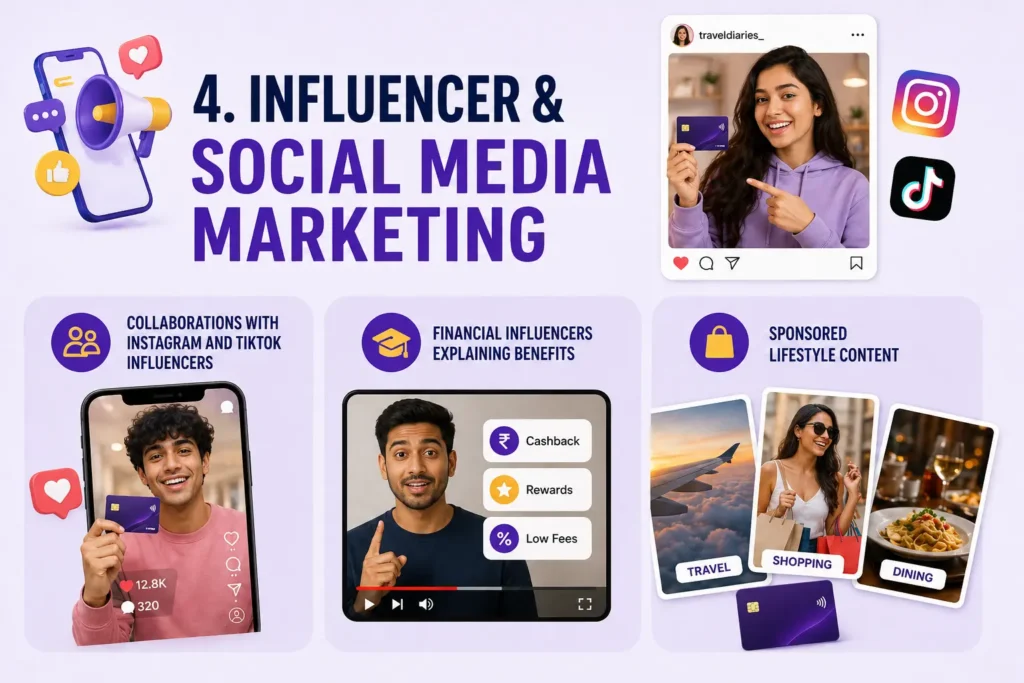
Credit card companies actively use social media to reach young adults where they spend most of their time. Instead of traditional ads, they rely on creators and relatable content.
- Collaborations with Instagram and TikTok influencers
Brands partner with content creators who already have a strong connection with their audience. - Financial influencers explaining benefits
Creators break down features like cashback, rewards, and fees in simple terms, making it easier to understand. - Sponsored lifestyle content
Posts showing travel, shopping, dining, and everyday use of the card make it feel practical and desirable.
Why it works:
People are more likely to trust recommendations from someone they follow, making the message feel real and easier to connect with.
5. Digital-First & Mobile App Experience
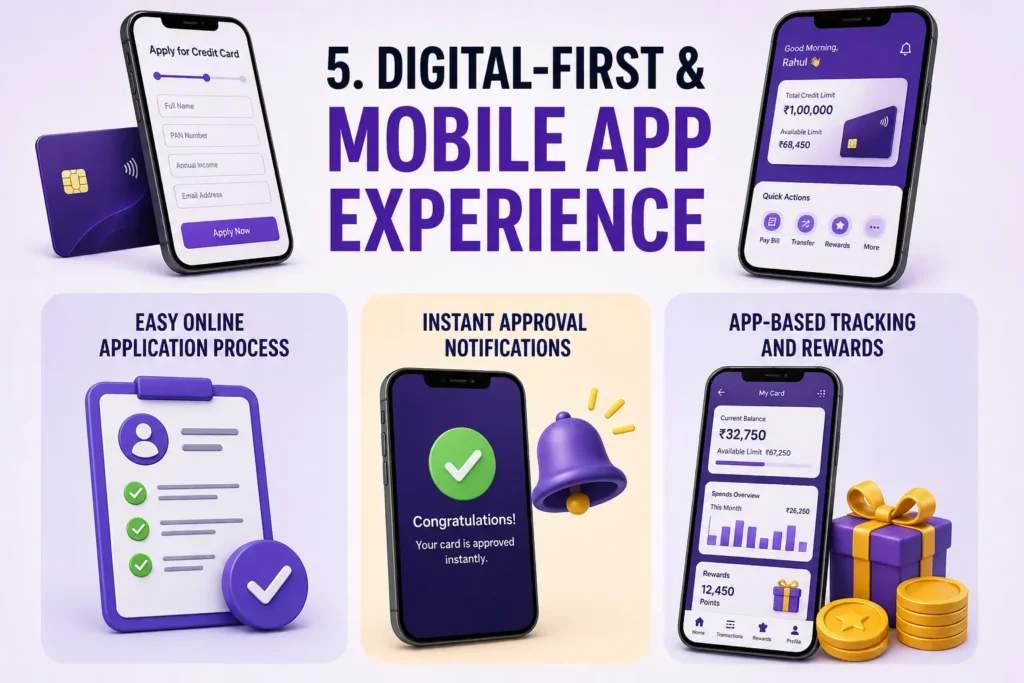
Credit card companies design their entire process to be fast, simple, and mobile-friendly, keeping in mind how young adults prefer to manage everything on their phones.
- Easy online application process
Users can apply within minutes through a website or app without paperwork or branch visits. - Instant approval notifications
Many platforms offer quick approvals or real-time updates, reducing waiting time and friction. - App-based tracking and rewards
Mobile apps let users track spending, view rewards, redeem points, and manage payments in one place.
Why it works:
This approach fits perfectly with the digital habits of young users, making the experience smooth, convenient, and always accessible.
6. Buy Now, Pay Later (BNPL) Integration
Credit card companies are increasingly adding BNPL features to match how young adults prefer to manage spending without paying everything upfront.
- Split payments into installments
Users can divide a purchase into smaller monthly payments, making bigger expenses feel more manageable. - Interest-free short-term credit options
Many BNPL plans offer zero interest for a limited period, which makes them attractive for short-term use. - Partnerships with eCommerce platforms
Integration with online stores allows users to choose BNPL directly at checkout, making the process quick and seamless.
Why it works:
It gives users more control over their cash flow while still allowing them to make purchases when they need them.
7. Gamification & Engagement Strategies
To keep young users active and engaged, credit card companies turn everyday usage into something interactive and rewarding.
- Rewards for usage milestones
Users get bonuses when they hit certain spending goals or complete specific actions. - Points, badges, or levels
Progress systems make the experience feel like a game, encouraging continued usage. - Learning plus earning apps
Some platforms combine financial education with rewards, helping users learn while they earn benefits.
Example:
Some apps use gamified features like challenges, streaks, or quizzes to make financial learning more engaging and keep users coming back regularly.
8. Campus & Event Marketing
Credit card companies often go directly to where young adults are, especially colleges and youth-focused events. This allows them to interact with potential users in real life.
- College partnerships
Brands collaborate with universities to promote student credit cards and financial tools. - On-campus promotions
Stalls, booths, and sign-up drives make it easy for students to learn and apply on the spot. - Event sponsorships
Sponsoring college fests, concerts, and youth events helps brands stay visible and relevant.
Why it works:
It gives companies direct access to their target audience in a familiar setting, making it easier to build trust and encourage sign-ups.
9. Personalized Offers Using Data
Credit card companies use data to understand user behavior and deliver offers that feel more relevant instead of generic promotions.
- Spending-based recommendations
Offers are tailored based on where and how users spend, such as dining, travel, or online shopping. - Targeted email and SMS campaigns
Users receive customized deals, reminders, and updates that match their activity and preferences. - AI-driven offers
Advanced systems analyze patterns and suggest the right rewards, upgrades, or benefits at the right time.
Why it works:
When offers match real needs and habits, users are more likely to engage, use the card more often, and stay loyal to the brand.
10. Lifestyle Branding & Emotional Appeal
Credit card companies don’t just promote features, they sell a lifestyle that young adults want to be part of.
- Ads showing travel, freedom, and success
Campaigns often highlight experiences like vacations, shopping, and social life to make the card feel aspirational. - Messaging focused on independence
Credit cards are positioned as a step toward financial freedom and self-reliance. - Positioning credit cards as lifestyle tools
Instead of just a payment method, the card is presented as something that enhances everyday life.
Why it works:
It connects emotionally with users, making the card feel like a symbol of growth, freedom, and modern living rather than just a financial product.
Psychological Triggers Behind These Tactics
Behind every offer and campaign, there are simple psychological triggers that influence how young adults make decisions.
- Fear of missing out (FOMO)
Limited-time offers and exclusive deals create urgency, pushing users to act quickly so they don’t miss a benefit. - Instant gratification
Cashback, rewards, and quick approvals give immediate satisfaction, making the experience feel rewarding right away. - Social proof (influencers and peers)
Seeing others use and recommend a card builds trust and reduces hesitation. - Reward-seeking behavior
Earning points, cashback, or perks encourages users to keep spending to gain more benefits.
Why it matters:
These triggers shape user behavior and make marketing campaigns more effective by aligning with natural decision-making patterns.
Pros and Cons for Young Adults
Using a credit card can be helpful, but it also comes with risks. Understanding both sides makes it easier to use credit wisely.
Pros
- Easy access to credit
Allows users to make purchases even when they don’t have immediate cash. - Rewards and savings
Cashback, points, and discounts can help reduce overall spending. - Builds credit history
Responsible usage helps improve credit score, which is useful for future loans and financial needs.
Cons
- Risk of overspending
Easy access to credit can lead to spending more than planned. - Debt accumulation
Carrying unpaid balances can quickly turn into long-term debt. - Hidden fees and interest
Late fees, high interest rates, and other charges can add up if not managed carefully.
How Young Adults Can Evaluate These Offers
Not every credit card offer is as good as it looks. Taking a few minutes to review the details can help avoid problems later.
- Check interest rates and fees
Look at the annual percentage rate (APR), late fees, and any hidden charges before applying. - Understand reward conditions
Some rewards come with limits or conditions. Make sure you know how to earn and redeem them. - Avoid unnecessary spending
Don’t spend just to earn rewards. Only use the card for planned and essential purchases. - Monitor credit usage
Keep track of how much you spend and try to stay within a safe limit to avoid debt.
A good credit card is not just about rewards, it’s about how well it fits your spending habits and how easily you can manage repayments.
FAQs (People Also Ask Optimization)
1. Why do credit card companies target young adults?
Because they can become long-term customers and often influence spending decisions within their social circle and family.
2. What is the most effective tactic used?
Rewards programs and sign-up bonuses are among the most effective because they offer immediate and clear value.
3. Are student credit cards safe?
Yes, they are safe if used responsibly, with timely payments and controlled spending.
4. How do influencers promote credit cards?
Through sponsored posts, short videos, and simple explanations of benefits that make the card easier to understand.
5. Do rewards programs encourage overspending?
They can, especially if users spend more than planned just to earn rewards.
Conclusion
Credit card companies use a mix of rewards, digital strategies, and psychological triggers to attract young adults and keep them engaged. From cashback and welcome bonuses to influencer campaigns and mobile-first experiences, every tactic is designed to fit into everyday life.
While these offers can provide real value, it’s important to look beyond the surface. Understanding how these strategies work helps you choose the right card, avoid unnecessary debt, and make better financial decisions over time.
In the end, a credit card should be a useful tool, not a financial burden.