The demand for high-quality video content has never been higher. Marketing teams today face a relentless cycle of content creation. To stay competitive, they must produce dozens of ad variations to see what resonates with their audience.
This constant need for new creative assets often leads to a significant problem: creative overload. Producing a single high-quality video ad traditionally requires a scriptwriter, a videographer, an editor, and hours of post-production. When you multiply that by the twenty variations needed for a robust A/B test, the process becomes unsustainable.
The emergence of the ai ad generator has fundamentally changed this dynamic. By automating the most labor-intensive parts of video production, these tools allow teams to scale their creative output without increasing their headcount or budget.
In this article, we will explore how modern AI video technology solves the bottleneck of ad variation. We will also look at how professional tools like Higgsfield empower creators to test more effectively.
The Problem: The Creative Bottleneck in Modern Marketing
In digital advertising, the “winner” is rarely the first video you create. Performance marketing relies heavily on A/B testing to find the perfect combination of visuals, hooks, and calls to action.
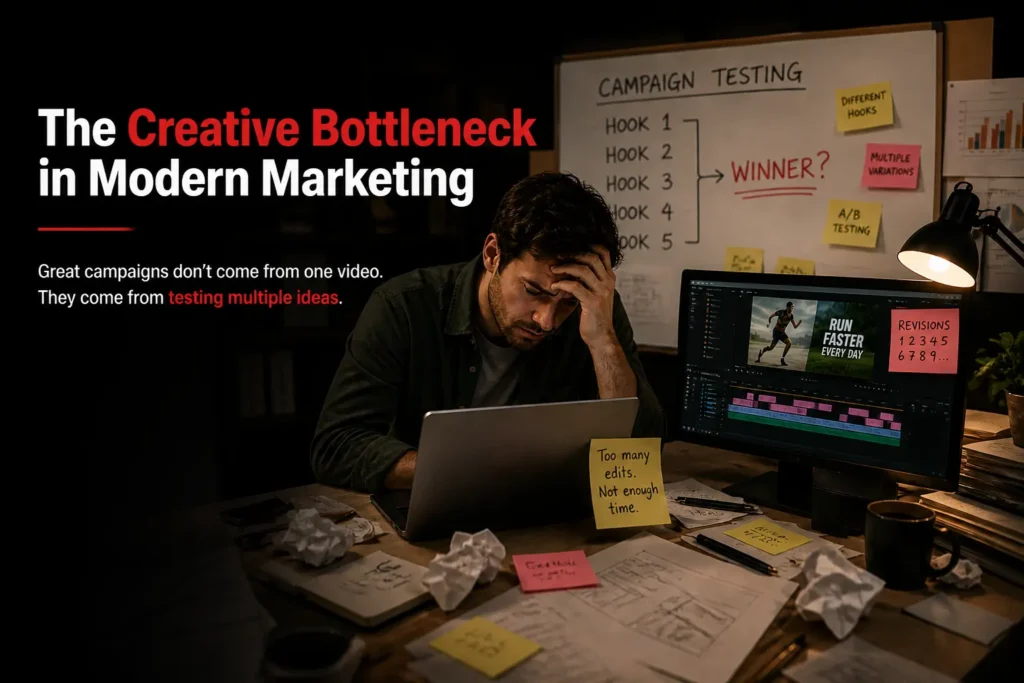
Unfortunately, traditional video production is slow. If a team wants to test five different opening scenes, they often have to film five different segments. This creates several challenges:
- High production costs for every new variation.
- Long turnaround times that delay campaign launches.
- Creative fatigue as designers spend more time on repetitive tasks than on strategy.
- Difficulty maintaining brand consistency across different edits.
When teams are overloaded, they stop testing. They settle for “good enough” content because they lack the bandwidth to iterate. This leads to stagnating campaign performance and wasted ad spend.
Deep Dive: How Seedance 2.0 Changes the Landscape
To solve the problem of creative overload, the underlying technology must be capable of producing professional-grade results with minimal manual intervention. This is where the Seedance 2.0 model comes into play.
Developed by ByteDance, Seedance 2.0 is a state-of-the-art AI video generation model. It is designed specifically for high-end video production and cinematic quality. Unlike early AI video tools that produced shaky or distorted images, Seedance 2.0 offers frame-level precision.
Key Capabilities of Seedance 2.0
- Multi-Asset Input: The model accepts up to 12 different assets as inputs. This includes text prompts, images, existing videos, and audio files.
- Cinematic Multi-Shot Videos: It can generate complex sequences with multiple camera angles while keeping the scene cohesive.
- Character Consistency: One of the biggest hurdles in AI video is keeping a character looking the same across different shots. Seedance 2.0 solves this, ensuring the “talent” in your ad looks consistent.
- Native Audio Sync: The model synchronizes character movements and visual cues with the audio perfectly, creating a professional feel.
Higgsfield has integrated this powerful model into its platform. This allows users on all subscription plans to access the cutting-edge capabilities of Seedance 2.0 without needing expensive hardware or technical expertise.
Strategy: Using an AI Ad Generator to Test Without Overload
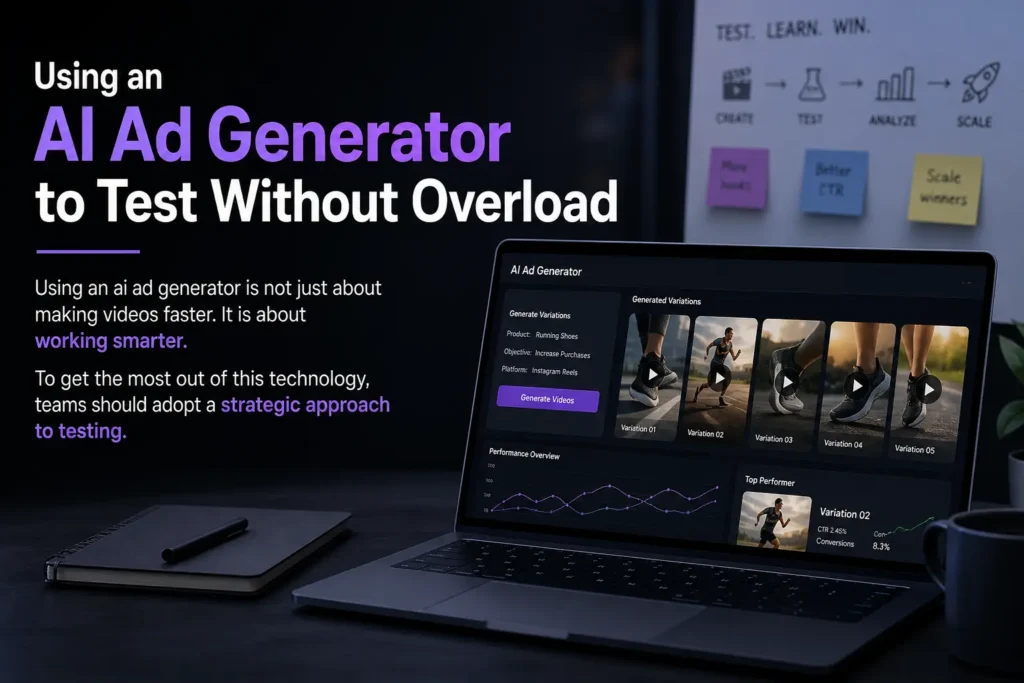
Using an ai ad generator is not just about making videos faster. It is about working smarter. To get the most out of this technology, teams should adopt a strategic approach to testing.
1. Test Different Hooks First
The first three seconds of a video ad are the most critical. With an AI tool, you can create ten different openings for the same product in minutes.
- Try an emotional opening versus a data-driven opening.
- Swap out a lifestyle shot for a close-up product shot.
- Use different AI avatars to see which “face” your audience trusts more.
2. Transition from UGC to CGI
Audiences respond differently to different visual styles. Some platforms, like TikTok, favor User Generated Content (UGC). Others, like YouTube or television, may require high-fidelity CGI.
Higgsfield allows teams to turn a simple product URL into various formats. You can generate a “raw” UGC-style video or a polished cinematic commercial from the same link. This allows you to test which aesthetic drives the highest conversion rate for your specific niche.
3. Leverage Multi-Shot Precision
Variation does not have to mean changing the whole video. Sometimes, changing a single shot in a sequence can improve performance. Because Seedance 2.0 supports multi-shot generation, you can keep the core of your ad the same while swapping out specific segments to see if a different background or camera angle performs better.
4. Rapid Format Adaptation
An ad that works on Instagram Stories might fail on a desktop Facebook feed. An ai ad generator can instantly reformat your content into 9 different ad formats. This ensures you are testing not just the content, but the delivery for each specific platform.
How Higgsfield Enables Professional Scaling
Higgsfield is built specifically for marketing teams who need to scale. It is more than just a video generator: it is a comprehensive creative suite. By providing a user-friendly interface for the Seedance 2.0 model, Higgsfield removes the technical barriers to high-end video production.
Streamlined Workflow
The platform allows you to turn any product URL into a scroll-stopping video ad. This “link-to-video” workflow saves hours of manual asset gathering. The AI analyzes the product page, understands the selling points, and generates a video that reflects the brand’s identity.
Diverse Creative Options
With over 40+ AI avatars and a library of styles, Higgsfield ensures your ads never look repetitive. You can create a virtual “spokesperson” for your brand who remains consistent across every video variation you produce.
Efficiency and Precision
The ai ad generator within Higgsfield handles the heavy lifting of audio sync and frame-level precision. This means your team spends less time fixing technical glitches and more time analyzing the results of your A/B tests.
Actionable Tips for Marketing Teams
If you are ready to implement an ai ad generator into your workflow, follow these steps to avoid overload while maximizing output:
- Define Your Variables: Before generating videos, decide exactly what you want to test (e.g., the headline, the background, or the avatar).
- Use Batch Generation: Instead of creating one video at a time, use Higgsfield to generate five variations at once.
- Monitor and Iterate: Use the data from your initial tests to inform your next round of AI generation. If the UGC style performs 20% better, double down on those variations.
- Maintain a Brand Kit: Use the character consistency features to ensure that even though you are testing variations, the brand remains recognizable.
The goal of using an ai ad generator is to free your team from the “grunt work” of video editing. When the machine handles the production, the humans can focus on the big ideas.
Conclusion
Testing ad variations is the only way to ensure long-term success in digital marketing. However, the manual effort required to produce these variations has historically been a major barrier for most teams.
By leveraging the Seedance 2.0 model through Higgsfield, teams can now produce cinematic, high-precision video ads in a fraction of the time. This technology allows for the testing of multiple hooks, styles, and formats without causing team burnout.
The era of choosing between quality and quantity is over. With a professional ai ad generator, you can have both. Start by turning your product links into high-performing video assets and let the AI handle the heavy lifting of creative iteration.