Last reviewed: October 2026. Prices, inventory and features change often, so check each platform’s current numbers before you spend anything.
The best guest posting marketplaces give you access to relevant sites with real readers, at a price that matches what the placement is worth. The highest DR, the biggest catalogue and the lowest price are not the goal. Relevance and genuine traffic are.
This guide shows you which marketplaces are worth a look, who each one suits, and how to vet any placement before you pay. It also covers cost, Google’s rules on paid links, and when a marketplace is the wrong tool.
One honest note before we start. I have not placed orders on every platform below, so the profiles describe how each one positions itself and what to verify. Treat them as a shortlist to test, not a verdict.
What is a guest posting marketplace?
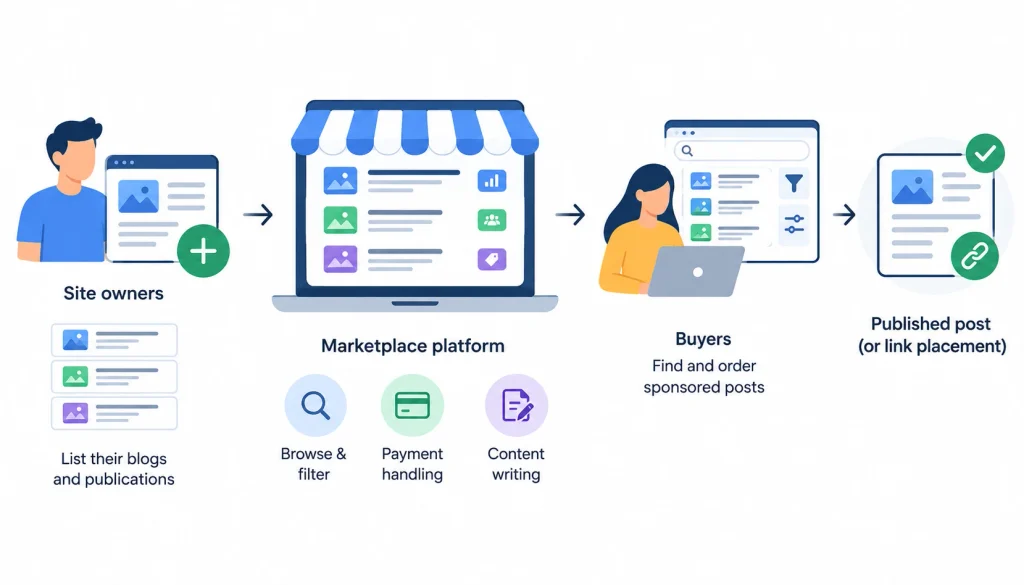
A guest posting marketplace is an online platform where site owners list their blogs and publications for sale, and buyers browse them, filter by metrics like traffic and niche, and order a sponsored article or link placement. The marketplace handles listings, payment and often content writing.
Think of it as a catalogue of publishers. You pick the site, the platform takes a fee, and the publisher posts your article.
The quality of what you get depends almost entirely on how well you vet the listing, because most marketplaces sell both strong and weak sites side by side.
Guest blogging has a long history as a way to reach another site’s audience. Buying a placement through a marketplace is a paid version of that, which matters for the SEO rules we cover later.
Best guest posting marketplaces
Each profile below explains what the platform is best known for, who it may suit, and what to check before placing an order. Marketplace prices, publisher availability, traffic data, and site metrics can change, so confirm current details on the platform itself before buying.
1. Collaborator: Best for Publisher Data
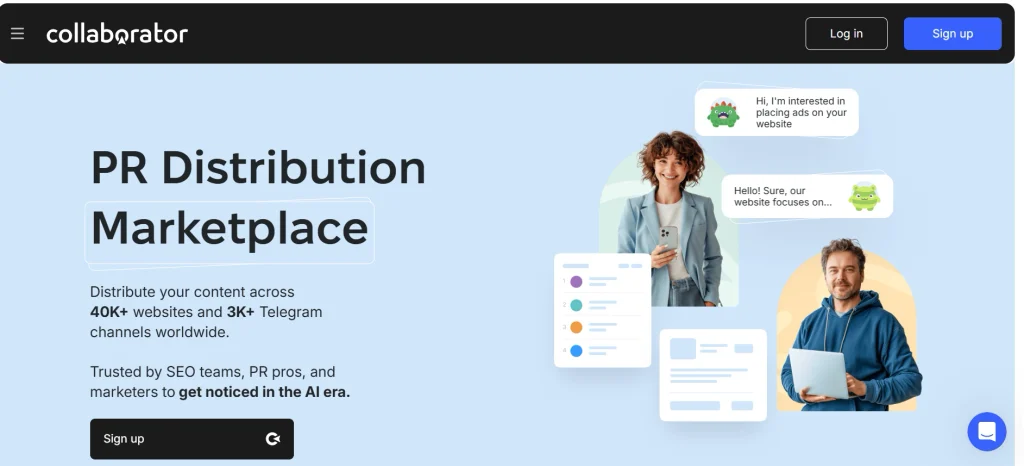
Collaborator is a self-serve guest posting marketplace that lets buyers browse and filter publishers using different website and audience metrics. This makes it useful when you want to compare a large number of potential sites without contacting publishers individually.
It can be a good starting point for agencies, SEO teams, and businesses that want more control over publisher selection.
However, don’t treat every displayed metric as independently verified. Before ordering, check where the traffic and authority figures come from and compare them with data from tools such as Ahrefs, Semrush, or Similarweb where appropriate.
Watch for: inflated metrics, low organic traffic, irrelevant audiences, and publishers with unusually high volumes of sponsored content.
2. WhitePress: Best for Larger and Multilingual Campaigns
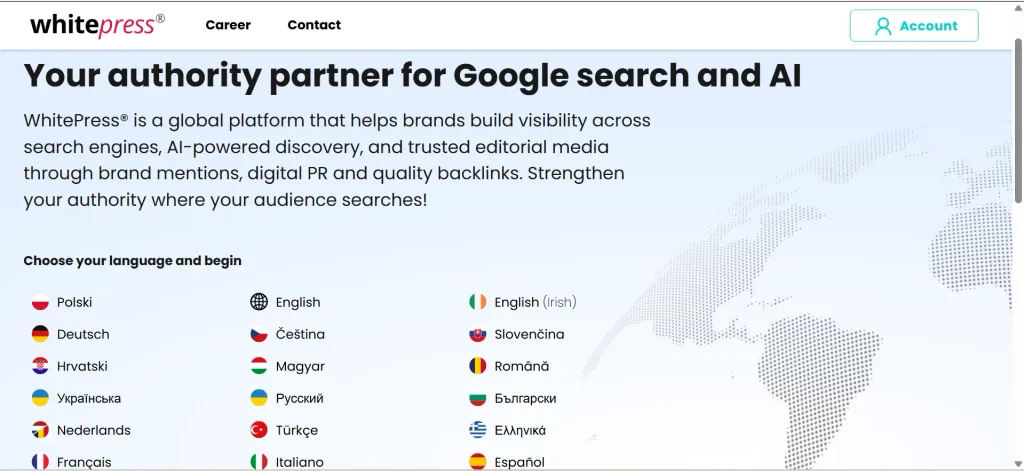
WhitePress is designed for buyers who need content creation and publisher placements across multiple countries and languages. That makes it particularly useful for agencies, international brands, and businesses running SEO campaigns across several markets.
Its broader publisher network can save considerable outreach time when you need placements in different regions. However, international coverage does not automatically mean consistent quality. A site that performs well in one country may have weak visibility or little relevance in another.
Watch for: local traffic quality, language-specific content standards, topical relevance, and whether the audience matches the country you are targeting.
3. Adsy: Best for Beginners
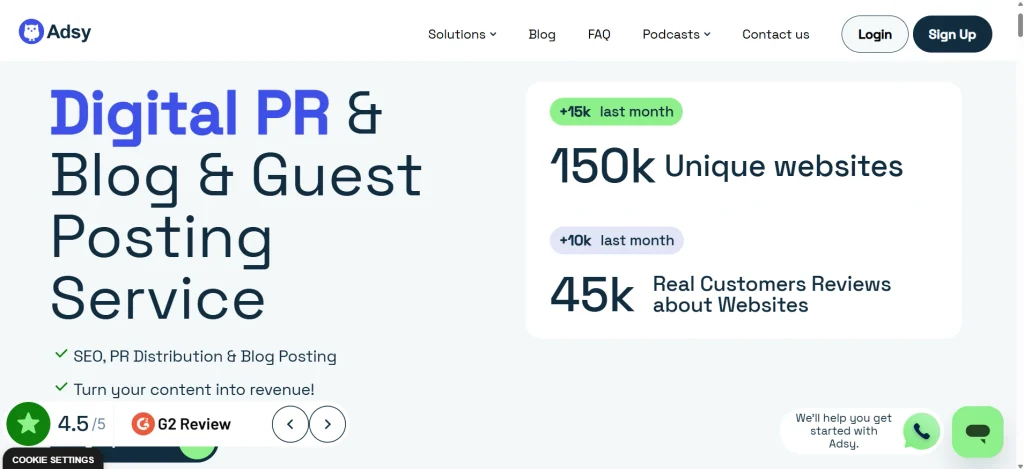
Adsy provides a large catalogue of publishers and a relatively straightforward ordering process, which can make it approachable for someone buying guest posts for the first time. You can browse potential websites instead of building a publisher list from scratch.
The size of the catalogue is both an advantage and a drawback. More options mean more opportunities to find a suitable site, but they also mean you need to filter out weak publishers.
Don’t select a site simply because it has a high DR or DA. Look at organic traffic, traffic trends, topical relevance, referring domains, and the quality of recently published articles.
Watch for: high-authority domains with little real traffic, unrelated websites, and sites publishing large numbers of guest posts.
4. PRNEWS.IO: Best for PR-Style Placements
PRNEWS.IO focuses more heavily on sponsored content and placements across news and media-style publications. This can make it a better fit for brand awareness, announcements, product launches, and PR campaigns than for purely transactional link building.
The audience and publication context matter more here than the backlink alone. A media placement can have value through visibility and referral traffic even when the link itself provides limited SEO value.
If your primary goal is a commercial backlink, check the publication’s linking rules before ordering. Find out whether commercial links are allowed and whether the article or link will carry a sponsored or other qualifying attribute.
Watch for: publications that look authoritative but have little relevant readership, unclear link policies, or high prices without a corresponding audience benefit.
5. Linkhouse: Best for Multi-Country Link Building
Linkhouse is positioned around publisher placements across multiple markets, making it useful for businesses and agencies working on international SEO campaigns.
Its international inventory can help when you need backlinks from websites in specific countries rather than relying entirely on general global publications. However, country-level targeting is important. A website may have substantial worldwide traffic while receiving very little traffic from your target market.
Ask for traffic information by country and, where possible, review the site’s audience distribution independently.
Watch for: global traffic being presented without country-level context, weak local relevance, and websites whose content does not match the market you are targeting.
6. Getfluence: Best for Premium Sponsored Content
Getfluence focuses on sponsored content and placements on higher-profile publications. It can be suitable for brands that care about visibility, media exposure, and association with established publications rather than simply acquiring inexpensive backlinks.
Premium placement does not automatically mean better SEO or better business results. A well-known publication may still be a poor investment if its audience does not overlap with your target customers.
Before paying a premium, compare the publication’s audience, geographic reach, topical relevance, estimated traffic, and expected referral value against the total placement cost.
Watch for: paying for brand recognition alone without confirming whether the publication reaches the people you actually want to reach.
7. FatJoe: Best for Managed Guest Posting
FatJoe takes a more managed-service approach to guest posting, which can be useful for teams that would rather outsource publisher research and content production than manage individual placements themselves.
The main benefit is convenience. Instead of reviewing a large catalogue yourself, you can delegate more of the process. The trade-off is that you generally have less direct control than you would with a self-serve marketplace.
Before starting a campaign, ask how publisher selection works, whether you can approve websites before content is created, what happens if you reject a placement, and whether replacement policies apply.
Watch for: limited publisher control, unclear quality standards, and campaigns where you cannot review the target site before publication.
8. Vefogix: Best for Smaller Budgets
Vefogix is often considered by buyers looking for more budget-friendly guest posting and link-building placements. Lower prices can make it attractive to smaller businesses or campaigns with limited budgets.
However, price should never be the main quality filter. A cheap placement can become expensive if the website has no relevant audience, poor content, declining traffic, or a history of publishing large volumes of unrelated sponsored articles.
Use the same publisher-vetting process regardless of price. A low-cost placement should still pass your minimum requirements for relevance, traffic, content quality, and publisher credibility.
Watch for: extremely cheap placements, weak organic visibility, unrelated websites, and publishers accepting almost any topic.
9. Link Publishers: Best for Guest Posts and Niche Edits
Link Publishers offers both new guest posts and link insertions into existing content. These are two different placement types and should be evaluated separately.
A new guest post gives you control over the article’s context and topic, while a link insertion places your link within an existing page. An existing page may already have traffic, rankings, backlinks, and search visibility, but that does not automatically make every insertion valuable.
Before ordering, determine whether you need a new article or an existing-page placement. For link insertions, check the page itself rather than evaluating only the overall domain.
Watch for: irrelevant existing pages, pages with no organic traffic, excessive outbound links, and placements that look forced into the surrounding content.
10. iCopify: Best for Low-Cost Self-Serve Orders
iCopify provides a self-serve approach that can appeal to buyers looking for relatively inexpensive placements without committing to a fully managed campaign.
The convenience of self-service means more responsibility falls on the buyer. Before ordering, review the publisher’s recent articles rather than relying entirely on the marketplace’s headline metrics.
Look at whether the site publishes consistently, whether its content is useful and original, whether topics are related, and whether its pages appear to receive genuine search traffic.
Watch for: sites publishing large volumes of unrelated guest posts, thin articles, unusual backlink patterns, and domains with strong metrics but weak current visibility.
11. PressWhizz: Best for Publisher Filtering
PressWhizz is useful for buyers who want filtering options to narrow down potential publishers. Effective filtering can significantly reduce the time required to build a shortlist.
However, filters are only useful when the underlying data is accurate and current. A platform may let you filter by authority, traffic, country, or niche, but you should still manually inspect the shortlisted websites.
Think of marketplace filters as a discovery tool, not a final quality check.
Watch for: outdated metrics, incomplete traffic information, and publishers that meet numerical filters but fail your manual relevance and quality checks.
12. Authority Builders: Best for Traffic-Focused Sites
Authority Builders emphasizes placements on websites with genuine organic traffic, which aligns with a more quality-focused approach to publisher selection.
This can be useful when your objective goes beyond acquiring a backlink and includes potential referral traffic and exposure to an established audience. However, traffic alone is not enough. A website can receive significant traffic from topics completely unrelated to your business.
Review the site’s traffic sources, top-performing pages, geographic audience, and topical coverage before deciding whether the placement makes sense.
Watch for: traffic coming from irrelevant countries or topics, sudden traffic spikes, declining organic visibility, and sites that don’t match your target audience.
13. Bazoom and Ereferer: Best for Volume and International Reach
Bazoom and Ereferer can be useful when you need access to a larger pool of publishers or want to run campaigns across multiple countries and markets.
Large inventories are helpful for agencies and businesses that need to scale, but more choice also creates more vetting work. Don’t assume that every publisher available through a large marketplace meets the same quality standard.
Build a shortlist first, then evaluate each website individually for organic traffic, topical relevance, audience location, content quality, referring domains, and outbound-link patterns.
Watch for: large but poorly filtered inventories, irrelevant publishers, weak local traffic, and sites that appear to exist primarily for selling links.
A Final Rule for Comparing Marketplaces
Don’t choose a marketplace simply because it has the largest inventory, highest reported DR, or lowest price. The better question is whether it consistently helps you find websites that have real audiences, relevant topics, credible content, and a reasonable cost for the value they can provide.
If a platform cannot clearly explain where its traffic or publisher metrics come from, treat those numbers cautiously. A short list of publishers you have independently vetted is usually more valuable than a huge catalogue you cannot confidently evaluate.
Best guest posting marketplaces at a glance
Use this table to narrow the field. It describes positioning, not scores, because I can’t verify live numbers for every platform. The last column tells you what to check first.
| Marketplace | Type | Commonly positioned as best for | Check before buying |
| Collaborator | Self-serve marketplace | Publisher data and filtering | Whether traffic figures are verified or self-reported |
| WhitePress | Marketplace with content services | Larger and multilingual campaigns | Local-language site quality |
| Adsy | Self-serve marketplace | Beginners, wide publisher choice | Duplicate listings, thin sites |
| PRNEWS.IO | Sponsored content and PR | Media-style placements | Editorial standards per outlet |
| Linkhouse | Marketplace | Multi-country link building | Traffic by country |
| Getfluence | Sponsored content marketplace | Premium publications | Price against traffic |
| FatJoe | Managed service | Hands-off guest posting | How much site choice you get |
| Vefogix | Marketplace | Smaller budgets | Real traffic behind low prices |
| Link Publishers | Marketplace | Guest posts and niche edits | Whether you want a new post or an insertion |
| iCopify | Self-serve marketplace | Low-cost placements | Content quality, publisher history |
| PressWhizz | Marketplace | Filtering by metrics | Metric source |
| Authority Builders | Managed marketplace | Traffic-focused sites | Niche match |
| Bazoom | Large marketplace | Access to many publishers | Vetting effort needed |
| Ereferer | Marketplace | International coverage | Language and country fit |
I left out ranks on purpose. A platform that is perfect for a US SaaS startup can be a poor fit for a German e-commerce store.
Best guest posting marketplace by use case
No single platform wins every situation. Use these pairings as starting points, then test.
- Beginners: a self-serve marketplace with strong filters, such as Adsy or Collaborator, so you can see what you are buying.
- Agencies and large campaigns: WhitePress or Linkhouse, for multi-country work and content support.
- Low budgets: Vefogix or iCopify, with strict vetting.
- Premium publications: Getfluence.
- PR and media placements: PRNEWS.IO.
- Hands-off buying: FatJoe.
- Traffic-focused buying: Authority Builders, with your own traffic check.
- Mixed insertions and new posts: Link Publishers.
For most small teams, I would start with one self-serve marketplace and one managed option, order a single placement from each, and compare the results.
Marketplace vs. agency vs. direct outreach
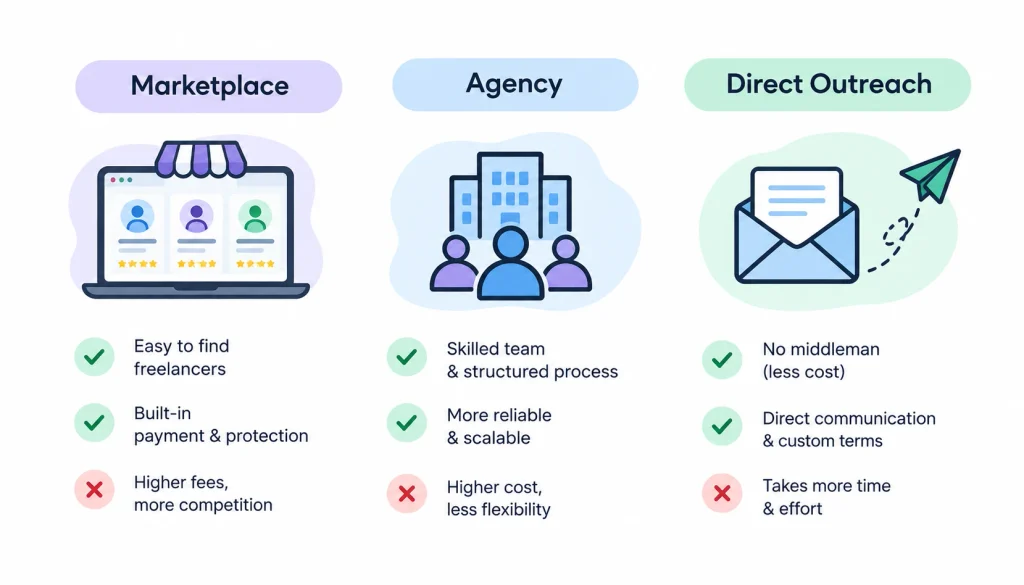
A marketplace is not your only route. Here is how the three main options compare.
| Factor | Marketplace | Agency | Direct outreach |
| Control over sites | High | Medium | High |
| Speed | Fast | Medium | Slow |
| Vetting you must do | High | Low | High |
| Cost | Medium | High | Low to medium |
| Scale | High | High | Medium |
| Relationship building | Low | Medium | High |
What you pay a marketplace for is convenience. You skip finding publishers, negotiating and invoicing. That convenience usually adds a markup compared with buying straight from a site owner.
Direct outreach costs less per link but takes weeks and many unanswered emails. If you only need a few placements and have time, go direct. If you need a dozen in a month, a marketplace saves your sanity.
How much does guest posting cost?
Prices vary too much to quote one number honestly. A small niche blog can cost far less than a national news site, and the gap between marketplaces and direct deals can be large.
These factors drive price:
- Organic traffic and audience size
- Domain strength
- Niche (finance, health and software usually cost more)
- Country and language
- Brand reputation of the site
- Whether the marketplace writes the content
- Link type and placement
Here is a rule I use. If a site has strong metrics and a very low price, ask why. Often the answer is that the site sells links to everyone, which makes it less useful.
To estimate markup, find a publisher on a marketplace, then contact the site owner directly and ask for a rate. Do this once or twice and you will know how much convenience costs in your niche.
How I would evaluate any marketplace
Most roundups rank platforms on gut feel. A repeatable method is better, so here is the one I use. You can apply it to the platforms above or to any new one you find.
| Criterion | Weight | What to look for |
| Publisher quality | 25% | Real editorial sites, not link-sale pages |
| Organic traffic | 20% | Steady or growing, from relevant countries |
| Topical relevance | 15% | Sites that match your niche |
| Price and value | 15% | Cost compared with traffic and quality |
| Transparency | 10% | Clear metrics, named data sources, visible fees |
| Inventory | 5% | Enough choice in your niche |
| Editorial controls | 5% | Review of content before publishing |
| Support and guarantees | 5% | Replacement if a link is removed |
The weights are my judgement, not an industry standard. Change them to fit your goals. If you only care about local reach, raise country-level traffic and drop inventory.
Two more habits keep the scoring honest. Separate what the platform claims from what you confirmed yourself in a tool like Ahrefs, Semrush or Similarweb. And check the date, because a site’s traffic can fall sharply in a single month.
How to evaluate a guest post site before you buy
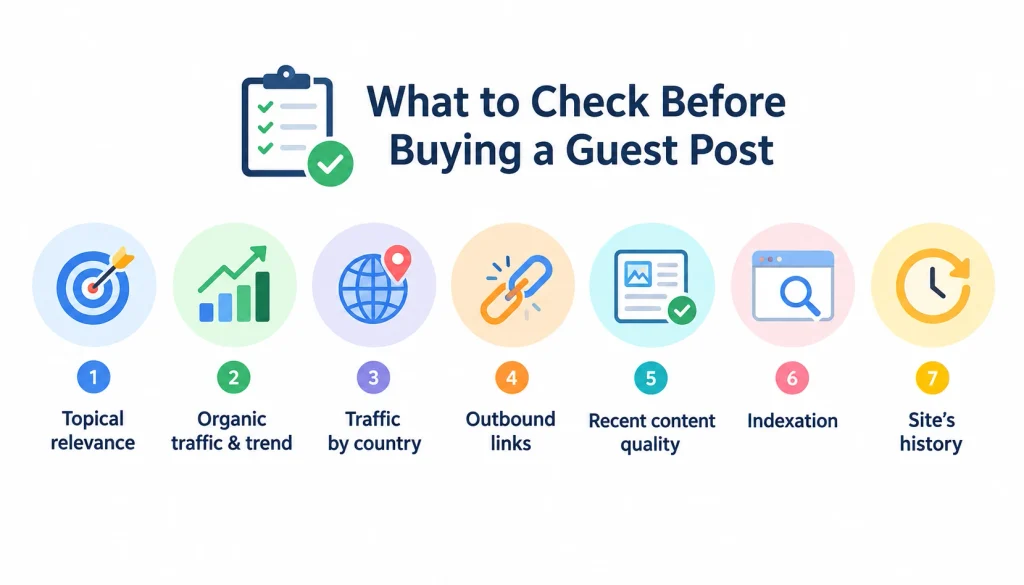
This is the most useful part of the guide. It takes about ten minutes per site once you have the habit.
What should you check before buying a guest post? Check topical relevance, organic traffic and its trend, traffic by country, outbound links, recent content quality, indexation and the site’s history. A site that passes all of these is a safer purchase than one with only a high DR.
- Relevance. Does the site cover your topic regularly? A cooking blog linking to a crypto exchange looks odd to readers and search engines.
- Organic traffic. Open Ahrefs, Semrush or Similarweb and look at monthly organic visits.
- Traffic trend. Look at the last 12 to 24 months. A sharp fall is a warning sign.
- Traffic by country. If you sell in the UK, a site read mostly elsewhere is a weak fit.
- Recent articles. Skim the last ten posts. Are they written for readers or for link buyers?
- Outbound links. A page stuffed with links to unrelated sites is a bad sign. It is also worth reviewing the site’s overall link profile to see whether its backlinks and referring domains look natural and relevant.
- Sponsored-post ratio. If most posts are paid, the audience is probably thin.
- Indexation. Search the domain in Google and confirm pages appear.
- Domain history. Look for sudden topic changes, which can signal an expired domain with a new purpose.
- Author and editor details. Real sites usually show real people.
A quick example
Say you sell project management software. Site A has a DR of 70, covers dozens of unrelated topics and has traffic that fell by half last year. Site B has a DR of 45, publishes only business and productivity content and has steady traffic from your target country.
Site B is the better buy, even though its number is lower. The audience is real, and it fits your product.
DR vs. DA vs. organic traffic
Domain Rating (DR) is Ahrefs’ score for the strength of a site’s backlink profile. Domain Authority (DA) is Moz’s score, and Authority Score is Semrush’s. All three are third-party estimates. Google does not use any of them.
Because they are estimates, they can be inflated. A site can build many links cheaply and look strong on paper while having no readers.
Organic traffic is harder to fake, so it tells you more. Pair it with the traffic trend and topical fit, and you get a much clearer picture than any single score gives.
Use DR and DA as a first filter, then let traffic and relevance make the decision.
Red flags to avoid
- High DR with almost no traffic
- Prices far below the rest of the market
- Hundreds of unrelated topics on one site
- Pages with many outbound links
- Thin or machine-written articles
- No editorial review at all
- Promises of guaranteed rankings
- Networks of expired domains or private blog networks (PBNs)
- No replacement policy if a link is removed
- Fees that appear only at checkout
A link farm is a group of sites that exist mainly to link to each other. If a seller’s sites look alike, share hosting patterns or carry the same generic content, walk away.
Are guest posting marketplaces safe for SEO?
They can be, if you buy carefully and follow Google’s rules. They can also cause problems if you buy at scale or chase rankings with manipulative links.
Google’s spam policies treat buying or selling links to manipulate rankings as link spam. They also list large-scale guest posting campaigns with keyword-stuffed anchor text as an example of spammy links.
Google also says paid or sponsored links should be marked with rel=”sponsored” or rel=”nofollow”. Its guidance on qualifying outbound links explains when to use each. A nofollow link tells search engines not to pass ranking credit through it.
That creates a real tension. Many buyers want dofollow links, and marketplaces often sell them, but a paid dofollow link goes against Google’s guidance. Know the risk before you take it.
You can lower the risk in a few ways, including following white hat link building services practices that prioritize relevant, editorially appropriate links.
- Buy from relevant sites with real readers.
- Use natural anchor text, often your brand name.
- Spread links across many different sites and pages.
- Avoid buying many links in a short time.
- Write content that would be useful even without the link.
For practitioner opinions, the r/bigseo and r/SEO communities on Reddit discuss link buying openly. Treat those threads as anecdotes, not rules, and compare them with Google’s own documentation.
How to buy a guest post from a marketplace
Here is the process I would follow, start to finish.
- Set a goal. Decide whether you want referral traffic, brand mentions or support for a specific page.
- Pick the target page. Choose a page that deserves links, such as a useful guide.
- Write your requirements. Set minimum traffic, niche, country and a maximum price.
- Filter the inventory. Apply those limits inside the marketplace.
- Vet each site yourself. Run the ten-minute checklist above.
- Compare prices. Look at similar sites and, if possible, the publisher’s direct rate.
- Check content terms. Find out who writes the article, how many revisions you get and whether the site labels sponsored posts.
- Place a small first order. Do not buy ten at once.
- Confirm publication. Check the live URL, the link, the anchor and the link attributes.
- Monitor it. Recheck after a few weeks and again after a few months.
How to get better ROI from guest posting
Backlinks are a means, not the result. Measure what happens after publication.
- Choose relevance over a bigger DR number.
- Link to pages that deserve attention, not only your homepage.
- Write something a reader would finish.
- Track referral visits in Google Analytics.
- Watch rankings in Google Search Console and your rank tracker.
- Check that links stay live.
- Count leads and sales, not only links.
A single placement on a relevant site that sends a few customers can beat five placements that send nobody.
Alternatives to guest posting marketplaces
If marketplaces feel too risky or too costly, try these:
- Direct publisher outreach: slower, but often cheaper and more personal.
- Digital PR: pitching data or stories to journalists.
- Resource-page outreach: asking sites to add your useful guide to a list.
- Broken-link building: offering your page as a replacement for a dead link.
- Expert contributions: sharing quotes and insights on topics you know well.
These take more effort, though they also tend to produce links that fit Google’s guidelines more naturally.
Frequently asked questions
What is the best guest posting marketplace?
There is no single best one. The right choice depends on your budget, niche, country and how much vetting you want to do. Beginners often start with a self-serve marketplace with strong filters, while larger campaigns suit platforms with content support.
Are guest posting marketplaces worth it?
They can be, when you buy relevant placements on real sites and measure results. They save time on finding publishers. They are a poor choice if you plan to buy many low-quality links quickly.
How much does a guest post cost?
Prices depend on traffic, niche, country, brand reputation and content needs. Small niche blogs cost far less than major publications. Check current prices on each platform, and compare them with the publisher’s direct rate.
Can buying guest posts hurt SEO?
Yes. Google treats links bought to manipulate rankings as link spam. Buying many links from low-quality sites, using keyword-heavy anchors or skipping proper link attributes raises the risk.
Is DR more important than organic traffic?
No. DR is a third-party estimate of link strength, and it can be inflated. Organic traffic, traffic trend and topical relevance say more about whether a site has a real audience.
How do I check if a site has real traffic?
Use Ahrefs, Semrush or Similarweb to view organic visits over 12 to 24 months. Look for steady or growing traffic from relevant countries, and check that the site’s pages appear in Google search.
What is the difference between guest posting and link insertion?
A guest post is a new article published on a site, with your link inside. A link insertion adds your link to an article that already exists. For more detail on evaluating existing pages for contextual placements, see this guide to SERP Insight Link Insertion. Insertions can be quicker, but the page’s quality and traffic matter a lot.
Marketplace or agency?
Choose a marketplace if you want control and are willing to vet sites. Choose an agency if you want a done-for-you service and have a larger budget.
Is guest posting still effective?
It can be, when the post reaches a relevant audience and offers real value. Mass-produced posts built only for links are the risky kind.
Final Verdict
The best guest posting marketplace depends on what you need from your campaign rather than on a single universal winner.
Collaborator and PressWhizz are useful for publisher filtering, Adsy works well for beginners, WhitePress and Linkhouse suit international campaigns, while PRNEWS.IO and Getfluence are better suited to PR and premium media placements.
FatJoe is a practical option if you prefer a managed service, while Vefogix and iCopify may appeal to budget-conscious buyers.
For traffic-focused placements, Authority Builders is worth considering, and Link Publishers is useful when you want a choice between new guest posts and link insertions. Whichever platform you choose, start with a small order, independently vet every publisher, and track the results.
The strongest marketplace is ultimately the one that consistently helps you find relevant websites with genuine audiences and credible content at a price that fits your campaign, not simply the platform with the highest DR, largest inventory, or lowest price.