Most customer journeys don’t fail because the offer is weak. They fail because the experience feels disconnected.
A visitor clicks an ad, reads a landing page, downloads a guide, opens an email, and speaks with sales. Sounds smooth on paper. In reality, those touchpoints often live in separate systems that barely talk to each other. Marketing sees one version of the customer. Sales sees another. Support gets dropped into the mess later.
That’s where data syncing matters. It keeps movement between platforms clean, current, and useful. Without it, businesses create friction they can’t even see.
One retail client once had five separate tools tracking leads. Five. Every team believed their dashboard was the truth. None of them matched. After syncing records properly, duplicate leads dropped by 31% in two months. Same traffic. Better flow.
Customers Notice Gaps Faster Than Teams Do
Customers rarely say, “Your systems are fragmented.” They just leave.
They notice when a form submission gets no response. They notice when they receive beginner emails after already booking a demo. They notice when support asks questions they answered last week. These moments feel small internally. Externally, they feel sloppy.
Trust is fragile online. It doesn’t take much to lose it.
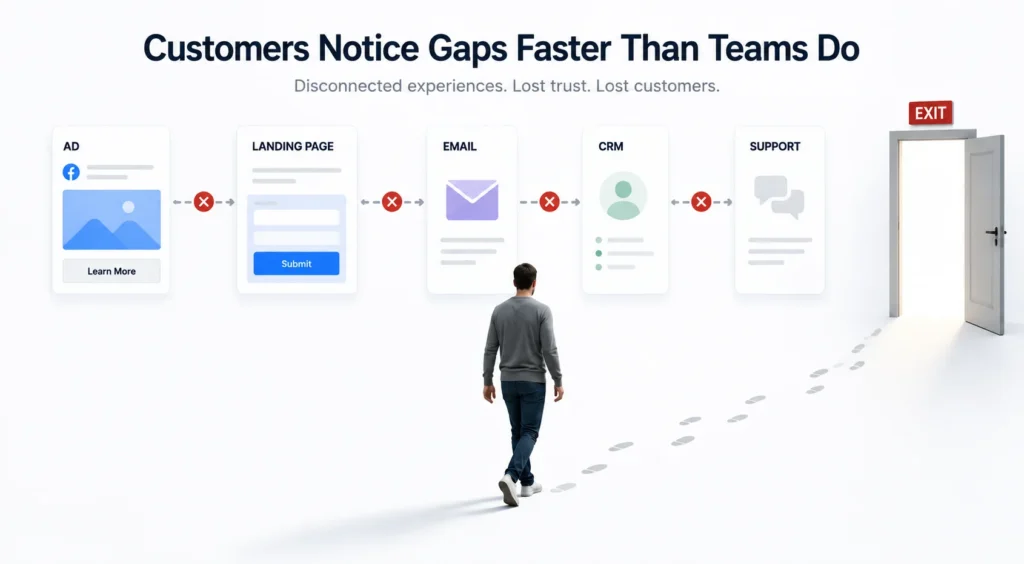
A connected system allows actions to trigger the next logical step. Someone requests pricing, then sales gets notified. A buyer completes checkout, then onboarding starts. A dormant lead re-engages, then messaging changes automatically. Smooth experiences feel natural because the plumbing is hidden.
That hidden plumbing is usually data syncing.
Better Timing Beats More Noise
Many teams chase volume. More emails. More ads. More popups. That usually creates louder nonsense.
Better timing wins.
When customer data updates in real time, messaging becomes sharper. A prospect who visited product pages twice this week shouldn’t receive the same generic newsletter sent to cold subscribers. Someone who already converted doesn’t need another discount code pretending the first purchase never happened.
This is where a strong HubSpot integration often becomes valuable. It can connect website behavior, lead status, sales activity, and campaign triggers into one operating picture. Instead of guessing where someone sits in the funnel, teams can respond to actual signals.
And yes, that tends to convert better.
Clean Data Creates Confidence
There’s another benefit nobody talks about enough. Internal confidence.
When teams don’t trust the numbers, progress stalls. Meetings become debates about whose spreadsheet is right. Marketing blames attribution. Sales blames lead quality. Leadership gets three reports with four different totals. Classic chaos.
Clean synced data changes the tone of those conversations.
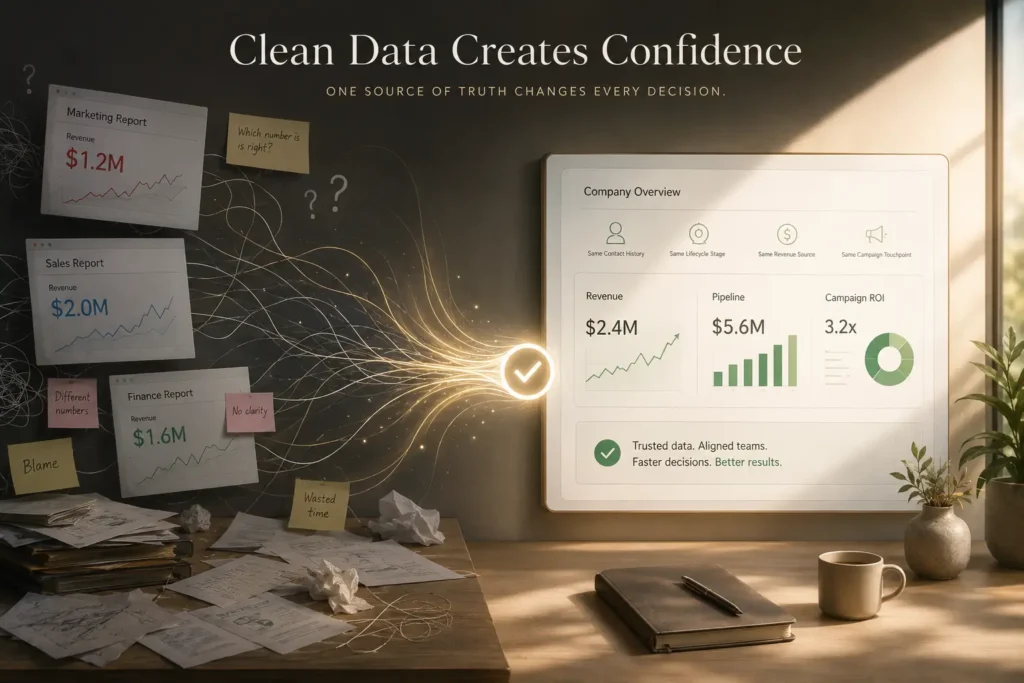
Decisions move faster when everyone sees the same contact history, same lifecycle stage, same revenue source, same campaign touchpoint. Even missed opportunities become useful because the cause is visible.
Ugly truth beats pretty confusion every time.
Search Traffic Needs a Connected Journey Too
Plenty of businesses invest heavily in traffic generation, then waste the attention they earn.
Organic visitors arrive with intent. They searched because they needed something now. If those visitors hit a form that doesn’t feed the CRM, or enter an email flow that ignores page behavior, momentum disappears fast.
That’s why search strategy and backend systems should never live in separate rooms. A smart Wollongong SEO campaign may bring qualified visitors to the site, but conversion depends on what happens after the click. Rankings create opportunity. Synced systems capture it.
Traffic without follow-through is just an expensive vanity metric wearing a nice suit.
The Small Moments Matter Most
High-converting journeys are rarely built on one dramatic tactic. They’re built on dozens of small moments that feel right.
The confirmation email arrives instantly. The sales rep already knows what was downloaded. The support agent sees purchase history without asking for it again. The abandoned cart reminder shows the correct product, not something random from six months ago.
None of this feels flashy. Good. Flashy is overrated.
Customers remember ease. They remember when things worked without effort. That memory drives repeat purchases more than most marketing slogans ever will.
What Usually Goes Wrong
Many companies try to patch growth problems with new tools. Another CRM. Another automation platform. Another dashboard. Suddenly there are seven subscriptions and no ownership.
Tools aren’t the issue. Fragmentation is.
The last time a team audited one client stack, three separate apps were sending welcome emails. Imagine joining a brand and getting greeted like a celebrity three times in ten minutes. Funny once. Costly later.
Before adding software, map the journey. Where does data start? Where does it stall? Where does it duplicate? Where does it die quietly at 2:14 a.m. on a Tuesday?
That exercise reveals more than most strategy decks.
Syncing Data Is Really About Respect
Respect for the customer’s time. Respect for internal teams trying to do good work. Respect for opportunities already paid for through ads, content, referrals, and search.
People don’t want perfect experiences. They want coherent ones.
When systems share information properly, businesses stop forcing customers to repeat themselves. They stop sending irrelevant messages. They stop treating every interaction like the first one.
That’s the real role of data syncing in customer journeys. It turns disconnected moments into progress.
And progress converts.