Dedicated routing software works inside the system. It guides the traffic and handles internet requests from apps. This software sends those requests through safe paths like SOCKS5 or HTTPS. It keeps local endpoints safe. It keeps app traffic separate. The software picks fast routes for data. These tools also make sure user login details stay safe. They stop bandwidth slowing and do not mess up other apps on the device.
For years, people who run it used full-tunnel VPNs to help keep important things for their company safe. But when you use full-tunnel encryption, there are some problems with where the data goes. This makes the work programs slow. The data has to move through many steps, so sometimes it takes a long time.
Now, there is a better way. People now use special ways to route traffic for each app. They do this with clients that are light and follow rules that are set. These only let some tasks be sent over safe and private networks, keeping overall costs manageable when evaluating proxytool pricing options for targeted application deployment.
Core Security Features in Application Routing
Standard web browsers manage the way they connect to the internet on their own. But many desktop apps, tools for databases, and simple scripts that run on your computer do not. They do not have their own way to use a special server to go online. There is software that helps with this job. It runs in the background on your system. It can catch all data from any program you pick before it goes out to the public internet.
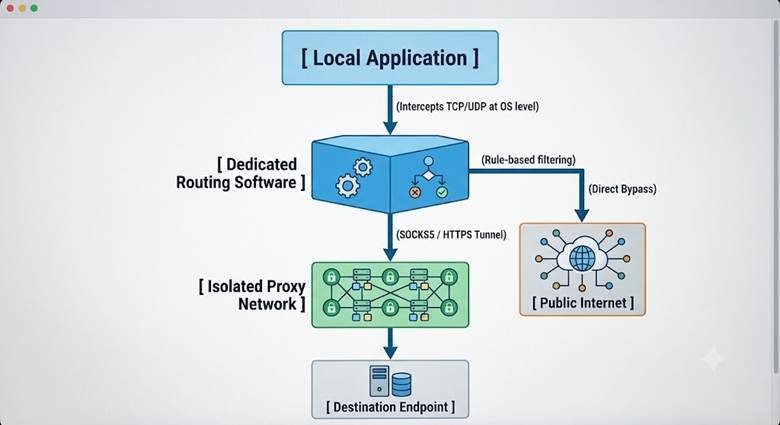
By making sure that apps do not mix, engineers who work with networks in companies help stop DNS leaks. A DNS leak is when a computer asks for a site name, but the request goes around safe lines and shows the person’s IP address. This is a risk many people face, but when apps stay apart, it helps stop it.
Also, when you look at how teams send people out, you can see there are clear benefits to choosing dedicated routing instead of using big system tunnels.
| Security Vector | Standard Full VPN Tunnel | System-Level Dedicated Routing Client |
| Scope of Interception | Entire Operating System Network Adapter | Selected Executable Process Targets |
| DNS Leak Mitigation | Relies on Global Network Adapter Drivers | Hardware/Kernel-Level Tunnel Forcing |
| Protocol Support | OpenVPN, WireGuard (Layer 3) | SOCKS5, HTTP(S), SSH Tunnels (Layer 7) |
| Process Isolation | Low (All apps share 1 gateway) | High (Each app can use a separate IP node) |
Optimizing Speed and Latency
Encryption may negatively impact the performance of the requests. In addition, the issue occurs especially if you use applications or services with a high repetition rate or multiple threads. The effective management of your requests will assist you in accelerating this process. It delivers your requests through fast routes. It does not encrypt the traffic on your local machine if it is not required.
Taking into account the current provider statistics, it is possible to analyze the behavior of each model under heavy load conditions.
The routing software operates according to the principle of rules applied to all apps. High-bandwidth applications such as video calls and synchronization of your device files with the cloud are exempted from this proxy system. At the same time, important database requests and web scrapers use special SOCKS5 nodes. This helps keep your connection speed fast and makes sure there are a lot of requests that go through.
Setting Up Custom Application Rules
Setting up rule-based traffic needs a clear plan. This helps set up routing for each process.
- Define Target Executables: Choose the exact app processes that you want to work with. Pick the program files like chrome.exe, python.exe, or your own work software that each need their own internet route.
- Set Proxy Protocols: Make sure the app uses what the node can manage. Put each program that can work in the correct place in the system. Use SOCKS5 when you need to handle plain TCP data. Use HTTPS when you want to send normal web requests.
- Set Filtering Rules: Enter the URL, site, and port you want to use. Make rules by using things like target IP numbers, port numbers, or wildcard domains. These let the system know when traffic must go through a tunnel. They also tell it when to connect straight.
- Turn on Fallback Routes: This step helps your system stay up if one of the nodes stops working. Set up backup pools to help your app stay up if your main server stops working.
Evaluating Market Infrastructure Costs
In order to select the most appropriate option to route your internet traffic, you should be aware of the prices for the various services. The price is determined by the origin of the IPs, possibility to control the traffic routing and the process of getting the IPs. Once you have decided upon the budget of the new software, you should be acquainted with proxy tool pricing at each stage. This will show you what is common in the industry.
| Infrastructure Type | Average Cost Model | Key Use Case | High-Volume Efficiency |
| Datacenter Proxies | $0.03 – $0.50 per IP / Mo | High-speed, bulk API scraping | Very High |
| Static ISP Proxies | $1.50 – $3.50 per IP / Mo | Account management, continuous sessions | High |
| Residential Proxies | $1.00 – $8.00 per GB | Bypassing strict anti-bot detection systems | Moderate |
| Mobile Proxies | $2.00 – $15.00 per GB | Mobile app testing, localized verification | Low |
For teams that deal with changing web items or design parts, using top tools like the ones at helps them see how content looks in each region. When people use special routing tools with strong setups, they can keep things running well without doing more work. A trusted proxy client for internet traffic lets you manage all web requests. This way, teams can have full say over the paths, speed, and safety of their work.
Strategic Recommendations for Modern Application Control
Using app-level controls to manage the system can make it safe and quick. When companies send certain software tasks through their own ways, they cut out wasted data, protect key spots, and keep apps working right. When you add simple checks for users and a custom setup, you get full online privacy and top speed for every tool you use.
Frequently Asked Questions
How does dedicated routing software differ from a standard VPN?
A VPN will send all the traffic from your system through a safe and hidden path. But with routing software, you can choose which apps use different servers. The other traffic will go the normal way.
Does application routing prevent WebRTC IP leaks?
Yes, set up routing tools will hide your local interface addresses. They stop your browser and apps from getting this address at the operating system level. Because of this, your IP will not show up with WebRTC or STUN requests.
Can I assign different IP addresses to different applications simultaneously?
Yes, most new routing tools let you chain different proxy servers. You can set rules for each app, too. This means that you can have each program use a different proxy at the same time.
Will routing software increase my internet connection speed?
It will not be faster than your usual internet speed from your ISP. However, it can reduce delays that show up when your whole device sends data through VPN encryption. It does this by sending only the important app traffic over fast SOCKS5 proxies.