Before a camera starts rolling, filmmakers spend significant time planning how every scene should look and feel. From deciding camera angles and framing to understanding character movement, lighting, and visual continuity, pre-production determines how effectively a creative idea translates onto the screen.
Traditionally, directors and cinematographers relied on storyboards, shot lists, concept art, and pre-visualization techniques to communicate their vision.
While these methods remain important, AI-powered filmmaking tools are making the planning stage faster by helping creators visualize scenes, explore camera ideas, and develop cinematic shot breakdowns before production begins.
A cinematic shot breakdown is more than a list of camera angles. It explains how a scene will be captured, including:
- Shot type and composition
- Camera movement
- Character positioning
- Lighting direction
- Scene transitions
- Visual style
- Production requirements
AI tools can now assist filmmakers by turning scripts, concepts, and references into structured visual plans. This helps directors experiment with different approaches before investing time and resources into production.
Here are some of the best AI tools that can help create cinematic shot breakdowns and improve pre-production workflows.
1. Invideo Agent
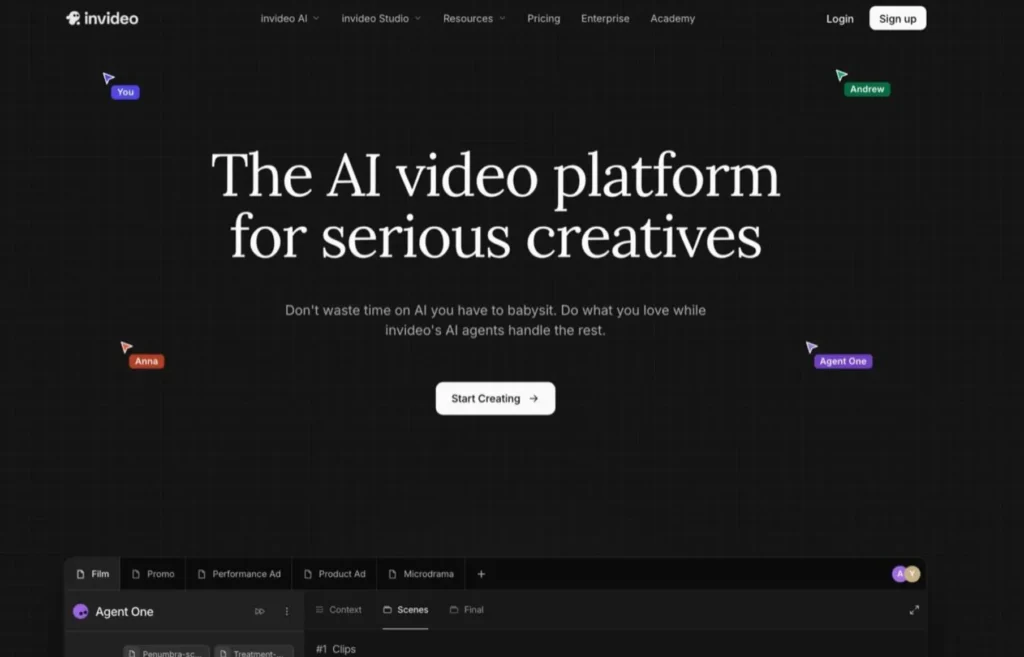
Invideo Agent is an AI filmmaking collaborator designed to support creators throughout the video production process, from initial concepts to final edits. Unlike simple AI video generators that focus only on creating individual clips, it helps organize the broader creative workflow.
For cinematic shot breakdowns, invideo Agent helps filmmakers move from an idea or script into structured scenes by supporting visual planning, shot development, and creative exploration. It can help define elements such as scene direction, visual style, characters, locations, and overall storytelling approach.
With invideo Agent Two, these workflows become more advanced with project memory and specialized creative agents that support areas like cinematography, storyboarding, casting, and VFX, helping teams maintain consistency across complex multi-scene productions.
This is especially useful during pre-production because filmmakers can explore different ways a scene could be filmed before creating the final video.
Key Features:
- Converts ideas into structured video concepts
- Helps plan scenes, visuals, and storytelling direction
- Supports character and visual consistency across scenes
- Helps creators refine cinematic styles and shot ideas
- Connects planning, generation, editing, and post-production workflows
Best For:
- Filmmakers planning AI-assisted productions
- Directors creating visual references before shooting
- Brands developing commercial concepts
- Creators producing cinematic social content
For complex projects, invideo Agent also helps maintain creative context throughout the workflow, making it easier to keep characters, visual language, and scene decisions connected as the project develops.
2. LTX Studio
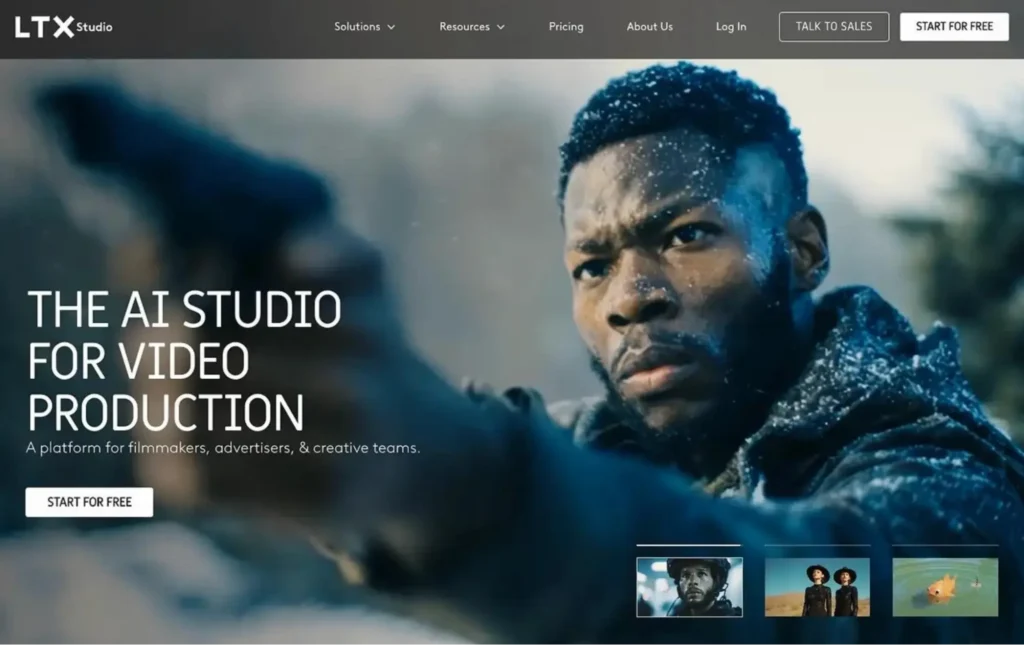
LTX Studio is an AI filmmaking platform focused on helping creators develop stories, visualize scenes, and plan video projects. It allows users to transform written ideas or scripts into visual sequences, making it useful for early-stage filmmaking and concept development.
The platform focuses on helping creators understand how a story could translate visually before moving into production. It can generate scenes, organize story elements, and help explore different cinematic directions.
For filmmakers, this can be useful when developing a first visual version of a project and experimenting with how scenes connect together.
Key Features:
- Script-to-scene visualization
- AI-generated story sequences
- Character and scene development
- Visual exploration before production
- Story structure planning
Best For:
- Independent filmmakers
- Short film creators
- Creative teams developing concepts
- Directors testing visual ideas
LTX Studio is particularly useful during the early creative phase when filmmakers want to explore multiple versions of a story before finalizing production decisions.
3. Filmustage
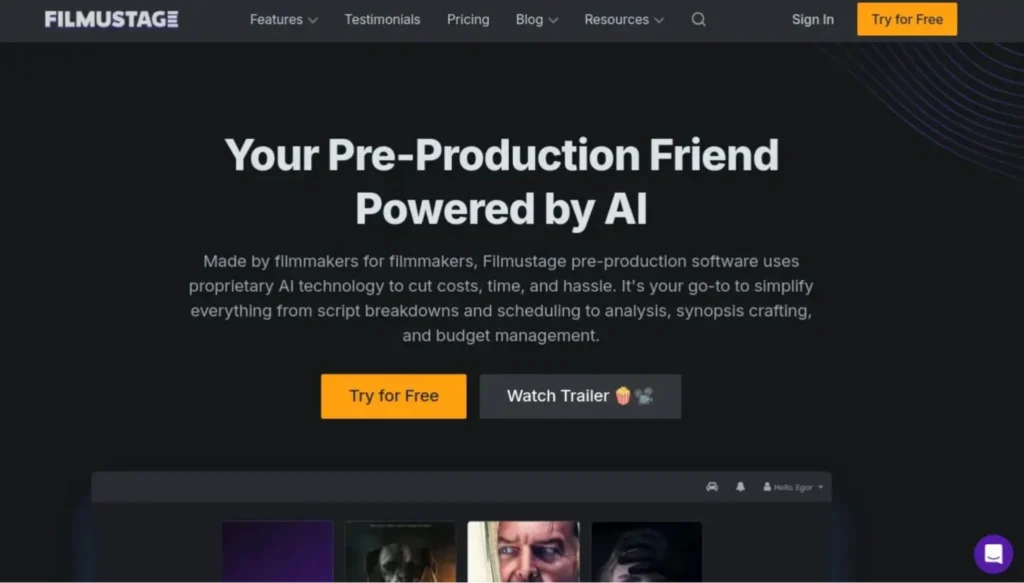
Filmustage focuses on AI-assisted film pre-production by helping filmmakers analyze scripts and organize production requirements. It is designed to automate parts of script breakdown, including identifying elements such as characters, locations, props, wardrobe, and production needs.
While it focuses more on production planning than visual generation, script breakdown is an important part of creating accurate shot plans. Understanding what appears in each scene helps directors and production teams prepare better.
Key Features:
- Automated script breakdown
- Character and location identification
- Production element tracking
- Scheduling support
- Pre-production organization
Best For:
- Producers
- Production managers
- Film crews preparing shoots
- Directors planning complex productions
Filmustage is valuable for projects where detailed preparation and resource planning are as important as creative visualization.
4. Boords AI
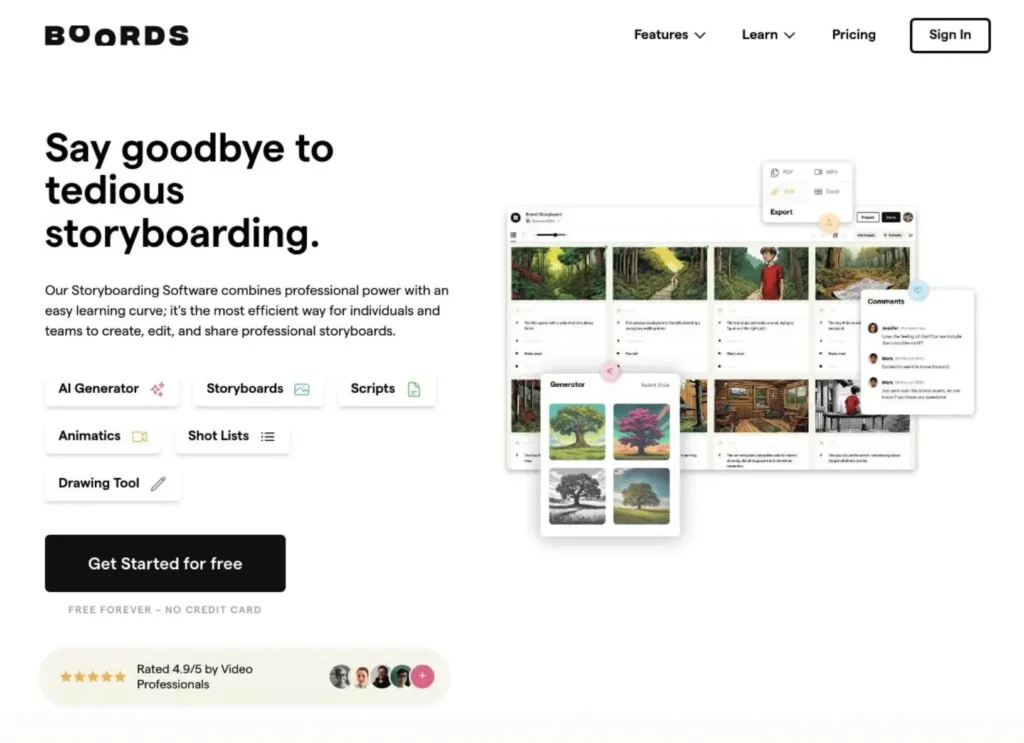
Boords AI is an AI-powered storyboard tool that helps creators transform ideas and scripts into storyboard panels. Storyboards are one of the most common ways filmmakers communicate shot ideas before production, making tools like this useful for visual planning.
It helps creators quickly create visual references that show scene progression, composition, and storytelling flow.
Key Features:
- AI-generated storyboard frames
- Script-based storyboard creation
- Scene organization
- Collaboration features
- Visual planning support
Best For:
- Commercial creators
- Advertising teams
- Video agencies
- Directors preparing presentations
Boords AI works well for teams that need quick visual references to discuss creative direction with clients or production members.
5. Studiovity
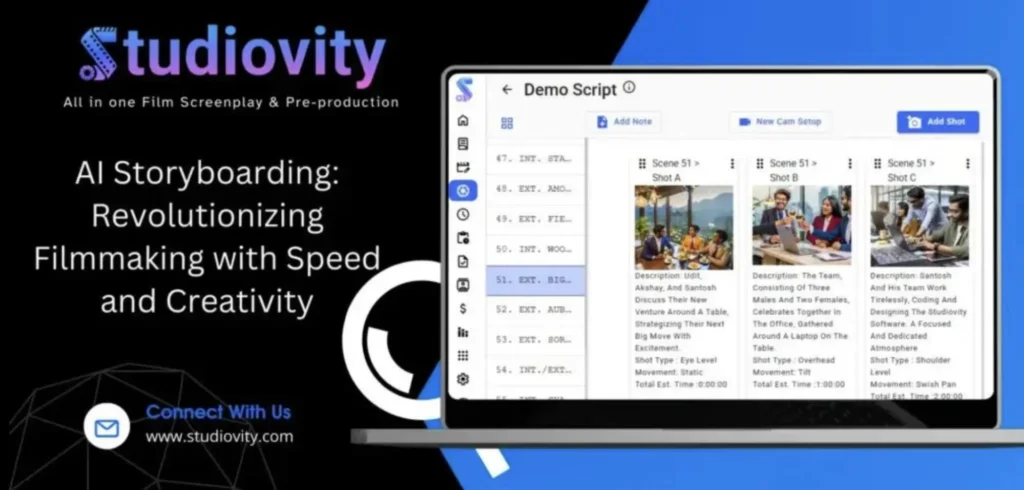
Studiovity is a film production platform that combines multiple pre-production tools, including AI-assisted script breakdown, storyboarding, shot planning, and production management features.
The platform is designed to help filmmakers manage different stages of production planning in one place.
For shot breakdowns, it can help organize scenes, generate planning materials, and connect creative decisions with production requirements.
Key Features:
- AI script breakdown
- Shot list generation
- Storyboard creation
- Production planning tools
- Team collaboration features
Best For:
- Production teams
- Film schools
- Independent filmmakers
- Large creative projects
Studiovity is useful for creators who want a more structured production management workflow alongside creative planning.
6. Storyflow
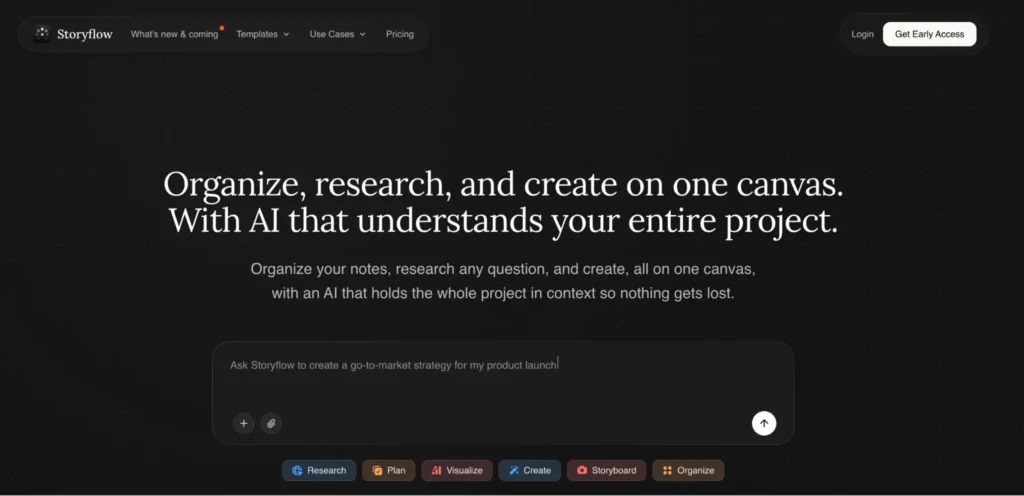
Storyflow is an AI storytelling and visualization platform designed to help creators organize scripts, visual references, and story elements together. It focuses on maintaining creative context while developing visual narratives.
For filmmakers, this approach can help when planning projects that require multiple scenes, characters, and visual references to remain connected.
Key Features:
- Story organization
- Visual development support
- Character and scene references
- Creative planning workspace
- AI-assisted storytelling
Best For:
- Narrative creators
- Content teams
- Screenwriters
- Directors developing visual concepts
Storyflow can be helpful during early development when creators need a central place to organize ideas before production begins.
How AI Shot Breakdown Tools Help Filmmakers Before Production
AI-powered shot planning tools are changing the way filmmakers approach pre-production. Instead of waiting until production begins to solve visual challenges, creators can explore different possibilities earlier.
These tools help with:
Faster Visual Exploration
Directors can test different camera angles, compositions, and scene styles before filming.
Better Communication Between Teams
Visual references make it easier for directors, cinematographers, editors, and production teams to understand the intended outcome.
Reduced Production Uncertainty
Planning shots in advance helps identify potential challenges related to locations, movement, lighting, and resources.
More Creative Experimentation
Creators can explore multiple visual approaches without the cost of producing each version physically.
How to Choose the Right AI Tool for Cinematic Shot Breakdowns
The best tool depends on the type of project and the stage of production.
For complete AI filmmaking workflows, creators may prefer platforms that combine planning, generation, and editing. For example, invideo Agent is designed around a connected production workflow where creators can move from ideas and scripts to finished videos while maintaining creative context.
For traditional pre-production planning, tools focused on script breakdowns, storyboards, or production management may be more suitable.
Before choosing a tool, consider:
- Whether you need storyboard generation or full video creation
- The complexity of your production
- Team collaboration requirements
- Character and visual consistency needs
- How much control you need over camera decisions
Final Thoughts
Cinematic shot breakdowns are an essential part of turning creative ideas into successful productions. They help filmmakers understand how a story will look before cameras begin recording.
AI tools are making this process faster by helping creators visualize scenes, organize production elements, and experiment with different cinematic approaches.
While AI does not replace the creative decisions of directors and cinematographers, it provides a powerful way to explore ideas, communicate visual concepts, and prepare better before production begins.
As AI filmmaking workflows continue to evolve, tools that combine creative planning, visual generation, and project understanding will become increasingly important for filmmakers, brands, and content creators.