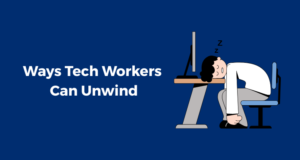
Tech work can leave the body tired even after spending most of the day sitting down. Hours of concentrated screen time, rapid communication, problem-solving and constant digital input make it difficult to switch immediately from work mode to personal time.
Remote and hybrid work can blur that boundary even further when the same room serves as an office and living space.
Instead of filling the evening with more stimulation, tech workers can build simple routines that create a recognizable end to the workday and give both mind and body something different to do.
Try A Cold Plunge
Cold-water immersion offers a distinctly physical way to transition out of a mentally demanding workday. Stepping into cold water immediately shifts attention away from emails, code, meetings and unfinished tasks and toward breathing and physical sensation.
For tech workers who spend much of the day absorbed in abstract problems, that change in focus can provide a useful mental reset.
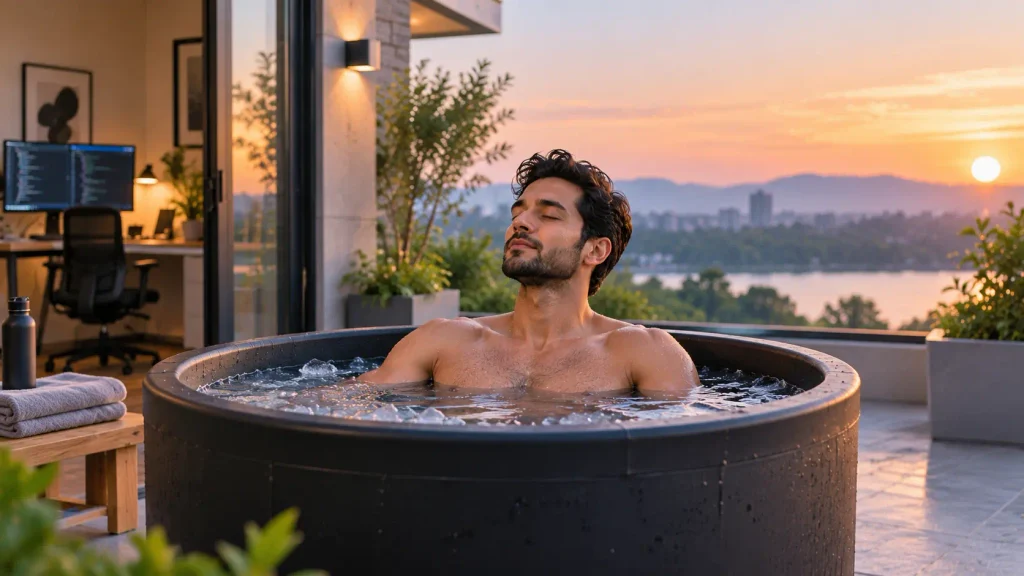
A large cold plunge tub also allows more of the body to be immersed comfortably, making it easier to establish cold plunging as a regular recovery practice at home. Cold-water immersion is commonly used after exercise to address muscle soreness and physical recovery, which can make it particularly appealing to people who combine demanding work schedules with regular training.
The cold also creates an immediate sense of alertness, offering a sharp transition between the fatigue of the workday and the beginning of personal time.
Cold plunging does not require turning temperature or duration into a competition. Short, controlled sessions can provide the experience without making the practice unnecessarily extreme. For someone who enjoys cold immersion, the combination of focused breathing, strong physical sensation and a defined beginning and end can make it an effective ritual for leaving work behind.
Take Movement Outside

After spending hours looking at information on a screen, going directly from a laptop to a television or phone keeps the evening visually and mentally similar to the workday. A walk creates a more substantial change. It requires no complicated equipment or workout plan, and it can be adjusted to fit whatever energy remains after work.
Tech workers who struggle to stop thinking about unfinished projects may find it useful to make the walk a firm boundary rather than another productivity exercise. There is no requirement to listen to a business podcast, answer calls or track every performance metric.
Leaving the phone in a pocket and paying attention to the surrounding environment gives the brain a break from processing notifications and interfaces. Even a relatively short walk can also loosen hips and legs after a day dominated by sitting.
Choose Your Screen Time
Avoiding screens completely is unrealistic for many people, and relaxation does not have to require a digital detox. The more practical distinction is between intentional entertainment and the endless consumption that happens when someone opens an app without deciding what they actually want to see.
It is perfectly reasonable to relax watching Youtube after work if the content is genuinely enjoyable rather than another stream of professional information. Comedy, music, travel videos, documentaries, cooking channels or hobby content can provide a mental change of subject. The key is choosing the entertainment rather than surrendering the evening to recommendations and autoplay.
Creating a stopping point can help. Watching one documentary or a few selected videos is different from scrolling until bedtime without remembering much of what appeared on the screen. Technology can be part of a relaxing evening without occupying every available minute of it.
Give Your Hands A Job
Knowledge work asks a great deal of the mind while often producing nothing tangible at the end of the day. A physical hobby reverses that equation. Cooking, gardening, drawing, woodworking, playing an instrument, knitting or working on a home project directs attention toward something concrete and gives the hands a purpose beyond typing and swiping.
The activity does not need to become a side business or another area for optimization. In fact, turning every hobby into a measurable pursuit can undermine the reason for doing it. Someone who spends all day evaluating performance may benefit from having an evening activity where being mediocre is perfectly acceptable.
Cooking dinner is one of the easiest ways to incorporate this principle because it already serves a practical purpose. Preparing ingredients, following a recipe and sitting down to eat away from a workstation can create a natural sequence that separates professional responsibilities from the rest of the night.
Make Work Harder To Reach
Relaxation becomes difficult when work remains one notification away. Tech workers often have unusually easy access to their jobs because the tools they use professionally live on the same devices they use personally. A message that takes 30 seconds to answer can reopen a work problem that occupies the next hour mentally.
Creating friction helps. Turn off nonessential work notifications, close professional applications and keep the laptop somewhere other than the sofa or bedroom. Remote workers can benefit from physically clearing the workspace at the end of the day, particularly when a dedicated home office is not available. Even closing the laptop and putting it out of sight creates a stronger boundary than leaving unfinished work glowing on a nearby screen.
A good evening routine does not need to eliminate technology or involve an elaborate wellness regimen. It simply needs to make the end of work feel meaningfully different from the hours that came before it.