A backlink profile is easy to manage when you have 50 links and one website. It gets messy fast when you have 500 links, three clients, and a spreadsheet nobody has updated since March.
That is where backlink management software earns its keep. The right tool tells you when a link disappears, shows you what your competitors have that you don’t, and keeps outreach notes in one place. The wrong tool gives you a pretty dashboard and the same spreadsheet problem.
The tricky part is that ‘backlink management software’ covers several different jobs: research, monitoring, outreach, and reporting. Few tools do all four well. This guide sorts 12 options by what they actually do, so you can pick based on your workflow instead of a feature list.
Best Backlink Management Software in 2026
Every review below follows the same format: what the software does, its key strengths, potential limitations, pricing considerations, and the types of users it suits best. The goal is to help you compare tools based on your actual backlink management needs rather than choosing one simply because it has more features.
Some platforms specialize in backlink research and monitoring, while others focus on outreach, contact management, or broader SEO workflows. Features and subscription plans can change, so verify the latest information on each vendor’s official website before making a purchase.
1. Ahrefs: Best for Backlink Research and Competitor Analysis
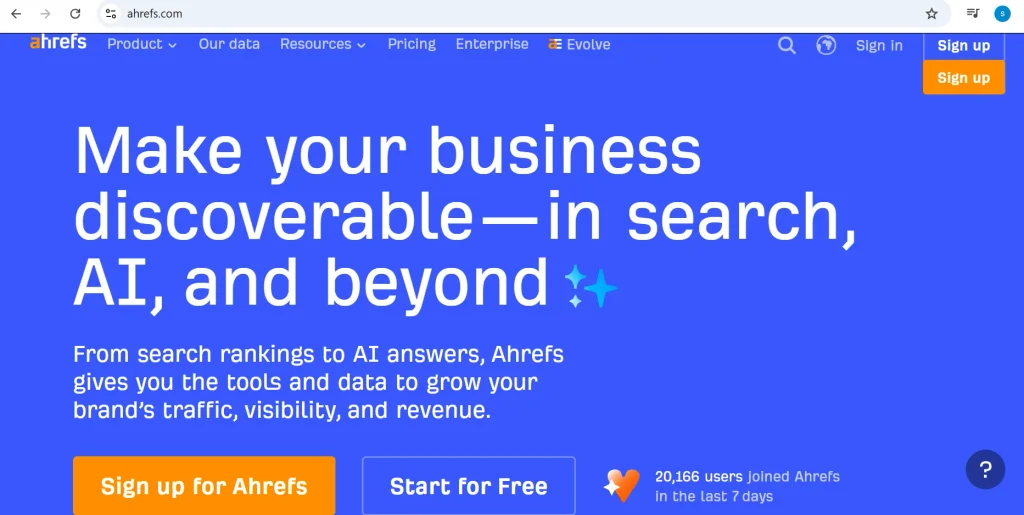
Ahrefs is a popular choice among SEO professionals who need detailed backlink data and competitor research capabilities. Its Site Explorer tool allows users to examine a website’s backlink profile, referring domains, anchor text, and top-linked pages. These insights help SEO teams understand which pages attract links and identify potential opportunities for their own websites.
Ahrefs also supports competitor backlink analysis, allowing you to discover websites that link to competing domains but not to yours. This makes it useful for identifying relevant prospects for guest posting, digital PR, resource-page outreach, and content promotion. Its backlink monitoring capabilities can also help users track newly discovered and lost links.
Strengths:
- Provides extensive backlink research and competitor link gap analysis.
- Helps identify new and lost backlinks to understand changes in a website’s link profile.
- Offers Domain Rating (DR), Ahrefs’ proprietary metric for comparing the strength of backlink profiles.
- Identifies top-linked pages and anchor text patterns that can inform content and link-building strategies.
- Supports broader SEO research, making it useful for teams that need more than backlink monitoring.
Limitations:
- Does not replace a dedicated outreach CRM for managing publisher relationships and communication histories.
- Subscription costs may be difficult to justify for beginners or small teams with limited backlink research needs.
- Domain Rating is a third-party metric, not a Google ranking score, and should not be treated as a direct measure of ranking potential.
Pricing: Ahrefs offers paid subscriptions with different feature and usage limits. It also provides free webmaster tools for eligible websites that users can verify as their own. Review the official pricing page to understand current subscription limits, available features, and free access options.
Best for: SEO agencies, in-house SEO teams, experienced link builders, and website owners who regularly research competitors and discover backlink opportunities.
2. LinkColab: Best for Link-Building Outreach and Publisher Opportunities
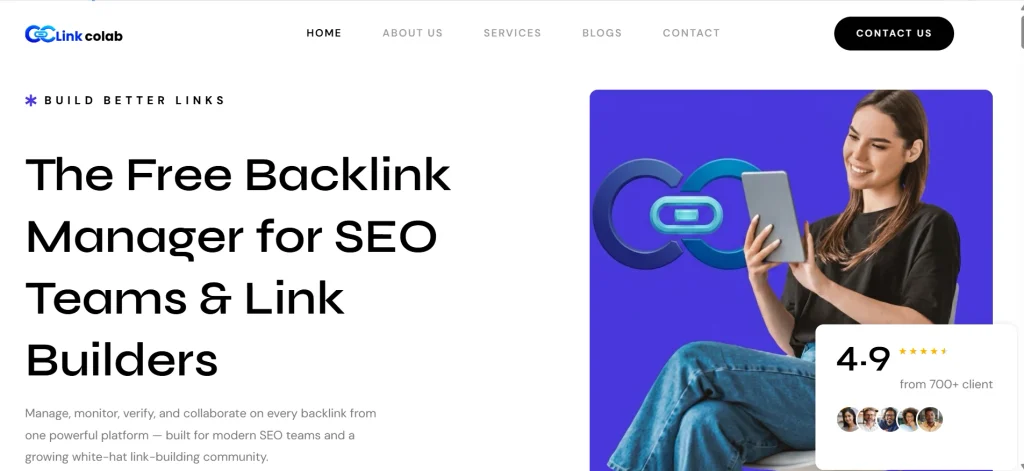
LinkColab is a free backlink management tool built for SEO teams and link builders who want to manage their link-building work in one place. It helps users organize backlinks, monitor link status, verify placements, and collaborate with team members without relying on scattered spreadsheets and emails.
With its focus on backlink tracking and white-hat link building, LinkColab is a useful option for agencies, in-house SEO teams, and independent link builders looking to keep their backlink work organized.
LinkColab can be included in a link-building workflow to help users centralize their prospecting and outreach process, maintain a more organized pool of websites, and coordinate link-building opportunities.
It is particularly relevant to teams that work with publisher websites and link exchanges. Rather than treating link acquisition as a one-off task, teams can use a structured workflow to evaluate potential partners, keep track of opportunities, and manage communication more consistently.
As with any link-building platform, users should independently review each website for topical relevance, real audience value, content quality, organic visibility, and outbound-link patterns before agreeing to a placement.
Strengths:
- Free to use: Offers a free backlink management solution for SEO teams and link builders.
- Centralized backlink tracking: Keeps backlink records organized in one workspace instead of scattered spreadsheets.
- Backlink monitoring: Helps users monitor the status of their backlinks and identify changes.
- Link verification: Supports checking backlink placements to keep records accurate.
- Team collaboration: Makes it easier for SEO teams and link builders to manage backlink work together.
- White-hat link-building focus: Supports organized link-building workflows for SEO professionals and agencies.
- Improved workflow management: Brings backlink tracking, monitoring, and collaboration together in one platform.
- Suitable for different teams: Can be useful for freelancers, in-house SEO teams, and link-building agencies.
Limitations:
- It should not be treated as a replacement for comprehensive backlink-index tools when you need deep competitor analysis or historical backlink data.
- A listing or available link opportunity does not automatically mean a website is high quality; review relevance, traffic quality, content standards, and outbound links independently.
- Link-building results still depend on the quality of the websites selected, the value of the partnership, and the natural fit of each link.
- Confirm the current features, available website data, integrations, and plan limits directly on the official website before choosing a subscription.
Pricing: Check the official LinkColab website for current plans, features, and pricing.
Best for: Link builders, SEO agencies, link resellers, and website owners who need a more organized way to manage publisher opportunities, outreach, and link-building relationships.
3. Semrush: Best All-in-One SEO Suite
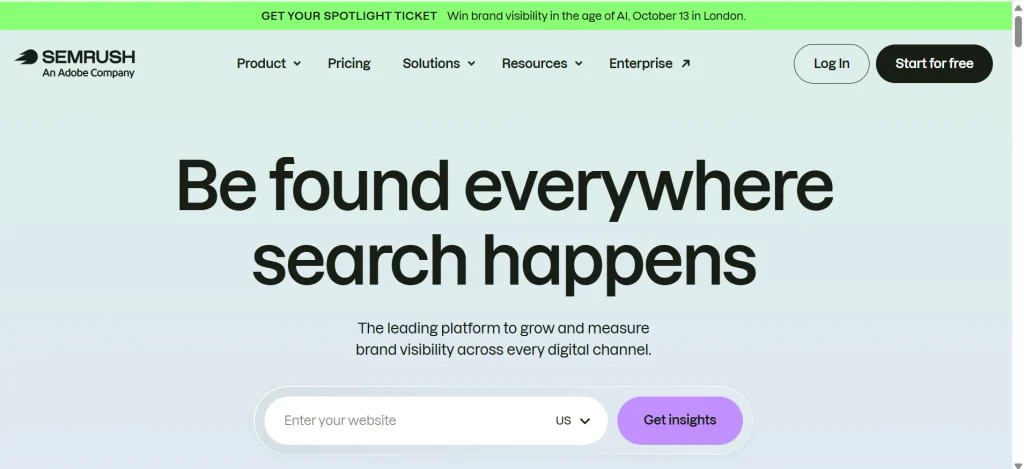
Semrush combines backlink management capabilities with a broader collection of SEO and digital marketing tools. Its backlink-related features include Backlink Analytics, Backlink Audit, and link-building workflows that help users research referring domains, evaluate backlink profiles, and discover potential outreach opportunities.
One advantage of Semrush is that backlink research can be performed alongside keyword research, position tracking, and technical site audits. This makes it easier for marketing teams to connect their link-building activities with their wider SEO strategy. Agencies can also use its reporting capabilities to communicate campaign progress and backlink findings to clients.
Strengths:
- Combines backlink analysis with keyword research, rank tracking, site audits, and other SEO features.
- Provides backlink audit functionality to help users investigate potentially problematic links and review their backlink profiles.
- Supports competitor research to uncover referring domains and potential link-building opportunities.
- Offers reporting capabilities that can help agencies communicate findings to clients.
- Helps consolidate several SEO activities within a single platform, reducing the need to switch between multiple tools.
Limitations:
- The large number of features can make the platform more difficult for beginners to learn.
- Some capabilities have plan-specific restrictions or may require additional purchases.
- Although it supports link-building workflows, it is not necessarily a complete replacement for a dedicated outreach CRM.
- Users who only need basic backlink monitoring may find the broader platform more complex than necessary.
Pricing: Semrush offers tiered subscriptions and limited free access, with features and usage limits varying by plan. Before subscribing, confirm whether the backlink research, auditing, reporting, and outreach features you need are included.
Best for: SEO agencies, digital marketing teams, and businesses that want backlink analysis and monitoring alongside their broader SEO activities.
4. Moz Pro: Best for Link Analysis and Authority Metrics
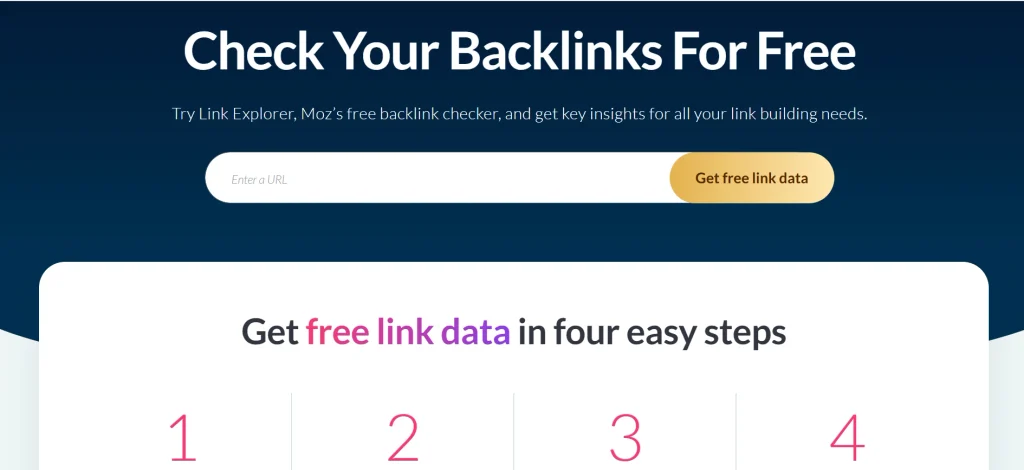
Moz Pro is an SEO platform with backlink research capabilities through its Link Explorer tool. Users can investigate backlinks, linking domains, anchor text, and other information that helps them understand how websites acquire links.
Moz is particularly known for Domain Authority (DA), a proprietary metric used to estimate a domain’s relative ranking potential, and Spam Score, which provides an indication of characteristics associated with potentially spammy websites.
These metrics can help SEO professionals compare domains and identify areas that deserve further investigation, although they should never be treated as definitive measures of Google’s assessment of a website.
For teams that need to evaluate prospective publishers or explain backlink metrics to clients, Moz provides a relatively accessible way to explore link data.
Strengths:
- Offers a user-friendly interface for backlink research and SEO analysis.
- Provides Domain Authority and Page Authority metrics that are widely used in SEO reporting.
- Includes Spam Score as an additional indicator for investigating potentially questionable backlink profiles.
- Helps users explore linking domains, anchor text, and competitor backlink opportunities.
- Can support backlink reporting and website evaluation without requiring advanced technical knowledge.
Limitations:
- Domain Authority, Page Authority, and Spam Score are Moz’s proprietary estimates, not metrics used directly by Google.
- It is not primarily designed for managing outreach conversations, publisher relationships, or email follow-ups.
- Users who need advanced, ongoing backlink monitoring should verify the available monitoring capabilities before subscribing.
- Data coverage and usage limits may differ from those of competing backlink research platforms.
Pricing: Moz Pro offers paid plans, while certain tools provide limited free access. Check the official website for current subscription prices, Link Explorer limits, and the features included in each plan.
Best for: SEO consultants, small agencies, and businesses that want accessible backlink analysis and familiar authority metrics for evaluating websites and reporting SEO progress.
5. Majestic: Best for Specialist Backlink Data
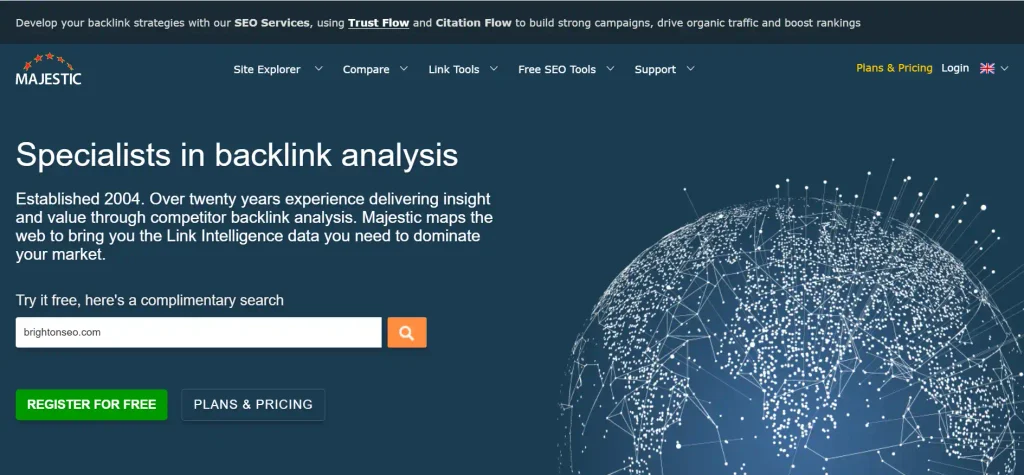
Majestic is a backlink intelligence platform designed primarily for analyzing link profiles and understanding relationships between websites. Unlike all-in-one SEO suites, it focuses heavily on backlink data and the metrics used to interpret it.
Two of its best-known metrics are Trust Flow and Citation Flow. Trust Flow estimates the quality of a site’s link profile based on Majestic’s methodology, while Citation Flow estimates the influence of a URL based on the quantity and strength of links pointing to it.
Examining both metrics can provide additional context when comparing websites or evaluating potential publishing partners.
Majestic can be particularly useful when you need a second source of backlink data before deciding whether a website is suitable for outreach, content partnerships, or further SEO analysis.
Strengths:
- Focuses specifically on backlink intelligence and link-profile analysis.
- Provides Trust Flow and Citation Flow for evaluating different aspects of a backlink profile.
- Helps users investigate referring domains and link relationships.
- Can support publisher evaluation and competitor backlink research.
- Offers an additional perspective when used alongside other SEO tools.
Limitations:
- Its interface and metrics may require more experience to interpret effectively.
- Its narrower focus means it does not replace a comprehensive SEO suite for keyword research, rank tracking, and technical audits.
- It is not designed to serve as a complete outreach CRM.
- Trust Flow and Citation Flow are proprietary metrics and should not be interpreted as direct Google ranking signals.
Pricing: Majestic offers paid subscriptions with different levels of access to its backlink data and features. Verify current plans, index access, and usage limits on the official website before choosing a subscription.
Best for: Experienced SEO professionals, link builders, and agencies that need specialist backlink data to evaluate websites, compare link profiles, and investigate potential publishing partners.
6. SE Ranking: Best for Backlink Analysis in a Broader SEO Workflow
SE Ranking combines backlink analysis and monitoring with other SEO capabilities, including keyword tracking, website audits, and competitor research. Its backlink tools help users investigate referring domains, review backlink profiles, and monitor changes to existing links.
For freelancers and growing agencies, this combination can be practical because it brings several recurring SEO tasks into one platform. Instead of maintaining separate subscriptions for every activity, users can evaluate whether SE Ranking covers enough of their workflow to justify consolidating their tools.
However, its suitability for backlink-heavy campaigns depends on the depth of data, monitoring frequency, reporting options, and usage limits available under the selected plan.
Strengths:
- Combines backlink research and monitoring with broader SEO tools.
- Helps users track backlink changes and investigate referring domains.
- Provides reporting capabilities that can support agency and client workflows.
- Offers competitor research alongside keyword tracking and website auditing.
- May be a practical option for teams seeking a broader SEO toolkit without subscribing to several separate platforms.
Limitations:
- Its features may overlap with tools a business already uses.
- Backlink data coverage and freshness should be evaluated against the websites and competitors you actually research.
- Advanced workflows may depend on the selected subscription plan.
- Users who need highly specialized outreach management may still require a separate platform.
Pricing: SE Ranking offers tiered subscriptions, with features and usage limits varying by plan. Trial availability and terms can change, so check the official pricing page before subscribing.
Best for: Freelancers, small businesses, and growing SEO agencies that want backlink research and monitoring alongside other essential SEO functions.
7. Linkody: Best for Dedicated Backlink Monitoring
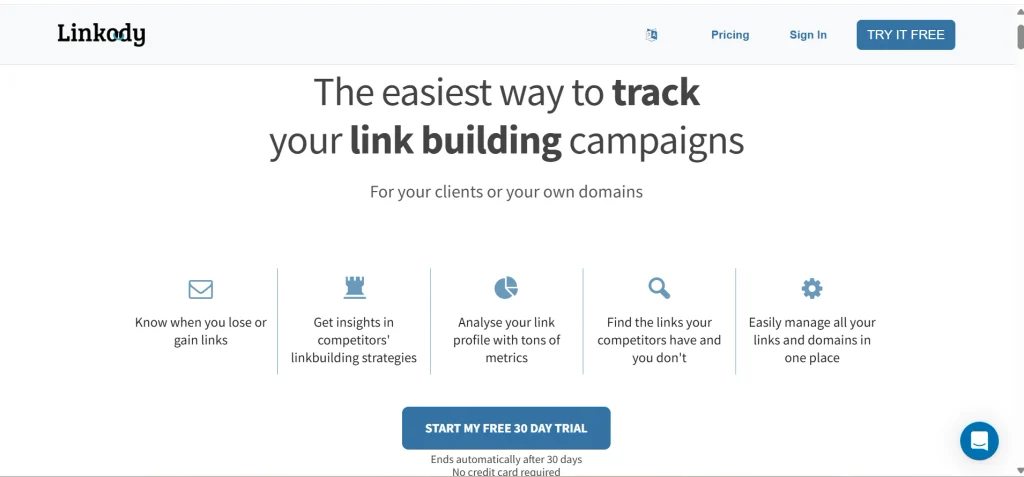
Linkody focuses on monitoring backlinks rather than providing a complete collection of SEO and outreach tools. It helps website owners and SEO professionals keep track of their backlink profiles and identify changes that may require investigation.
For example, if a publisher removes a backlink or a previously available linking page becomes inaccessible, monitoring can help bring the change to your attention. This is useful for teams that invest time and resources in acquiring links and want to verify whether those links remain available over time.
A dedicated monitoring tool can also make routine backlink checks more manageable, especially when several websites or campaigns need regular attention.
Strengths:
- Focuses on backlink monitoring instead of overwhelming users with unrelated SEO features.
- Helps track newly discovered and lost backlinks.
- Makes it easier to identify changes in existing backlink profiles.
- Provides a more focused workflow for users who primarily need ongoing link tracking.
- Can complement a backlink research tool by handling the monitoring side of link management.
Limitations:
- Competitor backlink research and broader SEO analysis may be more limited than in platforms such as Ahrefs or Semrush.
- It does not replace a dedicated outreach CRM for managing publisher contacts and conversations.
- Monitoring alerts identify changes that may need investigation, but users may still need to verify the underlying cause manually.
- Teams requiring advanced prospect discovery may need an additional research platform.
Pricing: Linkody offers paid plans, with features and monitoring limits depending on the subscription. Check the official website for current prices, website limits, monitoring options, and trial availability.
Best for: Website owners, freelancers, and SEO agencies that want a straightforward way to monitor existing backlinks and investigate lost or changed links.
Quick comparison of the best backlink management software
Use this table to build a shortlist. ‘Verify’ means the feature depends on your plan or I could not confirm it from public documentation, so check the vendor page before you buy.
| Software | Best for | Category | Backlink monitoring | Competitor analysis | Outreach | Free access |
| Ahrefs | Research and competitor gaps | Backlink intelligence | Yes (alerts) | Yes | No | Free tools for verified sites |
| Linkcolab | Linkbuilders and agencies | backlink management | Yes | no | yes | Fee Plan |
| Semrush | One suite for SEO work | All-in-one SEO suite | Yes | Yes | Yes (link building tool) | Limited free account |
| Moz Pro | Authority metrics and link analysis | SEO suite | Verify | Yes | No | Limited free checks |
| Majestic | Link-focused data | Backlink intelligence | Verify | Yes | No | Limited free checks |
| SE Ranking | Budget-friendly SEO workflows | SEO suite | Yes | Yes | No | Trial (verify) |
| Linkody | Ongoing link monitoring | Monitoring | Yes | Limited | No | Trial (verify) |
What is backlink management software?
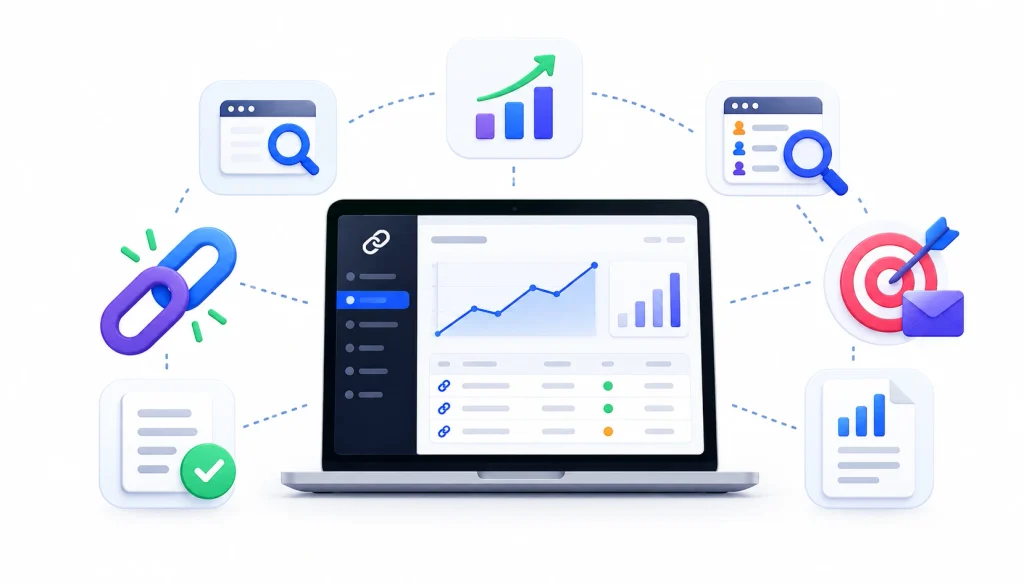
Backlink management software helps you organize, monitor, analyze, and report on the links pointing to your website. Depending on the product, it can also help you research competitors, run outreach campaigns, and confirm that agreed links are still live.
A backlink is simply a link from another website to yours. Search engines have used links as a signal since the early days of PageRank, which is why tracking them still matters.
How backlink management software works
Most tools run their own web crawlers and build a database of links. When you enter your domain, the tool shows you what it found. Monitoring tools check those links again over time and flag changes.
One point trips up a lot of beginners. No tool sees every link on the web. Two tools will often report different numbers for the same site, and that is normal. Treat each index as a sample, not a final count.
What you can do with it
Depending on the product, you can:
- Track existing backlinks and spot new and lost ones
- Review referring domains and anchor text
- Find sites that link to competitors but not to you
- Store prospects, contacts, and outreach history
- Verify that a promised link went live
- Send reports to clients or managers
No single tool does all of this equally well. That is why the categories below matter.
Backlink management vs. backlink analysis vs. link-building software
| Category | What it mainly does |
| Backlink management software | Organizes, tracks, and reports on links you already have |
| Backlink analysis software | Researches link profiles, quality signals, and competitors |
| Backlink monitoring software | Detects new, lost, and changed links |
| Link-building software | Helps you find opportunities and earn links |
| Outreach software | Manages contacts, emails, follow-ups, and campaign status |
These overlap. Semrush, for example, touches almost every row. A tool like Hunter touches only one. Knowing which row you need saves money.
Best backlink management software by use case
Picking from 12 tools is easier when you start with your situation.
SEO agencies. You need research, reporting, and outreach tracking across clients. A common setup is Ahrefs or Semrush for research, plus BuzzStream or Pitchbox for outreach.
Agencies that need additional support with their SEO campaigns can also explore white-label SEO services to manage link building, technical SEO, and other optimization activities for their clients.
Freelancers. Keep costs low and avoid overlap. One suite such as SE Ranking or Semrush, plus Google Search Console, covers a lot.
Small businesses. Start with Google Search Console. Add Linkody if you want alerts when links break.
Enterprise teams. Prioritize user access, data exports, and API options. Confirm these with each vendor, since they differ by plan.
Backlink monitoring. Linkody for a focused tool, or the monitoring features inside Ahrefs, Semrush, or SE Ranking.
Competitor backlink analysis. Ahrefs, Semrush, and Majestic all cover this. Run the same competitor through each trial and compare.
Link-building outreach. BuzzStream, Pitchbox, and Respona, with Hunter or Snov.io for contacts.
Free tools. Google Search Console for your own site, plus the limited free tiers from Ahrefs, Moz, and Majestic.
Essential features to look for
1. Backlink discovery and monitoring
You want to see new, lost, and changed links without checking by hand. Ask how often the tool re-crawls links and whether it alerts you by email.
2. Competitor backlink analysis
Link gap reports show sites that link to your competitors but not to you. That gives you a ready list of outreach targets.
3. Link quality and relevance
A link from a relevant page in your topic usually beats a link from a strong but unrelated site. Look at the linking page, the anchor text, and where the link sits in the content.
4. Backlink audit tools
Audit tools flag links that may look manipulative. Review those flags by hand. An automated score is a prompt to look closer, not a verdict.
5. Outreach and contact management
Good outreach features store contacts, show past emails, and remind you to follow up. Without that, people end up emailing the same editor twice.
6. Reporting, exports, and integrations
Check whether you can export data and whether the tool connects to the platforms you already use. Verify this per plan, because limits vary.
7. Multi-site and multi-client support
Agencies should check project limits, user permissions, and whether clients can receive reports without seeing each other’s data.
How to choose the right backlink management software
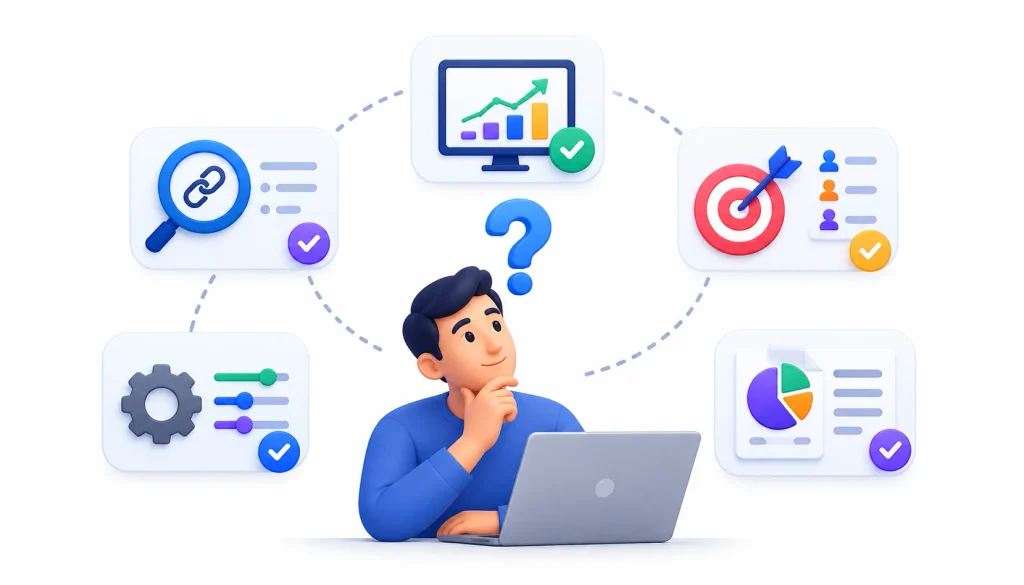
- Name your main job. Is it research, monitoring, outreach, verification, or reporting? Pick one to start.
- Set a budget. Add up what you already pay. Many people buy a second tool that duplicates the first. If you need help balancing your SEO budget with other marketing priorities, explore affordable digital marketing services that cover SEO, link building, content marketing, and performance tracking.
- Test data coverage. Enter your own domain and compare results with Google Search Console. Differences are normal, but huge gaps are worth noting.
- Check monitoring and reporting. Confirm the tool tracks what you need and exports in a format your team uses.
- Confirm team access. Look at user seats, permissions, and project limits.
- Use the trial. Run a real task, not a demo task. Try to find five competitor links and log them.
- Compare total cost. Include extra tools such as email finders.
How to manage backlinks effectively with software
Here is a workflow that works for most teams. It follows a simple cycle: discover, analyze, acquire, verify, monitor, report.
Step 1: Set a baseline
Export your current backlinks from Google Search Console and your main tool. Save the date. You will compare against it later.
Step 2: Monitor new and lost links
Turn on alerts. Review them weekly, or monthly for small sites.
Step 3: Judge link quality
Check relevance, anchor text, and context. Do not rely on a single authority score.
Step 4: Find competitor opportunities
Run a link gap report. Sort the results by relevance, not by authority alone. After identifying relevant backlink opportunities, businesses can explore effective white-hat link-building strategies such as guest posting, manual outreach, and content-based link building to acquire relevant backlinks.
Step 5: Organize outreach
Log each prospect, contact, message date, and status. A simple CRM beats a scattered inbox.
Step 6: Verify new links
When a link goes live, open the page. Confirm the URL, the anchor text, and the link attribute. Learn how nofollow and related attributes work so you can read these results correctly.
Step 7: Investigate lost links
Before you email the publisher, check whether the page returns an error, the link was removed, or the link now points elsewhere. Sometimes the page is simply down for a day.
Step 8: Report
Summarize new links, lost links, and outreach results. Tie the numbers to traffic or leads when you can.
A realistic example
Picture an agency with four clients. Each month, an analyst runs a link gap report in Ahrefs and picks 15 relevant targets per client. Contacts and email history go into BuzzStream. When links go live, the analyst checks them and adds them to a monitoring tool. At month end, the account manager exports a short report. Nobody opens a spreadsheet to guess what happened.
Common mistakes to avoid
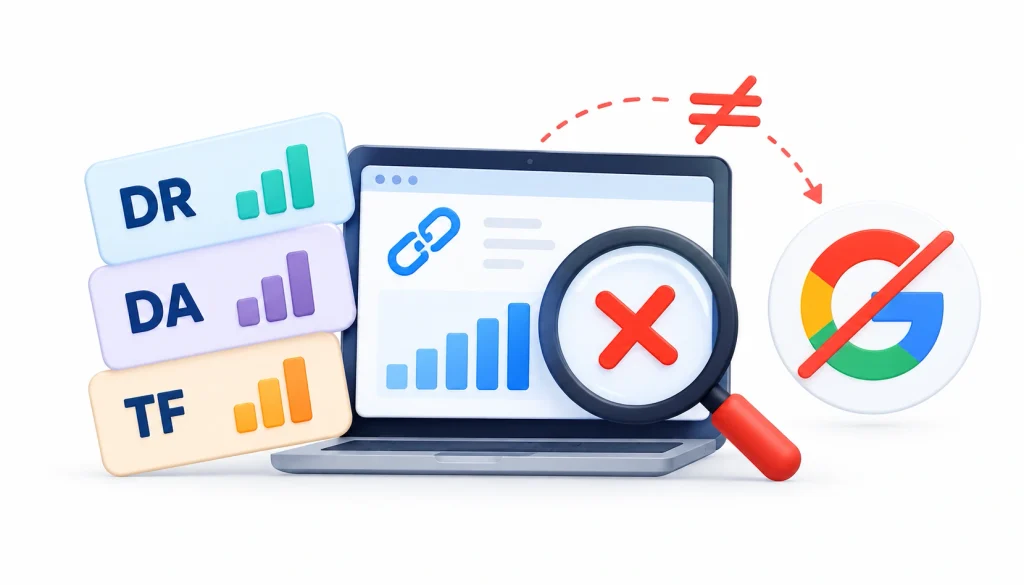
Choosing by authority score alone. DR, DA, and Trust Flow are each company’s own metric. They help you compare sites, but they are not Google ranking scores.
Treating every link as valuable. Some links bring nothing. Others can look manipulative. Google’s spam policies describe link practices it considers spam, so read them before you automate anything.
Mixing up outreach and monitoring. Outreach tools help you ask for links. They do not necessarily watch them afterward.
Paying for overlap. Audit your subscriptions first.
Ignoring lost links. A link you earned last year may be gone. You will only know if something is checking.
Automating without review. Automation saves time on contacts and follow-ups. It should not decide which sites deserve your link requests.
Free vs. paid backlink management software
Free tools work well for one site. Google Search Console gives you a solid baseline of links Google reports for your property, and the free tiers from vendors like Ahrefs or Moz let you run limited checks.
Paid software starts to make sense when you need competitor data, history, regular alerts, team access, or client reports. If you spend hours each month updating spreadsheets, a subscription may pay for itself.
A simple test: write down what you do manually each month and how long it takes. If a tool removes most of that, the upgrade is easy to justify. If it only adds charts, skip it.
For real-world opinions from working SEOs, communities like SEO and bigseo are worth browsing. Treat individual opinions as input, and test any tool on your own data.
Frequently asked questions
What is backlink management software?
It is software that helps you organize, monitor, analyze, and report on backlinks. Some products also support competitor research, outreach, and link verification.
What is the best free backlink management tool?
For your own site, Google Search Console. For limited research, try the free tiers from Ahrefs, Moz, or Majestic. For basic monitoring, look for a free trial and check the limits.
How often should you monitor backlinks?
Monthly works for small sites. Check weekly if you run active campaigns or if specific links matter to your revenue.
Does backlink management software build links automatically?
No. Research tools find opportunities, and outreach tools help you contact sites. A person still has to earn the link with something worth linking to.
What is the difference between backlink analysis and backlink management?
Analysis examines a link profile at a point in time. Management is the ongoing work of tracking, verifying, and reporting on links.
Can one tool manage backlinks for multiple websites?
Usually, yes, but project limits depend on the plan. Check the number of projects, users, and reports before you buy.
How do you check whether a backlink is still live?
Open the linking page. Confirm the link is present, points to the right URL, and carries the attribute you expect. Then check that the page returns a normal response. A monitoring tool can automate this for many links.
Final Verdict
The best backlink management software depends on your needs and budget. Ahrefs is ideal for backlink research and competitor analysis, while Semrush and SE Ranking offer broader SEO features.
Linkody is suitable for backlink monitoring, BuzzStream helps manage outreach relationships, and Pitchbox supports large-scale outreach campaigns. For a free starting point, Google Search Console provides useful backlink data for your website.
Many SEO professionals combine two tools to manage backlink research, outreach, and monitoring effectively. Identify your biggest challenge, test the available options, and choose software that fits your workflow and budget.