Artificial intelligence has changed the way businesses approach software development. Over the past few years, AI-powered development platforms have promised to reduce coding effort, shorten delivery timelines, and make application development accessible to a wider audience.
These tools can generate code, create workflows, automate testing, and even help design user interfaces. As a result, many organizations are exploring AI-driven development as a faster alternative to traditional software engineering.
However, building a prototype is very different from running a production-scale application. While AI tools can accelerate the early stages of development, businesses often discover new challenges when applications need to support thousands of users, integrate with complex systems, and meet strict security and compliance requirements.
This raises an important question: what do AI build tools actually deliver when projects move beyond experimentation and into real-world production environments?
The Rise of AI-Powered Application Development
Traditional software development requires planning, architecture design, coding, testing, deployment, and maintenance. This process often involves multiple specialists working together over several months.
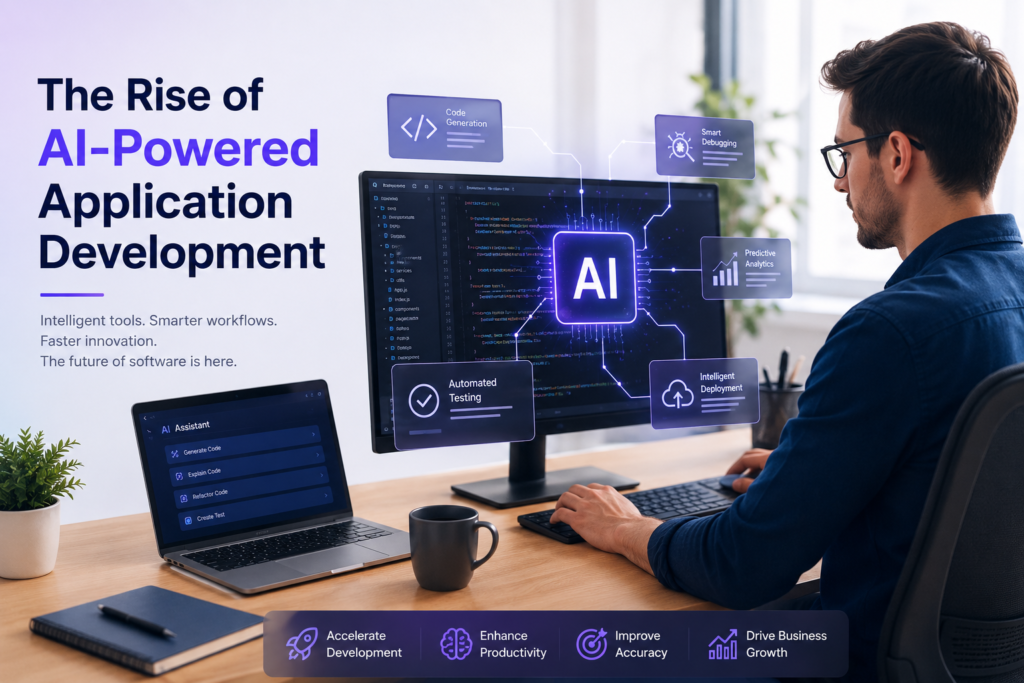
AI build tools aim to simplify this process by automating many of these tasks. Developers can describe application requirements in natural language, and the platform generates significant portions of the code automatically. Businesses are attracted to these solutions because they can reduce development time and help teams launch products more quickly.
For startups and small organizations, this speed advantage can be extremely valuable. Teams can validate ideas, collect customer feedback, and iterate on products without investing heavily in engineering resources.
What AI Build Tools Do Well
When used correctly, AI-powered development platforms provide several important benefits.
Faster Prototyping
One of the strongest advantages is rapid prototyping. Teams can transform ideas into working applications in days instead of weeks. This allows businesses to test concepts before committing significant budgets.
Reduced Development Costs
AI automation can lower development costs by reducing repetitive coding tasks. Developers spend less time writing boilerplate code and more time focusing on business logic and innovation.
Improved Productivity
AI tools can assist with documentation, debugging, code suggestions, and test generation. This support helps engineering teams become more productive and maintain momentum throughout a project.
Accessibility for Non-Technical Teams
Many modern AI development platforms allow product managers, founders, and business analysts to contribute directly to application creation. This reduces communication barriers between technical and non-technical stakeholders.
The Reality of Production-Scale Applications
Although AI tools excel during early development phases, production environments introduce a different set of requirements.
Applications serving real customers must handle:
- High traffic volumes
- Security threats
- Performance optimization
- Database scaling
- Regulatory compliance
- Continuous maintenance
- System integrations
These challenges often reveal the differences between generated software and enterprise-grade engineering.
In discussions about an AI app builder compared to traditional software development, organizations frequently discover that speed alone is not enough. Production systems require stability, reliability, and long-term maintainability that extend beyond the initial build process.
The most successful teams view AI as a productivity enhancer rather than a complete replacement for engineering expertise.
Scalability Challenges
Scalability is one of the biggest tests for any application.
An AI-generated application may perform perfectly with a few hundred users. However, as usage increases, bottlenecks can emerge in databases, APIs, server infrastructure, and application architecture.
Traditional software engineers typically design systems with scalability in mind from the beginning. They carefully evaluate load balancing, caching strategies, microservices architecture, and resource allocation.
AI tools can accelerate development, but they may not always optimize for large-scale performance without human oversight.
Common Scalability Issues
- Inefficient database queries
- Excessive API requests
- Poor memory management
- Limited caching implementation
- Architecture constraints
Addressing these issues often requires experienced developers to review and refine AI-generated code.
Security and Compliance Considerations
Security becomes increasingly important as applications grow.
Production-scale software frequently handles customer information, financial transactions, healthcare records, or proprietary business data. Any vulnerability can lead to serious consequences.
While AI tools can generate secure code patterns, they may also introduce hidden weaknesses if outputs are not thoroughly reviewed.
Organizations must consider:
| Security Area | Importance |
| Data Encryption | Protects sensitive information |
| Authentication | Verifies user identities |
| Access Control | Limits permissions |
| Compliance | Meets legal requirements |
| Vulnerability Testing | Identifies security risks |
Traditional development teams usually incorporate dedicated security reviews throughout the software lifecycle. AI-generated applications benefit from the same rigorous evaluation process.
Integration with Existing Systems
Few businesses operate in isolation.
Production applications often connect with:
- CRM platforms
- Payment processors
- ERP systems
- Analytics tools
- Marketing software
- Customer support platforms
AI build tools can simplify basic integrations, but complex enterprise environments frequently require custom development and specialized expertise.
The ability to connect multiple systems reliably becomes increasingly important as organizations scale operations.
Maintenance and Long-Term Support
Launching an application is only the beginning.
Production software requires continuous updates, bug fixes, feature enhancements, and infrastructure improvements. Over time, maintainability becomes just as important as development speed.
One concern with AI-generated code is consistency. Different prompts may produce different coding styles, making future maintenance more challenging.
Experienced engineering teams help establish coding standards, documentation practices, and architectural guidelines that support long-term growth.
Where AI Build Tools Deliver the Most Value
Despite the challenges, AI development platforms provide significant value when used strategically.
They are particularly effective for:
- MVP development
- Internal business tools
- Workflow automation
- Customer portals
- Rapid experimentation
- Feature prototyping
These use cases allow organizations to move faster while still maintaining control over critical production requirements.
Rather than replacing developers, AI often enables engineering teams to focus on higher-value activities such as architecture, optimization, security, and innovation.
The Future: AI and Human Developers Working Together
The future of software development is unlikely to be a choice between AI and human engineers. Instead, successful organizations will combine the strengths of both.
AI can accelerate development, automate repetitive work, and improve productivity. Human developers provide strategic thinking, architectural expertise, quality assurance, and problem-solving capabilities that remain essential for production-scale systems.
As AI technology continues to mature, development workflows will become increasingly collaborative. Teams that learn how to balance automation with engineering best practices will gain a significant competitive advantage.
Conclusion
AI build tools have transformed software development by making application creation faster, more accessible, and more efficient. They excel at prototyping, reducing repetitive work, and accelerating delivery timelines. However, production-scale applications introduce challenges related to scalability, security, maintenance, and system integration that often require experienced engineering oversight.
The most successful organizations recognize that AI is not a replacement for software engineering but a powerful complement to it. When combined with strong development practices, AI tools can help businesses build better applications faster while maintaining the reliability and performance required for real-world production environments.