AI video generation has changed how creators approach visual storytelling. Filmmakers, brands, and content teams can now create cinematic scenes, digital characters, and entire video concepts faster than ever before.
However, generating a visually impressive scene is only one part of filmmaking. The bigger challenge begins when that same character needs to appear again and again across multiple scenes.
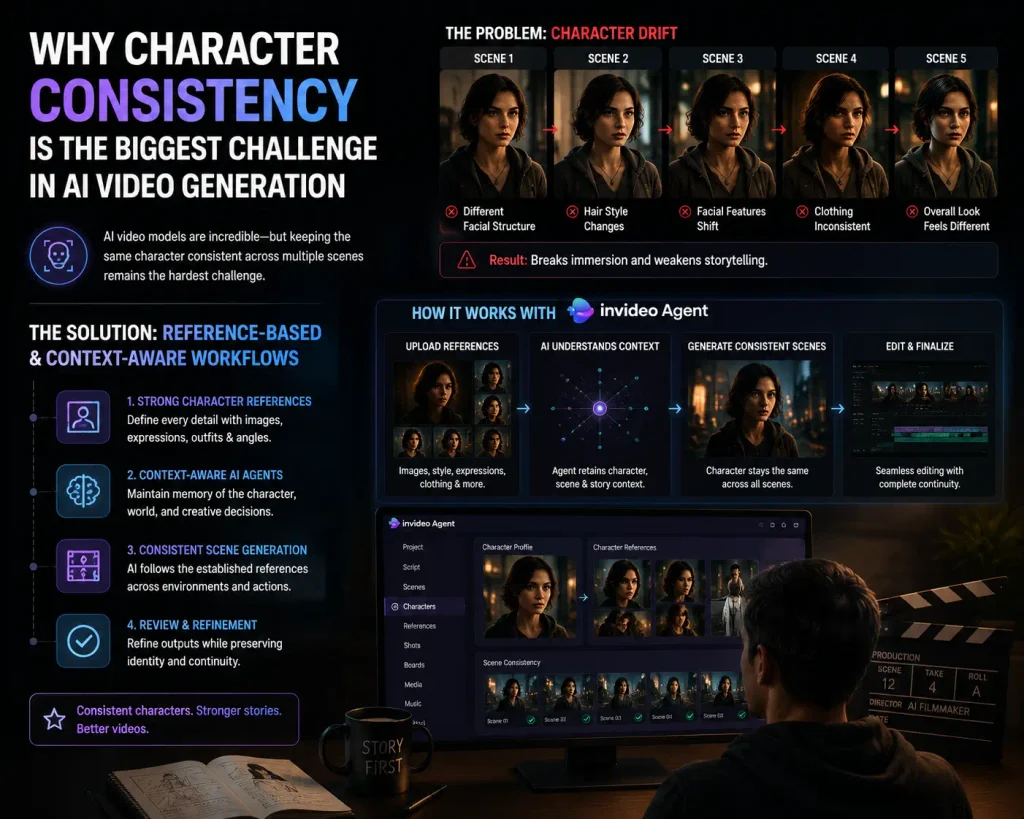
A character created in one AI-generated shot may look different in the next. Facial features can change, clothing details may shift, expressions may feel inconsistent, and the character’s overall identity can slowly drift away from the original design.
This issue, commonly known as character drift, has become one of the biggest challenges in AI video generation.
For short clips, small differences may not be noticeable. But for films, series, advertisements, and long-form storytelling, maintaining the same character identity across multiple scenes is essential. Audiences expect characters to feel like the same person throughout the story.
As AI video workflows become more advanced, creators are focusing on solving character consistency through better references, stronger creative planning, and context-aware production workflows.
What Is Character Drift in AI Video Generation?
Character drift occurs when an AI-generated character gradually changes across different scenes or generations.
The first generated image or video may match the creator’s vision, but when the character appears in a new environment, action sequence, or camera angle, certain details may change.
These changes can include facial structure, hairstyle, clothing, body proportions, age appearance, or even personality traits.
For example, a filmmaker may create a main character for a short film. In the opening scene, the character has a specific face, hairstyle, and outfit. Later, during another scene, the AI may generate a slightly different face or change small clothing details.
Individually, each scene may look realistic. However, when combined into a complete story, these differences can break immersion.
Why Maintaining Character Consistency Is Difficult for AI
AI video models generate content by interpreting patterns from training data, prompts, and references. While they are becoming better at understanding creative instructions, maintaining an exact identity across multiple generations remains complex.
Each new scene introduces additional variables. The character may appear in a different location, under different lighting, from a different camera angle, or with different movements.
The AI needs to understand that these changes should affect the environment and situation, not the character’s identity.
This is similar to traditional filmmaking continuity. A different camera angle does not change an actor’s face, clothing, or personality. AI systems need to maintain the same understanding when generating new scenes.
The Importance of Character References
One of the most effective ways to reduce character drift is using strong visual references.
Instead of describing a character only through text, creators can provide reference images that define the character’s appearance. These references act as a visual foundation for future scenes.
A detailed character reference can include:
- Facial features
- Hair and clothing details
- Age and appearance
- Body structure
- Expressions
- Visual style
For example, a filmmaker creating a fantasy series may establish a character reference showing the costume, facial details, and overall style before generating different scenes.
These references help AI systems understand which elements should remain unchanged while allowing other elements, such as backgrounds and camera movements, to evolve.
Context-Aware Workflows Improve Character Continuity
References alone are useful, but maintaining consistency across a complete project requires more than individual images.
AI filmmaking workflows are increasingly moving toward context-aware systems that understand the broader project instead of treating every generation as a separate task.
Invideo Agent supports this approach by helping creators work with connected workflows where ideas, references, scenes, and creative decisions remain linked throughout production. For character-driven projects, this helps filmmakers maintain identity across multiple scenes while developing videos from initial concepts to final outputs.
This type of workflow is especially valuable for short films, series, and branded storytelling where the same character needs to appear across different environments, camera angles, and story moments.
With invideo Agent Two, larger projects can benefit from improved coordination across complex creative workflows. It helps teams manage elements such as visual planning, cinematography, story development, and effects while maintaining alignment across different stages of production.
Character Sheets Bring Traditional Filmmaking Principles Into AI Creation
Character sheets have been used in animation and filmmaking for decades. They help production teams understand how a character should look, move, and behave.
AI filmmaking is adopting a similar approach.
A strong character sheet gives creators a consistent reference point before generating scenes. It defines the visual identity of the character and reduces uncertainty during production.
Beyond appearance, character sheets can also include personality traits, movement style, emotional expressions, and storytelling details.
This becomes especially important when creating recurring digital actors or AI-generated characters that appear across multiple episodes or campaigns.
Camera Angles and Lighting Can Affect Character Identity
Character consistency is not only about the face. Camera perspective and lighting also influence how a character appears.
A character may look different when shown in a close-up compared to a wide shot. Different lighting conditions can change how facial features, skin tones, and clothing details appear.
AI-generated videos need to maintain character identity while adapting to different cinematic situations.
Filmmakers solve this by defining visual rules around camera style, lighting, and composition before generating multiple scenes.
This ensures that creative changes support the story without affecting the character’s recognizable identity.
Maintaining Character Consistency Across Different Styles
Many AI-generated projects involve experimenting with different visual styles. A filmmaker may want a realistic cinematic look for one scene and a stylized approach for another.
However, changing the visual style can create additional consistency challenges.
The character needs to remain recognizable even when the environment, color palette, or artistic direction changes.
This is particularly important for brands creating campaigns where the same digital character appears across different advertisements, social media content, and promotional videos.
How AI Models Are Improving Character Continuity
AI video models are improving rapidly in their ability to understand references, motion, and visual relationships.
Newer models are becoming better at maintaining details such as facial features, object identity, and scene structure across multiple frames.
Different models also focus on different strengths. Some perform better with realistic motion, while others may provide stronger image references or creative control.
For example, AI models help creators generate more cinematic video sequences with improved motion and scene understanding, supporting workflows where visual consistency and storytelling continuity are important.
Combining different AI capabilities allows filmmakers to choose the right tools for different stages of production.
The Role of Human Direction in AI Character Creation
Although AI tools are improving, human creative direction remains essential for creating believable characters.
Filmmakers still need to define the character’s purpose, personality, emotional journey, and visual identity.
AI can help generate and maintain the character, but storytelling decisions determine whether audiences connect with that character.
The most effective AI-generated characters come from a combination of technology and creative planning.
The Future of Consistent AI Characters
Character consistency will continue to be one of the most important areas of development in AI video generation.
Future AI workflows will focus on creating digital characters that can maintain identity across longer stories, multiple campaigns, and different creative formats.
As AI systems gain better memory, reference understanding, and context awareness, creators will have more control over building characters that feel realistic and continuous.
The goal is not simply generating a character once. It is creating a character that can exist across an entire story.
Final Thoughts
Character consistency remains one of the biggest challenges in AI video generation because storytelling depends on continuity.
A character needs to feel like the same individual across every scene, whether they appear in a short film, commercial, or digital series.
By combining character references, detailed planning, AI models, and context-aware workflows, filmmakers can reduce character drift and create more believable AI-generated stories.
As AI filmmaking continues to evolve, maintaining character identity will become less of a limitation and more of a creative advantage for filmmakers exploring new ways to tell stories.