If you’re running SEO campaigns in Russia, Kazakhstan, or Belarus, you’ve probably hit the same wall I did years ago: your usual rank tracker just doesn’t work properly on Yandex. Positions look off. Some keywords show no data at all. And the reports you send to clients don’t match what they actually see when they search.
That’s because Yandex isn’t Google with a different logo. It ranks pages differently, weighs location and user behavior differently, and most Western SEO tools were never built with that in mind. Picking the right keyword rank tracking tool for Yandex is one of those decisions that quietly determines whether your entire CIS SEO strategy is built on solid data or guesswork.
The same challenge exists when optimizing for other regional search engines. For example, businesses targeting the Chinese market need a dedicated keyword rank tracking tool for Baidu, since Baidu uses its own ranking signals, indexing methods, and location-based search behavior that differ significantly from Google.
This guide walks through what actually matters when tracking Yandex rankings, compares the tools worth your money, and gives you a straightforward way to pick one based on your situation rather than a generic “best of” list.
A Yandex rank tracking tool checks where your website shows up in Yandex’s search results for a given keyword, on a given day, in a given location. That last part matters more than most people realize.
Unlike a basic Google-only checker, a proper Yandex tool needs to simulate searches from specific Russian regions, read Yandex’s SERP layout correctly (which looks quite different from Google’s), and update on a schedule that matches how often Yandex actually reshuffles its rankings. If your international SEO strategy also includes China, using a specialized keyword rank tracking tool for Baidu alongside your Yandex tracker ensures you receive accurate ranking data for both search engines instead of relying on Google-centric tools.
Top Keyword Rank Tracking Tools for Yandex
1. GeoRanker
GeoRanker was built with international and multi-engine tracking in mind, and its Yandex module is one of the more precise ones on the market. It supports city-level targeting across Russian regions, which matters if you’re comparing rankings in Moscow versus Novosibirsk. For businesses that need to monitor search performance across multiple search engines, it also works well as a comprehensive rank tracking software solution, helping SEO teams manage rankings from a single platform.
It also tracks Yandex Maps and local pack results, which most competitors skip entirely. If local visibility in Russia is part of your strategy, this is worth a serious look. Businesses looking for reliable rank tracking software that combines geo-specific insights with multi-engine support will appreciate GeoRanker’s strong regional accuracy and reporting capabilities.
2. Link Assistant Rank Tracker
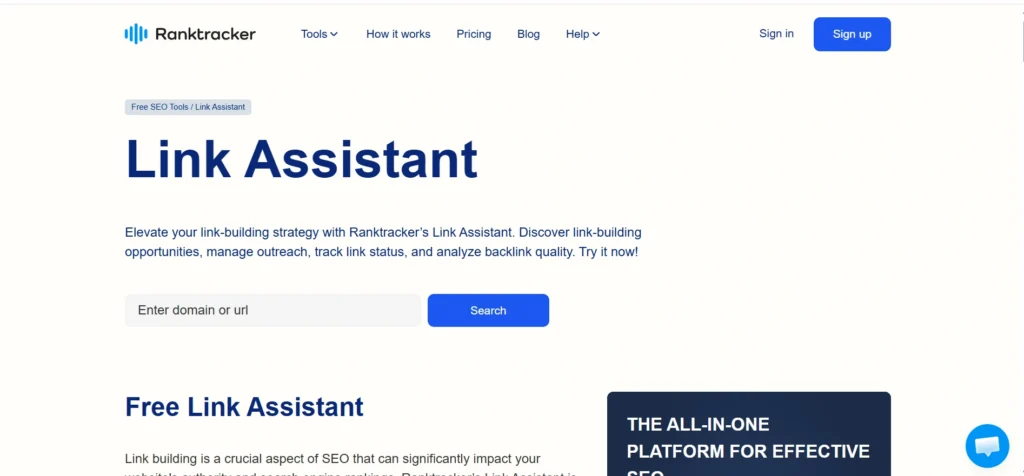
Rank Tracker has supported Yandex for years and lets you check rankings on demand rather than waiting for a scheduled crawl. That’s genuinely useful when you’ve just made a change and want to see the effect immediately instead of tomorrow.
It’s desktop software rather than a pure cloud dashboard, which some agencies find dated but others prefer for data ownership. A discussion on <a href=”https://www.reddit.com/r/SEO/” target=”_blank” rel=”noopener”>r/SEO on Reddit</a> shows this split in opinion comes up regularly when practitioners compare desktop versus cloud rank trackers.
3. Advanced Web Ranking
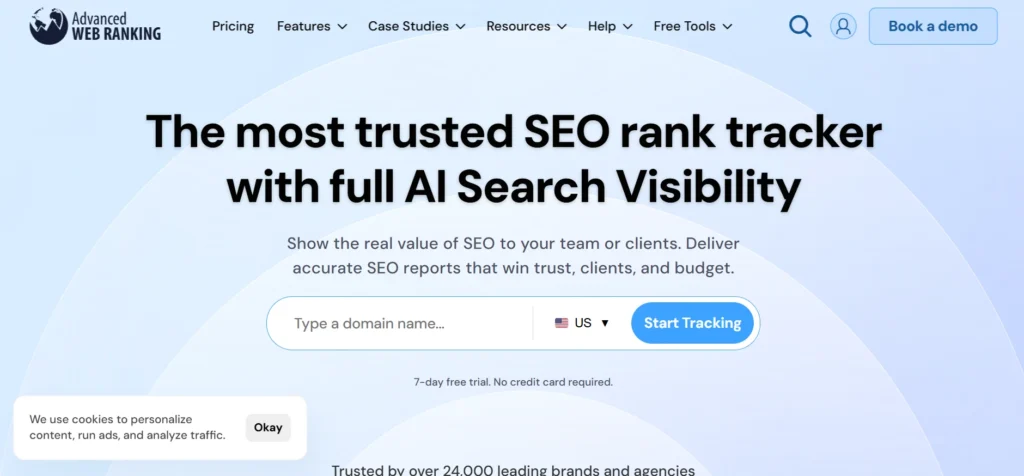
Advanced Web Ranking is one of the more configurable tools here, with granular control over search engine, region, device, and even the specific Yandex domain (yandex.ru versus yandex.kz, for example). It’s a favorite among agencies that need white-label reports for clients.
The learning curve is steeper than the plug-and-play tools on this list, but the depth of control pays off once you’re managing more than a couple of campaigns.
4. Serpstat

Serpstat covers Yandex as part of a broader all-in-one SEO suite, so you get rank tracking alongside backlink analysis and site audits in one subscription. It’s a reasonable choice if you want one tool instead of stitching several together.
Yandex-specific accuracy isn’t quite at the level of the dedicated tools above, but for teams on a budget it’s a solid middle ground.
5. SE Ranking
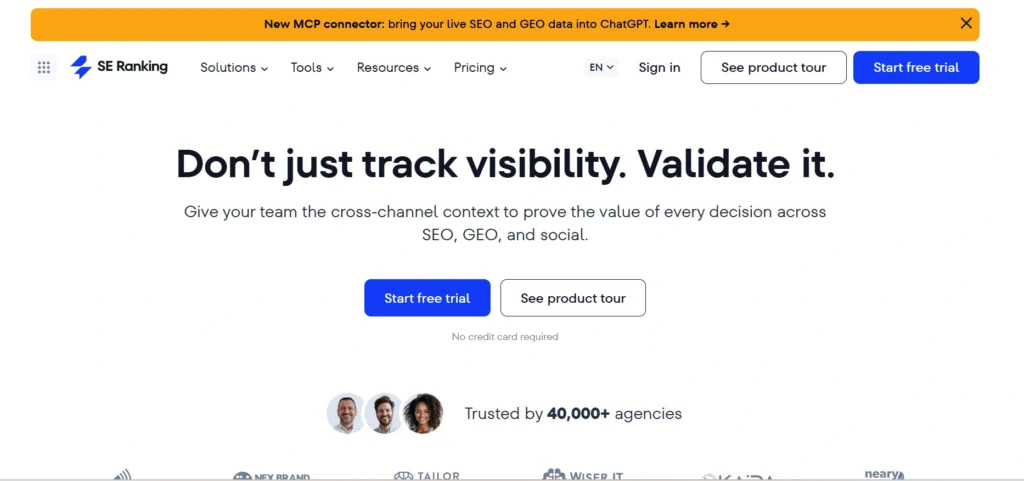
SE Ranking offers straightforward Yandex tracking with decent regional support and clean reporting. It’s popular with smaller agencies because the pricing scales reasonably with keyword volume.
It won’t give you the city-by-city precision that GeoRanker offers, but for most small and mid-size campaigns that precision isn’t strictly necessary.
6. AccuRanker
AccuRanker has built a strong reputation for fast updates and highly accurate keyword tracking, particularly for Google search results. It also supports Yandex, allowing users to monitor rankings alongside their Google campaigns from a single dashboard. This makes it a practical choice for businesses or agencies that primarily focus on Google SEO but occasionally need to check how their website performs in Yandex without investing in a separate platform.
That said, Yandex support is not the platform’s primary strength. While it can track Yandex keywords and provide reliable ranking data, it lacks some of the advanced regional targeting and Yandex-specific capabilities offered by tools designed with the Russian search engine in mind. If Yandex is only a small part of your overall SEO strategy, AccuRanker offers enough functionality to meet your needs.
However, if you’re running dedicated SEO campaigns in Russia or other Yandex-focused markets, you’ll likely outgrow its capabilities and benefit more from a specialized solution such as GeoRanker or Advanced Web Ranking.
7. Nightwatch
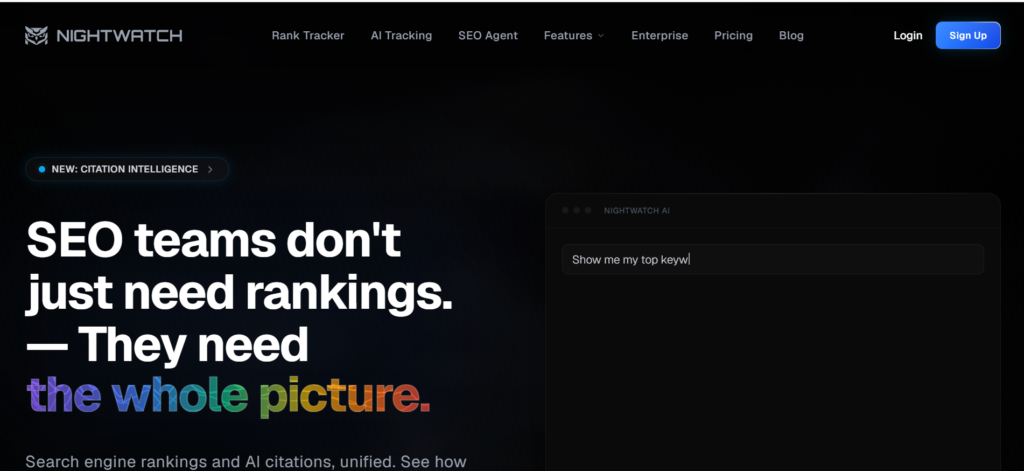
Nightwatch is a reliable mid-tier rank tracking platform that combines keyword monitoring with automated reporting, customizable dashboards, and competitor tracking. Its clean interface and scheduling features make it a good choice for SEO professionals who want regular ranking updates without spending much time on manual reporting. For teams managing campaigns across multiple search engines, it provides a convenient way to monitor performance from a single platform.
Nightwatch does support Yandex, but its capabilities are not as comprehensive as its Google tracking. While it can accurately monitor Yandex keyword positions and provide historical ranking data, it doesn’t offer the same level of regional precision or Yandex-specific features available in dedicated Yandex SEO tools. If your business primarily targets Google and only needs to keep an eye on a small number of Yandex keywords, Nightwatch can be a practical and cost-effective option.
However, if Yandex is a major source of traffic or an important part of your international SEO strategy, you’ll likely get better insights and more accurate regional data from specialized platforms such as GeoRanker or Advanced Web Ranking.Nightwatch is a solid mid-tier tracker with decent automation and reporting features. Yandex support exists but is less refined than its Google tracking, so treat it as a supplementary option rather than your primary Yandex tool.
8. Wincher
Wincher is an affordable and beginner-friendly rank tracking tool that’s easy to set up, making it a good starting point for freelancers, bloggers, and small businesses that want to monitor Yandex rankings without investing in a more expensive platform. Its simple interface, straightforward reporting, and quick project setup mean you can start tracking keywords within minutes, even if you have limited SEO experience.
While Wincher does support Yandex keyword tracking, its feature set is designed for simplicity rather than advanced regional SEO. It provides reliable ranking updates for basic monitoring, but it doesn’t offer the city-level targeting, extensive regional customization, or specialized Yandex search insights available in more dedicated tools. If you only need to track a modest number of Yandex keywords alongside your Google campaigns, Wincher offers good value for the price.
However, businesses running large-scale SEO campaigns across multiple Russian regions will likely need a more advanced solution as their requirements grow.Wincher is affordable and easy to set up, which makes it a reasonable starting point for freelancers dipping a toe into Yandex tracking without a big budget. Don’t expect deep regional granularity here.
9. Mangools
Mangools, through its KWFinder and SERPWatcher tools, is well known for its clean interface, affordable pricing, and beginner-friendly design. It’s a popular choice for freelancers, bloggers, and small businesses that want an easy way to research keywords and monitor search rankings without dealing with a steep learning curve. If you’re already using Mangools for Google SEO, its Yandex support provides a convenient way to keep track of rankings from the same platform.
However, Yandex tracking is relatively basic compared to dedicated Yandex rank tracking tools. Regional targeting options are limited, update frequency is generally slower than many competitors, and the platform lacks advanced Yandex-specific features such as detailed city-level tracking or deeper localization insights. For users who only need occasional visibility into a handful of Yandex keywords, Mangools offers good value and a straightforward experience.
However, businesses running competitive SEO campaigns across Russia and other CIS markets will likely need a more specialized tool that provides greater accuracy, faster updates, and stronger regional reporting.Mangools (through its KWFinder/SERPWatcher tools) is beginner-friendly and cheap, but Yandex tracking is basic and update frequency is slower than most competitors. Fine for casual monitoring, not for serious CIS SEO work.
10. AIOSEO
AIOSEO is a WordPress SEO plugin first and a rank tracking solution second, making it a convenient option for website owners who prefer managing their SEO from within the WordPress dashboard. Along with on-page optimization, XML sitemaps, schema markup, and other SEO features, it offers lightweight rank monitoring so you can keep an eye on your keyword performance without switching between multiple tools.
This makes it particularly useful for bloggers, small businesses, and WordPress users looking for an all-in-one SEO workflow. While AIOSEO can provide basic keyword tracking, it isn’t designed for advanced Yandex SEO campaigns. Its Yandex support is limited compared to dedicated rank tracking platforms, with fewer options for city-level targeting, regional analysis, and detailed historical reporting.
If your website primarily targets Google and you only need occasional visibility into Yandex rankings, AIOSEO offers a simple and convenient solution. However, businesses targeting multiple Russian regions or managing large-scale Yandex SEO campaigns will benefit from using a specialized Yandex rank tracking tool with more robust localization and reporting capabilities.AIOSEO is a WordPress plugin first, SEO suite second.
If your site runs on WordPress and you want lightweight rank checks without leaving your dashboard, it’s convenient. It’s not built for complex multi-region Yandex tracking, though.
How Yandex Rank Tracking Works
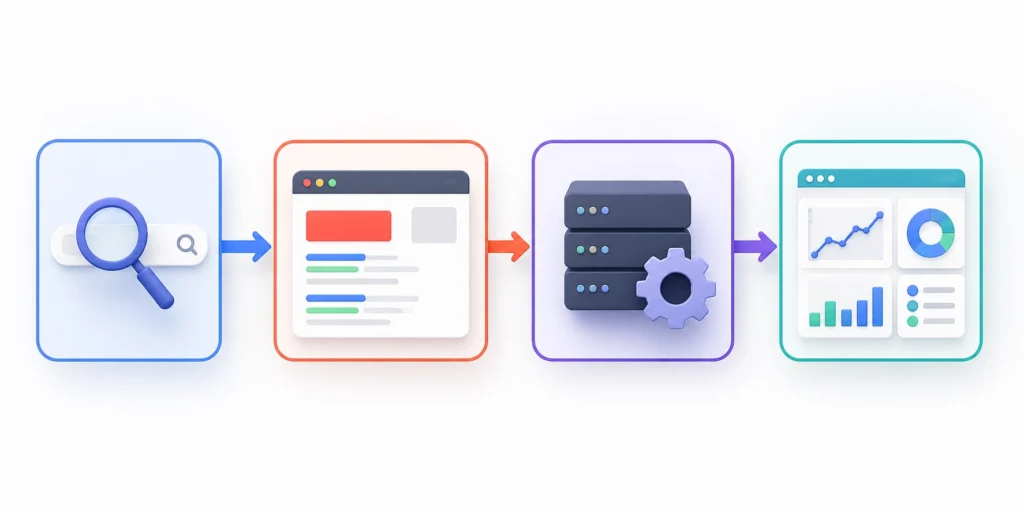
Tools ping Yandex’s search results using automated queries tied to a region code, device type, and sometimes a specific data center. The tool then records your domain’s position and stores it so you can see how it moves over time.
The tricky part is that Yandex actively pushes back against automated scraping. Good tools rotate IPs and use proper request patterns to get accurate data without triggering blocks. That infrastructure cost is a big part of why dedicated Yandex trackers charge what they do.
Why Yandex Rankings Differ from Google
Yandex looks at what people do on a website like how they stay on a page after they click on it. This is more important to Yandex than it is to Google. Yandex also changes the search results based on what a person has searched for and where they are in the world. This means that two people in cities can get very different results when they search for the same thing.
According to <a href=”https://en.wikipedia.org/wiki/Yandex_Search” target=”_blank” rel=”noopener”>Yandex Searchs history on Wikipedia</a> Yandex has been using its special computer programs to rank search results since 2009. These programs, called MatrixNet and others that came after it were made by Yandex. Are different from Google’s programs. This is why a website that is popular on Google might not be as popular, on Yandex and the way around. Yandex uses Yandex to figure out what people like. Google uses Google to do the same thing. Yandex and Google are different so they get results.
Who Needs a Yandex Rank Tracker?
You need one if you’re doing SEO for a business with real customers in Russia, Kazakhstan, Belarus, Uzbekistan, or other markets where Yandex still holds meaningful search share. That includes local businesses targeting specific Russian cities, international ecommerce brands expanding into the region, and agencies managing multilingual SEO clients.
If your traffic is 90% from Google-dominant markets, you probably don’t need this. But the moment a client asks “why aren’t we ranking in Yandex,” you’ll want real data instead of a shrug.
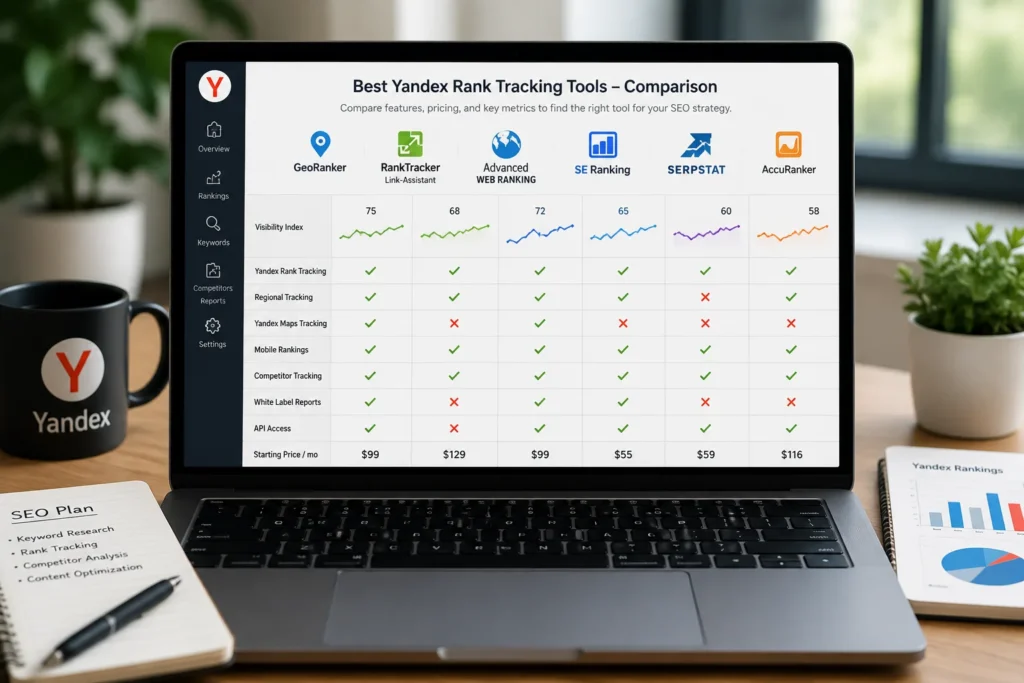
Quick Comparison of the Best Yandex Rank Tracking Tools
Here’s the short version before we go tool by tool.
Feature Comparison Table
| Tool | Yandex Support | Update Frequency | Geo-Targeting | API Access | Starting Price |
| GeoRanker | Strong | Daily | City-level | Yes | Mid-range |
| Rank Tracker (Link Assistant) | Strong | Daily/on-demand | City-level | Limited | One-time or subscription |
| Advanced Web Ranking | Strong | Daily | City-level | Yes | Mid to high |
| Serpstat | Moderate | Daily | Regional | Yes | Low to mid |
| SE Ranking | Moderate | Daily | Regional | Yes | Low to mid |
| AccuRanker | Limited | Daily | Regional | Yes | High |
| Nightwatch | Limited | Daily/weekly | Regional | Yes | Low to mid |
| Wincher | Limited | Daily | Regional | Yes | Low |
| Mangools | Limited | Weekly | Regional | No | Low |
| AIOSEO | Limited | Weekly | Regional | No | Low (WordPress plugin) |
Prices and features change often enough that you should confirm current numbers directly on each vendor’s pricing page before you commit.
Pricing Comparison
Some tools are made for Yandex. These tools have parts that help them work with Yandex. There are tools like GeoRanker and Rank Tracker and Advanced Web Ranking. These Yandex tools cost money because they have their own system to get information from Yandex.
Other tools like Serpstat and SE Ranking can also work with Yandex. They are not as good at it. These tools are okay for getting some information from Yandex.
Then there are tools that can work with Yandex but not very well. These tools are cheaper. They do not always give the right information when you want to know something about a specific city and Yandex. Yandex tools that are not very good at tracking Yandex are, like this. Yandex is important for these tools to work correctly.
Best Tool by Use Case
Freelancers and solo consultants who are keeping track of a number of Yandex keywords can manage just fine with Serpstat or SE Ranking. Agencies that are handling clients in different regions usually require GeoRanker or Advanced Web Ranking because they offer better geo-precision and white-label reporting. Companies that have a number of keywords and need automation should start by looking at API access and then make a choice from there.
How We Evaluated These Tools
To keep this comparison honest, we looked at each tool against six criteria that actually affect day-to-day SEO work rather than marketing claims.
1. Accuracy
Whether the reported position matched what a real search from that location actually showed, checked manually against a sample of keywords.
2. Regional Coverage
How many Russian and CIS regions or cities each tool could realistically target, not just claim to support.
3. Update Frequency
How often rankings refresh, and whether on-demand checks were available for time-sensitive work.
4. Reporting
Whether reports were clear enough to hand to a client without extra editing, and whether white-labeling was available.
5. Ease of Use
How long it took a new user to set up their first tracking campaign without documentation.
6. Automation
Whether the tool supported scheduled reports, alerts for ranking drops, and API access for custom workflows.
Key Features to Look for in a Yandex Rank Tracking Tool
1. Geo-Specific Tracking
Rankings in Yandex can shift noticeably between cities, so a tool that only tracks at the country level is missing half the picture. Look for city-level targeting if you serve local customers.
2. Mobile vs Desktop Rankings
Mobile and desktop results often differ on Yandex just like they do on Google. Track both separately, especially if a large share of your traffic comes from phones.
3. Daily Updates
Weekly updates are fine for a slow-moving content site, but if you’re actively optimizing pages, daily data lets you see the effect of changes within a day or two instead of guessing for a week.
4. Historical Trends
A tool that only shows today’s position is far less useful than one that lets you graph movement over months. That history is what tells you whether a drop is a blip or a real problem.
5. Competitor Tracking
Knowing your own position is only half the job. Being able to see where your top three competitors sit for the same keywords tells you whether a ranking drop is your fault or the whole niche shifted.
6. SERP Feature Tracking
Yandex has its own version of rich snippets, local packs, and Yandex Zen content blocks. Tools that track these give you a fuller picture of visibility beyond a plain blue link position.
7. Keyword Tagging
Grouping keywords by product line, intent, or campaign makes reports far easier to read once you’re tracking more than fifty terms.
8. AI Insights
Some newer tools flag unusual ranking volatility or suggest which keywords need attention. Useful as a starting point, though it shouldn’t replace your own analysis.
9. API Access
If you want to pull ranking data into your own dashboards or combine it with analytics data, API access is non-negotiable. Check the rate limits before assuming it’ll cover your keyword volume.
How to Choose the Right Tool
1. For Freelancers
Pick something affordable with a simple setup, Wincher or SE Ranking will cover most small client workloads without overcomplicating things.
2. For Agencies
Prioritize white-label reporting and multi-client management. GeoRanker or Advanced Web Ranking handle this better than the budget options.
3. For Ecommerce
Look for competitor tracking and keyword volume capacity, since ecommerce sites often track thousands of product-related terms.
4. For Enterprise SEO
API access and automation matter most here. You’ll likely want to feed ranking data into your own BI dashboards rather than relying on the tool’s native reports alone.
How to Track Yandex Rankings Step by Step
1. Create a Project
Set up a new campaign in your chosen tool and connect your domain.
2. Add Keywords
Import your target keyword list, ideally organized by page or product category from the start.
3. Choose Regions
Select the specific Russian cities or regions relevant to your business rather than tracking at the country level by default.
4. Monitor Rankings
Let the tool run its scheduled checks and review the dashboard weekly at minimum.
5. Analyze Trends
Look for patterns over 30 to 90 days rather than reacting to single-day fluctuations, which are normal.
6. Optimize Based on Insights
Use ranking drops as a prompt to check for technical issues, content changes, or new competitor activity, then adjust your pages accordingly.
Yandex Rank Tracking Best Practices
1. Track by Region
Don’t assume a national average tells you anything useful if your business serves specific cities. Track where your customers actually are.
2. Group Keywords
Organize keywords by topic or funnel stage so your reports tell a story instead of showing a flat list of numbers.
3. Monitor Competitors
Set up tracking for two or three direct competitors alongside your own keywords. It’s the fastest way to tell whether a drop is niche-wide or specific to you.
4. Review SERP Features
Check whether Yandex is showing local packs, images, or Zen content above organic results for your target keywords. Ranking first in organic doesn’t help much if a map pack pushes you below the fold.
5. Track Search Intent Changes
Occasionally Yandex will start showing different result types for a keyword, a sign the perceived intent behind that search has shifted. Revisit your content strategy when that happens.
Common Mistakes to Avoid
The biggest mistake people make is looking at the countrywide level and missing big changes in certain areas. A close second is checking how things rank once a month and thinking that normal ups and downs are actual problems. Not paying attention to how things look on phones is another mistake, especially, for companies that get most of their customers from mobile devices. Many groups also don’t track what their competitors are doing which means they don’t know if their own changes are really strange or not.
Yandex vs Google Rank Tracking
1. Algorithm Differences
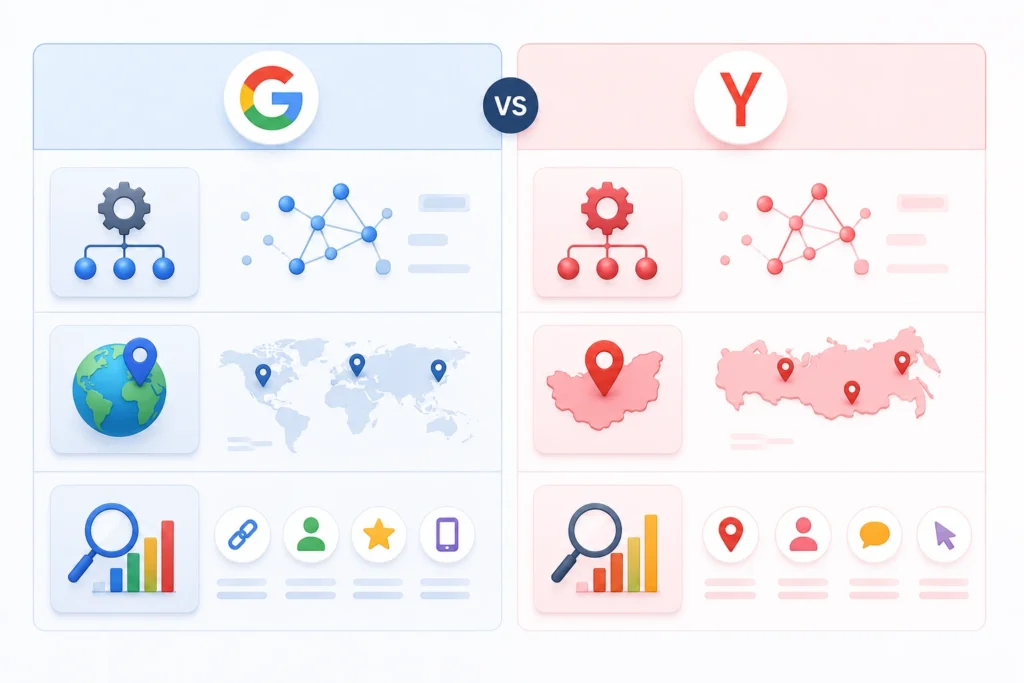
Google relies heavily on backlinks and content relevance signals refined over two decades of public updates. Yandex places more weight on user behavior data collected through its own ecosystem, including Yandex Metrica and Yandex Browser.
2. Localization
Yandex’s regional targeting can be more granular within Russia than Google’s, since it was built around the specific geography and language needs of Russian-speaking markets from the start.
3. Behavioral Signals
Click-through rate, dwell time, and pogo-sticking (clicking back to the results page quickly) appear to influence Yandex rankings more directly, based on patterns SEO practitioners have documented in community discussions on <a href=”https://www.reddit.com/r/bigseo/” target=”_blank” rel=”noopener”>r/bigseo</a> over the years.
4. Ranking Volatility
Yandex rankings can shift more visibly after regional events or algorithm tweaks, which is part of why daily tracking is worth the extra cost compared to weekly checks.
Frequently Asked Questions
What is the best keyword rank tracking tool for Yandex?
GeoRanker and Advanced Web Ranking are generally considered the strongest options for accuracy and regional depth, though the right choice depends on your budget and how granular your location targeting needs to be.
Does Semrush track Yandex rankings?
Semrush focuses primarily on Google and Bing tracking and doesn’t offer dedicated Yandex rank tracking. For Yandex, you’ll need a tool built or extended specifically for it.
Can Ahrefs track Yandex keywords?
No, Ahrefs’ rank tracking is built around Google. It’s not a suitable option if Yandex is part of your strategy.
How do I monitor keyword rankings on Yandex?
Use a rank tracker with confirmed Yandex support, set up your target regions, add your keyword list, and check the dashboard on a regular schedule rather than a one-off.
Is there a free Yandex rank checker?
Some tools offer limited free trials or a small number of free daily checks, but there’s no fully-featured free option suited to ongoing professional tracking.
How accurate are Yandex rank tracking tools?
Accuracy varies by tool and depends heavily on how well they simulate real regional searches. Tools built specifically for Yandex tend to be more reliable than general trackers with basic Yandex support bolted on.
How often should I track Yandex keyword rankings?
Daily is ideal if you’re actively optimizing. Weekly can work for stable, low-competition keywords where you’re not expecting fast movement.
Why do Yandex rankings vary by location?
Yandex personalizes results based on regional user behavior and local relevance, so the same keyword can show different top results in Moscow versus a smaller regional city.
Can I track mobile rankings on Yandex?
Yes, most dedicated Yandex tools let you track mobile and desktop rankings separately.
Conclusion
The right Yandex rank tracking tool for you depends on how important Yandex is to your overall SEO strategy. If a significant share of your traffic or revenue comes from Russia and other Yandex-dominated markets, investing in a tool that provides accurate regional tracking and detailed reporting is well worth it. Understanding search engine basics, such as how Yandex’s ranking algorithms, localization, and user behavior signals differ from Google, will also help you make better decisions when selecting the right platform.
On the other hand, if you only monitor a small number of Yandex keywords, a simpler and more affordable tool may be enough to keep track of your rankings without paying for enterprise-level features.
Each tool serves a different type of user. GeoRanker is ideal for businesses that need precise location-based tracking and visibility in Yandex Maps. SE Ranking offers a strong balance of features and affordability, making it a great option for small businesses and growing SEO teams. Knowing the search engine basics behind regional search results and ranking factors can help you understand why some tools perform better than others in Yandex.
Advanced Web Ranking is well suited for enterprises and agencies that require extensive customization, automation, and detailed reporting. Wincher, on the other hand, is an excellent choice for freelancers and beginners who want an easy way to start tracking Yandex keyword performance.
Ultimately, the best Yandex rank tracking tool is the one that helps you make smarter SEO decisions. Regularly monitoring your keyword rankings, identifying trends, and optimizing your content based on real search data will deliver better long-term results than simply generating reports. Combine the insights from your rank tracker with a solid understanding of search engine basics, choose a solution that fits your goals and budget, and use it consistently to improve your visibility in Yandex search results over time.
How you work and use it regularly to get better results in Yandex search over time. Yandex rank tracking tools are important for anyone who wants to do in Yandex search results. Yandex is a deal for some businesses so they need to use Yandex rank tracking tools to stay on top of things.