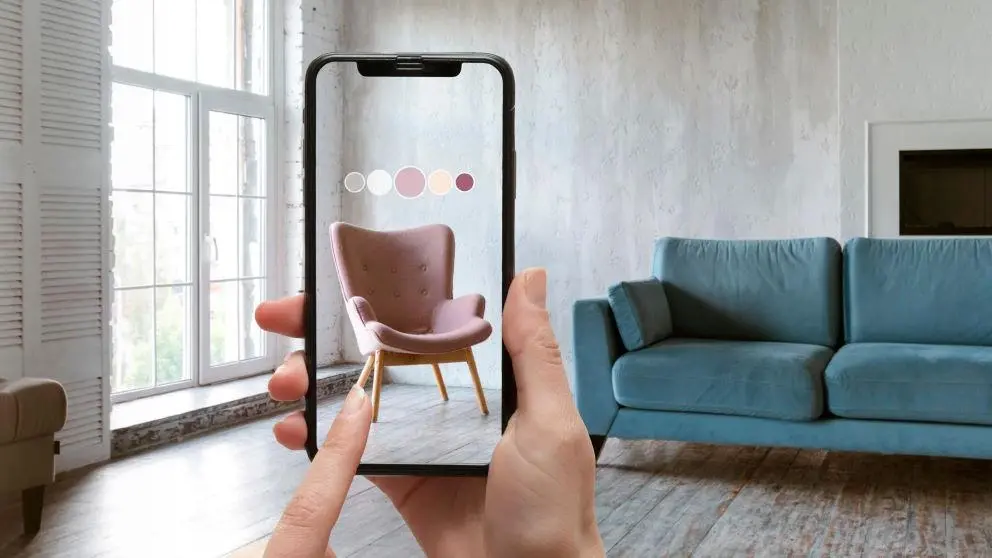
Imagine pointing your smartphone at your living room and instantly seeing how a new sofa would look before buying it. Or wearing smart glasses that display navigation directions directly on the road in front of you.
This isn’t science fiction, it’s augmented reality (AR).
Augmented reality has transformed how people shop, learn, work, and interact with digital content. From gaming experiences like Pokémon GO to advanced industrial training systems, AR is becoming a major part of everyday life.Yet many people still ask a simple question:
How does augmented reality work?
The answer involves a fascinating combination of computer vision, sensors, cameras, artificial intelligence, 3D modeling, and real-time processing.
In this comprehensive guide, you’ll learn exactly how augmented reality works, the technology behind it, its key components, real-world applications, benefits, limitations, and what the future holds for AR technology.
What Is Augmented Reality?
Augmented reality (AR) is a technology that overlays digital content onto the real world in real time.
Instead of replacing reality, AR enhances it by adding computer-generated elements such as:
- Images
- Animations
- Videos
- 3D objects
- Text information
- Interactive experiences
Users continue to see their physical environment while digital elements are layered on top.
Quick Definition
Augmented reality works by using cameras, sensors, and software to recognize the real-world environment and place digital content within that environment in real time.
How Does Augmented Reality Work? (Short Answer)
For those looking for a quick answer:
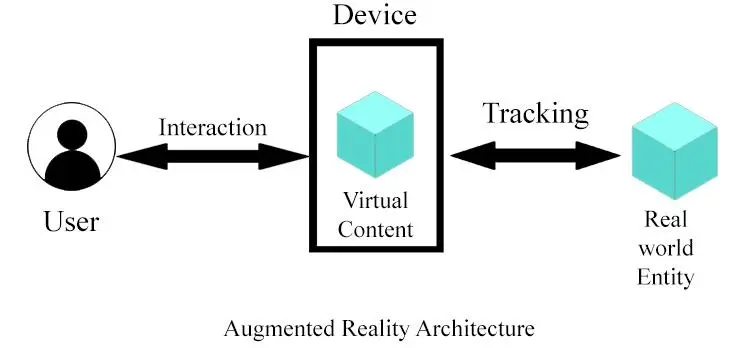
Augmented reality works by capturing the real world through a camera, analyzing the environment using sensors and computer vision, determining the user’s position, and then overlaying digital content that appears anchored to physical objects or locations.
The process happens within milliseconds, creating a seamless blend of physical and digital worlds.
The Core Components of Augmented Reality
To understand how AR functions, it’s important to understand the technologies working together behind the scenes.
1. Camera Systems
The camera serves as AR’s eyes.
It continuously captures images of the surrounding environment and sends visual data to the AR software.
The camera helps:
- Detect surfaces
- Identify objects
- Recognize markers
- Track movement
- Understand spatial positioning
Without visual input, most AR experiences would not be possible.
2. Sensors
Modern AR devices rely on multiple sensors.
Common sensors include:
Accelerometer
Measures movement and orientation.
Gyroscope
Tracks rotation and angular motion.
Magnetometer
Acts as a digital compass.
GPS
Provides location-based information.
Together, these sensors help determine:
- User position
- Device orientation
- Movement direction
- Environmental context
3. Computer Vision
Computer vision is one of the most important technologies behind augmented reality.
It allows software to:
- Understand images
- Detect objects
- Recognize faces
- Identify surfaces
- Track motion
Computer vision converts camera data into meaningful information that AR systems can interpret.
For example, if an AR app places a virtual chair on your floor, computer vision helps identify where the floor is located.
4. Simultaneous Localization and Mapping (SLAM)
One of the biggest breakthroughs in modern AR is SLAM.
What Is SLAM?
SLAM stands for:
Simultaneous Localization and Mapping
This technology allows devices to:
- Build a map of the environment
- Track their position within that map
- Update information continuously
SLAM helps digital objects remain fixed in place even when users move around.
For example:
A virtual coffee table stays in the same location as you walk around the room.
Without SLAM, AR objects would drift or move incorrectly.
5. Processing Unit
All captured data must be processed extremely quickly.
The processor:
- Analyzes sensor data
- Runs computer vision algorithms
- Calculates positioning
- Renders 3D graphics
Modern smartphones and AR headsets contain powerful chips specifically designed for these tasks.
6. Display Technology
Once digital content is generated, it must be displayed to the user.
Common AR displays include:
Smartphone Screens
Most AR experiences today use mobile devices.
Tablets
Offer larger viewing areas.
Smart Glasses
Project digital information directly into the user’s field of vision.
AR Headsets
Provide immersive augmented experiences while keeping the real world visible.
Step-by-Step: How Augmented Reality Works
Let’s break down the entire process.
Step 1: Environment Scanning
The camera captures the surrounding environment.
The software begins analyzing:
- Floors
- Walls
- Objects
- Lighting conditions
- Spatial dimensions
Step 2: Object and Surface Detection
Computer vision identifies usable surfaces.
Examples include:
- Tables
- Floors
- Walls
- Product packaging
- Human faces
The system determines where virtual objects can be placed.
Step 3: Position Tracking
Sensors and SLAM technology calculate:
- User location
- Viewing angle
- Device movement
The AR system continuously updates positioning data.
Step 4: Digital Content Placement
The software determines where digital elements should appear.
Examples:
- Virtual furniture
- Navigation arrows
- Educational graphics
- Product information
The content is anchored to specific locations.
Step 5: Real-Time Rendering
Graphics engines generate 3D content instantly.
The rendered object is adjusted based on:
- Perspective
- Distance
- Lighting
- User movement
This creates realism and immersion.
Step 6: Continuous Updating
AR systems constantly refresh data.
As users move:
- The environment changes
- Position data updates
- Digital elements adjust
This process happens many times per second.
Types of Augmented Reality
Not all AR systems work the same way.
1. Marker-Based AR
Uses predefined images or markers.
When the camera detects a marker, digital content appears.
Examples:
- Product packaging
- QR-code-like markers
- Printed advertisements
2. Markerless AR
Uses SLAM, GPS, and sensors instead of markers.
This is the most common type today.
Examples:
- Furniture placement apps
- Navigation systems
- Interior design tools
3. Location-Based AR
Uses GPS coordinates.
Digital content appears at specific geographic locations.
Examples:
- Tourism applications
- Navigation apps
- AR games
4. Projection-Based AR
Projects digital images directly onto physical surfaces.
Common in manufacturing and industrial settings.
5. Superimposition AR
Replaces or enhances parts of the real-world view.
Examples include:
- Virtual makeup apps
- Medical visualization systems
- Product customization tools
Real-World Examples of Augmented Reality
Understanding AR becomes easier when looking at practical applications.
1. Retail and E-Commerce
Consumers can:
- Try products virtually
- Visualize furniture
- Preview home décor
Benefits include:
- Better buying decisions
- Reduced returns
- Improved customer experience
2. Healthcare
Doctors use AR for:
- Surgical planning
- Medical training
- Patient education
AR can provide visual guidance during complex procedures.
3. Education
Students can interact with:
- 3D models
- Historical recreations
- Scientific simulations
Learning becomes more engaging and memorable.
4. Manufacturing
AR assists workers by displaying:
- Assembly instructions
- Safety alerts
- Maintenance procedures
This improves efficiency and reduces errors.
5. Navigation
AR navigation overlays directions directly onto roads and pathways.
Users can follow visual arrows instead of interpreting traditional maps.
6. Gaming and Entertainment
AR gaming blends virtual content with physical environments.
Players interact with digital objects as though they exist in the real world.

How Artificial Intelligence Enhances Augmented Reality
Modern AR increasingly relies on AI.
Artificial intelligence improves:
a. Object Recognition
AI identifies real-world objects with greater accuracy.
b. Scene Understanding
Systems can interpret complex environments.
c. Gesture Recognition
Users can interact using hand movements.
d. Personalization
Experiences adapt to user behavior and preferences.
As AI evolves, AR experiences become smarter and more natural.
Benefits of Augmented Reality
AR offers significant advantages across industries.
a. Improved User Engagement
Interactive experiences capture attention more effectively than static content.
b. Better Learning Outcomes
Visual and hands-on experiences improve information retention.
c. Enhanced Decision-Making
Users can preview products before purchasing.
d. Increased Productivity
Workers receive contextual information without leaving their tasks.
e. Reduced Costs
Virtual demonstrations often eliminate the need for physical prototypes.
Challenges and Limitations of Augmented Reality
Despite rapid growth, AR still faces challenges.
a. Hardware Constraints
Advanced AR requires powerful devices.
b .Battery Consumption
Continuous camera and sensor use drains battery life.
c. Privacy Concerns
AR systems often collect environmental data.
d. Accuracy Issues
Poor lighting or complex environments can affect performance.
e. Development Complexity
Creating high-quality AR experiences requires specialized expertise.
The Future of Augmented Reality
The future of AR is incredibly promising.
Emerging developments include:
a. AR Smart Glasses
Lightweight wearable devices could eventually replace smartphones for many tasks.
b. AI-Powered Spatial Computing
AR systems will better understand environments and user intent.
c. Enterprise Adoption
Businesses will increasingly use AR for:
- Training
- Collaboration
- Maintenance
- Remote assistance
d. Mixed Reality Experiences
The line between augmented reality and virtual reality will continue to blur.
Industry analysts predict AR will become a core computing platform over the next decade.

Key Takeaways: How Does Augmented Reality Work?
Here are the most important insights:
Augmented reality works by combining cameras, sensors, computer vision, and real-time graphics to overlay digital content onto the physical world.
Modern AR relies heavily on SLAM technology to track environments and anchor digital objects accurately.
Smartphones, tablets, smart glasses, and headsets all serve as platforms for augmented reality experiences.
Industries including healthcare, education, retail, manufacturing, and entertainment are rapidly adopting AR solutions.
Artificial intelligence is making AR more accurate, intelligent, and immersive.
Conclusion
Augmented reality is fundamentally changing the way people interact with information. By combining cameras, sensors, computer vision, SLAM, artificial intelligence, and real-time rendering, AR creates experiences that seamlessly blend the physical and digital worlds.
As hardware becomes more powerful and AI continues to advance, augmented reality will move far beyond gaming and novelty applications. It will become a critical tool for education, commerce, healthcare, collaboration, and everyday life.
Understanding how augmented reality works today provides valuable insight into the future of human-computer interaction, and that future is arriving faster than many people realize.
This version is structured to perform well for traditional SEO, featured snippets (AEO), and AI-driven search systems (GEO) through concise answer sections, entity-rich topical coverage, quotable takeaways, FAQ targeting, and semantic depth around AR technologies.
Frequently Asked Questions (FAQ)
1. How does augmented reality work on smartphones?
Smartphones use cameras, sensors, GPS, and computer vision software to analyze the environment and display digital content on the screen in real time.
2. What technology is used in augmented reality?
Augmented reality uses cameras, sensors, GPS, computer vision, SLAM, artificial intelligence, 3D graphics engines, and display technologies.
3. What is the difference between AR and VR?
AR adds digital content to the real world, while virtual reality (VR) replaces the real world with a fully digital environment.
4. Does augmented reality require internet access?
Not always. Many AR applications can function offline, although cloud-based features may require an internet connection.
5. What devices support augmented reality?
AR is supported on smartphones, tablets, smart glasses, AR headsets, and some wearable devices.
6. Why is SLAM important in augmented reality?
SLAM helps AR systems map the environment and track user movement, allowing virtual objects to remain accurately positioned in the real world.
7. Can augmented reality use artificial intelligence?
Yes. AI improves object recognition, scene understanding, gesture tracking, personalization, and overall AR performance.
8. What industries use augmented reality?
Healthcare, retail, manufacturing, education, real estate, automotive, logistics, tourism, and entertainment industries all use AR technology.