If you have ever wondered whether moving your marketing budget online is worth it, you’re asking the right question. The benefits of online advertising go far beyond getting more people to see your ads. When used effectively, it helps you reach the right audience faster, reduce customer acquisition costs, and measure exactly how your campaigns are performing.
This guide explains what online advertising is, why it has become more important than ever, and the 15 biggest benefits it offers businesses today. You’ll also learn how different advertising platforms compare, which key performance indicators (KPIs) matter most, and the common mistakes to avoid before investing your budget.
If you’re looking to build a stronger digital presence, you can also explore our Social Media guide to learn how organic and paid social strategies work together to increase brand awareness, engagement, and conversions.
By the end of this guide, you’ll have a clear understanding of how online advertising can support your business growth and help you achieve better marketing results.
What Is Online Advertising?
Definition
Online advertising is the practice of promoting products or services through digital channels, search engines, social platforms, apps, and websites, instead of print, TV, or radio.
According to Wikipedia’s overview of online advertising, it uses the internet to deliver promotional marketing messages to consumers, and includes formats like search ads, banner ads, and social media placements.
How Online Advertising Works
At a basic level, an advertiser bids for space or attention on a digital platform. The platform’s algorithm determines who sees the ad based on targeting settings, budget, and ad relevance. Depending on the campaign type, advertisers pay per click (PPC), per impression (CPM), or per action (CPA), giving businesses flexibility in how they invest their advertising budget.
The process is simple: identify your target audience, set a budget, launch your ads, measure the results, and optimize your campaigns based on performance. Unlike traditional advertising, where success is often difficult to measure, online advertising provides real-time insights that help you improve results continuously.
It also plays a vital role in building a strong online presence, making it easier for potential customers to discover your business across search engines, social media platforms, and other digital channels.
Common Types of Online Advertising
- Search ads: text ads that appear on search engine results pages, usually triggered by keywords.
- Display ads: banner or image ads shown across websites and apps.
- Social media ads: ads placed within platforms like Facebook, Instagram, or LinkedIn.
- Video ads: ads shown before, during, or after video content.
- Native ads: ads styled to match the look of the platform they appear on.
- Shopping ads: product listings with images and prices, common on Google and Amazon.
- Programmatic ads: ads bought and placed automatically through software, often across many sites at once.
15 Benefits of Online Advertising
1. Reach Highly Targeted Audiences
One of the biggest advantages of online advertising is the ability to reach the right people instead of broadcasting your message to everyone. Traditional advertising often relies on broad demographics, meaning many people who see your ad may have no interest in your product or service.
Digital advertising platforms let you define your audience using detailed targeting options such as age, gender, location, interests, online behavior, job title, income level, device type, and even previous interactions with your business.
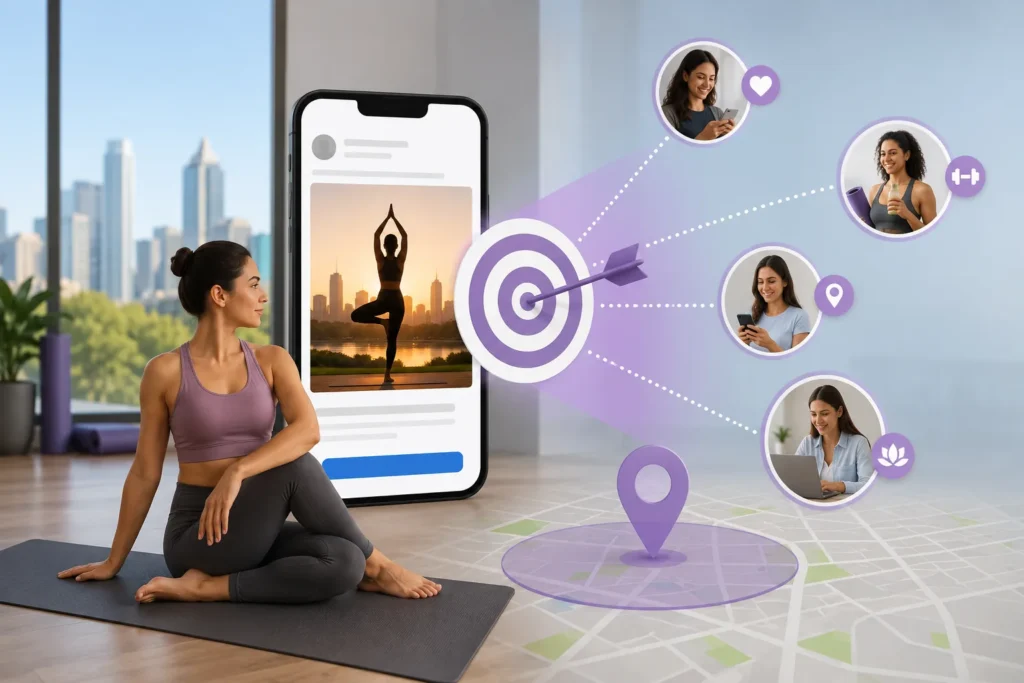
For example, a yoga studio in Austin can create a campaign that targets women aged 25–45 within a 10-mile radius who have shown an interest in fitness, wellness, or meditation. Instead of paying to reach thousands of irrelevant viewers, the business spends its budget on people who are much more likely to book a class.
Advanced targeting also includes custom audiences, lookalike audiences, and remarketing, allowing businesses to reconnect with existing customers or reach new users who share similar characteristics with their best customers.
Business Example: A yoga studio in Austin targets women aged 25–45 within a 10-mile radius who follow fitness and wellness accounts, increasing local class registrations.
KPI to Measure: Click-through rate (CTR) by audience segment.
2. Expand Local and Global Reach
Online advertising allows businesses to reach customers at virtually any scale. Whether you serve a single neighborhood or multiple countries, digital campaigns can be customized to match your business goals. Unlike traditional advertising, expanding into new markets doesn’t require separate print campaigns or expensive television spots.
A local business can focus on nearby customers by targeting specific cities, ZIP codes, or even a radius around its physical location. At the same time, ecommerce businesses can launch international campaigns that target multiple countries with localized messaging, currencies, and languages.
This flexibility makes online advertising ideal for businesses planning gradual expansion without significantly increasing marketing costs.
Business Example: A handmade jewelry seller on Etsy runs one campaign promoting local pickup orders while simultaneously advertising worldwide shipping to international customers.
KPI to Measure: Impressions and conversions by geographic location.
3. Cost-Effective Marketing
Compared to traditional media, online advertising offers a much lower barrier to entry. Businesses can launch campaigns with modest daily budgets and adjust spending based on performance. This makes digital advertising accessible to startups, local businesses, and enterprises alike.
Most advertising platforms operate on auction-based pricing models such as Cost Per Click (CPC) or Cost Per Thousand Impressions (CPM). You only pay when your campaign receives clicks, impressions, or other measurable actions depending on your chosen objective.
Because budgets are flexible, businesses can pause campaigns during slower periods, increase spending during peak seasons, or shift budget toward higher-performing campaigns without major financial risk.
Business Example: A local plumbing company invests only $10 per day in Google Ads targeting emergency plumbing searches and consistently generates qualified service calls.
KPI to Measure: Cost per Click (CPC).
4. Higher Return on Investment (ROI)
Online advertising often delivers stronger returns because campaigns can be continuously optimized using real-time performance data. Instead of spending money on audiences unlikely to convert, advertisers focus their budget on users who demonstrate purchase intent or previous engagement.
Features such as audience segmentation, remarketing, automated bidding, and conversion tracking help reduce wasted ad spend while increasing revenue.
As campaigns collect more data, advertisers can identify which keywords, audiences, creatives, and placements generate the highest return and allocate more budget accordingly.
Business Example: An online course creator discovers that visitors who previously viewed the pricing page convert three times more often than first-time visitors, making remarketing campaigns significantly more profitable.
KPI to Measure: Return on Ad Spend (ROAS).
5. Real-Time Performance Tracking
Unlike traditional advertising, where results may take weeks to measure, online advertising provides performance insights almost instantly. Marketers can monitor impressions, clicks, conversions, sales, engagement, and advertising costs through detailed dashboards.
Real-time reporting allows businesses to identify underperforming campaigns before large budgets are spent. If a campaign isn’t generating expected results, marketers can quickly adjust targeting, creative assets, bidding strategies, or landing pages.
This immediate feedback loop makes digital marketing far more efficient and data-driven.
Business Example: A restaurant notices its lunch promotion receives very few reservations by midday. Instead of continuing to spend budget, the campaign is paused and replaced with a dinner promotion.
KPI to Measure: Daily conversion rate.
6. Faster Campaign Optimization
Because online advertising generates immediate performance data, marketers can continuously improve campaigns through testing and optimization. Small adjustments to headlines, images, calls to action, landing pages, or audience targeting can significantly improve results.
A/B testing enables advertisers to compare multiple variations and identify which version produces the highest engagement or conversion rate. Rather than relying on assumptions, decisions are based on measurable performance.
Over time, ongoing optimization increases efficiency while reducing customer acquisition costs.
Business Example: An ecommerce store tests three product images for the same advertisement and discovers one image generates 35% more add-to-cart actions than the others.
KPI to Measure: A/B test conversion lift.
7. Better Brand Awareness
Online advertising isn’t only about immediate sales. Consistent exposure across search engines, social media platforms, video networks, and display advertising helps businesses build long-term brand recognition.
Even if users don’t click an advertisement the first time they see it, repeated exposure increases familiarity. When they later search for a product or service, they’re more likely to remember and trust a brand they’ve already encountered.
Brand awareness campaigns are particularly valuable for businesses entering new markets or launching new products.
Business Example: A skincare company runs educational video ads demonstrating product usage. Weeks later, more users search directly for the brand name because they recognize it from previous advertisements.
KPI to Measure: Growth in branded search volume.
8. Increased Website Traffic
Online advertising provides an immediate way to attract qualified visitors to your website. Instead of waiting months for organic SEO efforts to gain traction, paid campaigns can begin driving traffic within hours of launch.
Businesses can direct visitors to specific landing pages designed for purchases, lead generation, newsletter signups, or product demonstrations. Since traffic comes from targeted audiences, visitors are generally more likely to engage with the content.
Paid traffic also complements SEO by increasing visibility during competitive periods.
Business Example: A SaaS company uses LinkedIn Ads to target IT managers and directs them to a product demo page, resulting in a steady increase in qualified website visits.
KPI to Measure: Sessions generated from paid traffic.
9. Higher Lead Generation
Many advertising platforms offer built-in lead generation tools that make it easier for potential customers to submit inquiries. Instead of sending users to external websites, lead form ads allow them to share contact information directly within the platform.
This simplified process reduces friction and often increases the number of leads generated.
Businesses can then nurture these leads through email marketing, sales calls, or automated follow-up campaigns.
Business Example: A real estate agent promotes a newly listed property using Facebook Lead Ads, allowing interested buyers to request additional information without leaving Facebook.
KPI to Measure: Cost per Lead (CPL).
10. More Sales and Revenue

The ultimate goal of most online advertising campaigns is to generate sales. Digital advertising reaches consumers at various stages of the buying journey, from product discovery to purchase.
By targeting high-intent users and delivering personalized offers, businesses can increase conversion rates while improving overall revenue.
Sales campaigns become even more effective when combined with remarketing and personalized messaging.
Business Example: An online clothing retailer launches a limited-time holiday promotion that drives a significant increase in completed purchases over a single weekend.
KPI to Measure: Revenue generated per advertising campaign.
11. Flexible Advertising Budgets
One of the greatest strengths of online advertising is budget flexibility. Advertisers are not locked into long-term contracts or fixed spending commitments. Campaign budgets can be adjusted daily based on seasonality, business performance, or available marketing funds.
This flexibility allows businesses to invest more during peak demand and reduce spending during slower periods without interrupting overall marketing efforts.
Business Example: A landscaping company increases advertising investment during spring when homeowners seek outdoor improvement services and reduces spending during winter.
KPI to Measure: Monthly advertising spend efficiency.
12. Personalized Customer Experiences
Modern advertising platforms use customer behavior and browsing history to deliver highly personalized experiences. Dynamic ads automatically display products or services that users previously viewed, making advertisements more relevant and increasing purchase intent.
Personalization improves engagement because customers see products that genuinely match their interests.
Businesses can also personalize messaging based on demographics, purchase history, or customer lifecycle stage.
Business Example: An online bookstore automatically displays advertisements featuring the exact books a visitor previously viewed but didn’t purchase.
KPI to Measure: Dynamic ad click-through rate.
13. AI-Powered Campaign Optimization
Artificial intelligence has transformed digital advertising by automating bidding, audience targeting, creative testing, and budget allocation. AI continuously analyzes large volumes of campaign data to identify opportunities that would be difficult to detect manually.
Platforms such as Google Ads Performance Max and Meta Advantage+ automatically optimize campaigns across multiple channels, improving efficiency while reducing manual workload.
This allows marketers to focus more on strategy and creative development.
Business Example: A furniture retailer uses Google Performance Max to automatically test different headlines, images, audience segments, and bidding strategies across Search, Display, YouTube, Gmail, and Discover campaigns.
KPI to Measure: Conversion rate compared with manually managed campaigns.
14. Better Customer Retention Through Remarketing
Acquiring new customers is often more expensive than retaining existing ones. Remarketing helps businesses reconnect with people who previously visited their website, abandoned a shopping cart, watched a video, or interacted with an advertisement.
Because these users already recognize the brand, remarketing campaigns typically generate higher conversion rates and lower acquisition costs than campaigns targeting completely new audiences.
Remarketing is also effective for upselling existing customers and encouraging repeat purchases.
Business Example: A subscription box company targets former subscribers with a personalized discount campaign, encouraging many to reactivate their memberships.
KPI to Measure: Remarketing conversion rate.
15. Scalable Business Growth
One of the biggest long-term advantages of online advertising is scalability. Once a campaign consistently generates profitable results, businesses can increase budgets, expand targeting, enter new markets, or promote additional products without rebuilding their marketing strategy from scratch.
Digital advertising platforms support growth by allowing businesses to duplicate successful campaigns, create lookalike audiences, and test new regions while maintaining consistent performance tracking.
This scalability makes online advertising an effective growth engine for businesses of all sizes.
Business Example: A direct-to-consumer skincare brand achieves strong profitability in the United States and then expands the same campaign structure to the United Kingdom and Canada, adapting only the targeting, currency, and messaging.
KPI to Measure: Customer Acquisition Cost (CAC) as campaigns scale..
Why Online Advertising Matters More Than Ever
1. Changing Consumer Behavior
People use their phones to look up products before they talk to someone who is trying to sell them something. There is a conversation on Reddit, in the marketing section where small business owners say the thing over and over: people want to find their business on the internet before they will even think about calling them. If your business is not showing up where people are already looking then someone else’s business will be.
2. AI-Driven Advertising
Ad platforms are using machine learning to figure out who should see your ad and when they should see it. Google’s Performance Max and Meta Advantage+ campaigns can change the bids and the actual ad itself automatically. They do this by looking at what combinations work the. This means the person who is advertising does not have to guess much.
The machine learning algorithm is doing a lot of the work. This is good for some people because they do not have to do much.. It is not good for others because they like to be, in control of their ads.
The ad platforms and machine learning are really changing how ads work. Google’s Performance Max and Meta Advantage+ campaigns are a part of this change.
3. Privacy Changes and First-Party Data
Browser cookie restrictions and Apple’s App Tracking Transparency have made it much harder for businesses to track user behavior across the web. As a result, many companies are shifting their focus to first-party data, information collected directly from their own customers rather than from third-party sources.
First-party data includes information customers willingly share, such as signing up for email newsletters, creating an account, making a purchase, or completing a contact form.
This approach not only helps businesses understand their audience better but also supports stronger data privacy practices by relying on consent-based data collection instead of third-party tracking.
This shift is changing how businesses approach online advertising. Instead of depending on browser cookies, advertisers are building stronger customer relationships through first-party data while adapting to evolving privacy regulations. As digital advertising continues to evolve, prioritizing data privacy helps businesses maintain customer trust while delivering more relevant and effective advertising experiences.
Online Advertising vs Traditional Advertising
| Factor | Online Advertising | Traditional Advertising |
| Targeting | Precise, based on data | Broad, based on demographics |
| Cost | Flexible, start small | Often high upfront cost |
| Measurement | Real-time analytics | Delayed or estimated |
| Reach | Local to global, adjustable | Fixed by medium (TV region, print run) |
| Speed to launch | Hours | Weeks to months |
| Best for | Direct response, testing | Mass brand exposure |
Traditional advertising still has a place, particularly for mass-market brand building where reach matters more than precision. But for most small and mid-sized businesses, online advertising offers a faster feedback loop and lower risk when testing new offers.
Which Businesses Benefit Most from Online Advertising?
1. Small Businesses
Small businesses benefit from low entry costs and hyper-local targeting. A single-location business can compete for attention against larger chains within its own zip code.
2. Ecommerce Stores
Ecommerce brands depend on shopping ads. Retargeting to get people to come back and finish buying things they left in their cart. They also use these methods to encourage customers to buy. Dynamic product ads work well for this purpose.
3. B2B Companies
B2B companies use LinkedIn Ads. Search ads to find the people who make decisions. They want to reach these decision makers by their job title and the industry they work in.
This is because the process of selling something to these companies takes time but the people they reach are more likely to spend a lot of money.
B2B companies like this way of advertising because it helps them find the right people to talk to about their products. They use LinkedIn Ads. Search ads to get to these decision makers at B2B companies.
4. Local Businesses
Local businesses, like dentists or auto shops, benefit from geo-targeted search and map ads that reach people actively searching nearby.
5. Service Businesses
Service providers, such as consultants or contractors, often see strong results from lead-generation ads paired with a simple booking or quote-request form.
6. Enterprise Organizations
Enterprise organizations run larger, multi-channel campaigns across search, social, video, and programmatic display, often managing brand and performance goals in parallel.
Popular Online Advertising Platforms Compared
| Platform | Best Audience | Average Cost | Strengths | Weaknesses | Ideal Goal |
| Google Ads | High-intent searchers | $1-$4 CPC (varies by industry) | Strong intent capture | Competitive keywords can be pricey | Lead gen, sales |
| Meta Ads | Broad consumer audience | $0.50-$2 CPC | Detailed interest targeting | Privacy changes limit tracking | Brand awareness, retargeting |
| LinkedIn Ads | Professionals, B2B | $5-$15 CPC | Job title and industry targeting | Higher cost per click | B2B lead gen |
| TikTok Ads | Younger demographics | $1-$3 CPC | High engagement, creative formats | Requires frequent creative refresh | Brand awareness |
| YouTube Ads | Video viewers | $0.10-$0.30 CPV | Strong storytelling format | Needs video production | Awareness, consideration |
| Microsoft Advertising | Search users on Bing/Edge | Lower CPC than Google | Less competition | Smaller audience size | Lead gen, sales |
| Amazon Ads | Shoppers with purchase intent | Varies by category | Point-of-purchase targeting | Limited to Amazon ecosystem | Product sales |
Cost figures are general industry ranges and will vary by niche, season, and competition. Always check current benchmarks within your own ad account before budgeting.
How to Maximize the Benefits of Online Advertising
Running ads is not enough to get results. You need to have a plan to make the most of your advertising. The best ad campaigns are the ones that have a plan that are always being improved and use facts to make decisions. Here are some useful ways to get the most out of advertising.
1. Set Clear Objectives
Start by defining exactly what you want to achieve before launching a campaign. Your goals could include increasing brand awareness, generating leads, driving website traffic, boosting online sales, or encouraging app downloads. Having a specific objective helps you choose the right advertising platform, create relevant ads, and measure success using meaningful metrics.
2. Know Your Audience
When you really know the people you are trying to reach, your advertising works a lot better. You should look at the information you have about your customers like what they do on your website, what they say in surveys and what you learn from researching the market.
Think about things, like how old they are, what they like to do, what they do online, what they have bought before and what problems they have. If you target the people they will pay more attention to what you have to say and you will not waste as much money on ads.
3. Choose the Right Platform
When it comes to advertising each platform has its thing. Google Ads is really good for people who are actually looking for something. On the other hand, social media sites like Facebook, Instagram, LinkedIn or TikTok are great for getting people to know about your business and talking to the people you want to reach.
You should choose the platform that’s right for what your business wants to do and where the people you want to sell to are spending their time.
4. Create High-Converting Ads
Effective ads focus on solving a customer’s problem rather than simply promoting a product. Write clear, benefit-driven headlines, use compelling visuals, include a strong call to action, and highlight what makes your offer unique. Testing different ad creatives and messaging can help you discover what resonates most with your audience.
5. Optimize Landing Pages
Your landing page plays a major role in converting clicks into customers. Ensure it loads quickly, is mobile-friendly, and provides a seamless user experience.
Keep the messaging consistent with your ad, make the call to action prominent, and remove unnecessary distractions. Even small improvements to landing pages can significantly increase conversion rates.
6. Track Key Performance Indicators (KPIs)
Measuring campaign performance is really important. It helps you figure out what is working and what needs to be improved. You should look at things like click-through rate and conversion rate. Cost per click and cost per acquisition are also important to consider. Then there is return on ad spend and overall return on investment.
When you look at these campaign performance metrics regularly you can make decisions about what to do next with your campaign performance.
This is because you have an understanding of your campaign performance and what it is doing. By focusing on campaign performance metrics like these you can make your campaign performance better, over time.
7. Test and Improve Continuously
Successful advertisers think that making things better is something they need to do all the time. They try things like headlines and images and the words in the ads and what they want people to do when they see the ads and who they show the ads to and the pages people go to after they click on the ads.
They do this to find out what works the best. When they make changes and use the information they get from these tests they usually get better results in the long run than if they just set up one ad and left it alone.
8. Use AI and Automation
Modern advertising platforms have tools that use intelligence to make campaigns better and save time.
Things like bidding smart ways to reach the right people, changing ads automatically, looking ahead with data and managing money automatically help make campaigns better as they happen.
When AI takes care of the tasks that repeat over and over marketers can spend time on planning, making creative ideas and growing their business.
Common Mistakes to Avoid
- Targeting too broad an audience and diluting your budget
- Ignoring mobile users, who make up the majority of traffic on most platforms
- Sending traffic to a weak or slow landing page
- Skipping conversion tracking, so you can’t tell what’s actually working
- Setting a testing budget too small to gather meaningful data
- Avoiding A/B testing and sticking with the first version of an ad
- Chasing vanity metrics like impressions instead of actual conversions
Key Metrics to Measure Success
- CTR (click-through rate) – the percentage of people who click your ad after seeing it.
- CPC (cost per click) – how much you pay, on average, for each click.
- CPA (cost per acquisition) – how much it costs to gain one customer or lead.
- CPM (cost per thousand impressions) – the cost to show your ad 1,000 times.
- ROAS (return on ad spend) – revenue generated for every dollar spent on ads.
- ROI (return on investment) – overall profit relative to total campaign cost.
- Conversion rate – the percentage of visitors who complete a desired action.
- Customer lifetime value (CLV) – the total revenue expected from a customer over time.
Future Trends in Online Advertising
Online advertising is always changing because of technology and how people are using the internet. People’s behavior and the rules about privacy are also changing. If businesses pay attention to what’s happening they will be able to reach the people they want online.
They will also be able to make their online advertising campaigns work better and get more out of the money they spend on advertising. This means they will get a return on their investment in online advertising.
1. AI Agents

Advertising is changing because of AI agents. They do not just do jobs, like picking who to show ads to or how much to pay for them. Now AI tools can help with planning the campaign, finding the right words, making the ads, making sure they look good, deciding how much money to spend and seeing how well the ads are doing.
As AI agents get better, people who make ads will have time to think about the big picture, try new things and get to know their customers better. They will spend time doing the same things over and over. AI agents are really changing how advertising campaigns are managed.
2. Predictive Advertising
Predictive advertising uses intelligence and machine learning to look at past customer data and find users who are most likely to make a purchase.
By waiting for customers to show they want to buy something, predictive models guess what will happen next and help advertisers send the right message at the right moment.
This method makes targeting more accurate, saves money on ads that don’t work and makes it more probable to get leads and sales.
3. Privacy-First Marketing
Growing concerns about data privacy and stricter rules are changing the way businesses gather and use customer information. Privacy-first marketing is about getting permission from users being open, about how data is used and creating better connections by collecting data directly from customers. Businesses that focus on privacy not follow new rules but also create more trust and keep customers loyal for a long time.
4. Cookieless Tracking
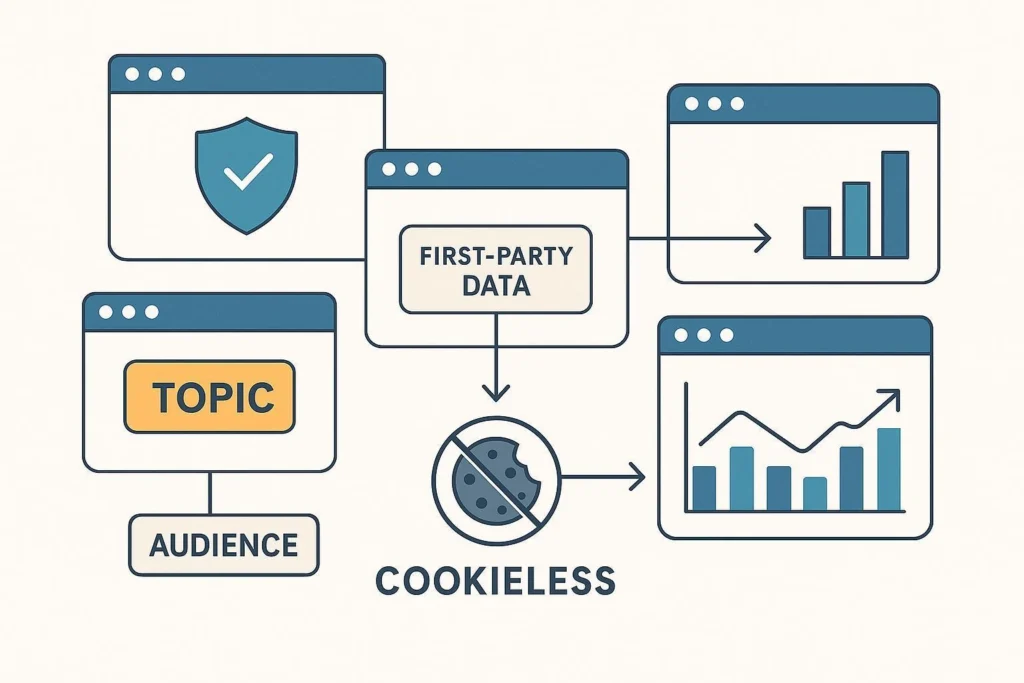
With big browsers stopping third-party cookies advertisers are trying new ways to measure things. Tracking without cookies uses first-party data tracking on servers, customer relationship management systems and tools that care about privacy to learn how people act. These methods help companies keep track of how their ads are doing while also protecting peoples privacy and changing with the online world.
5. Voice Search Advertising
As voice assistants and smart devices become more common people are starting to find products and services in a different way. Voice search is changing the way people look for things. Even though voice search advertising is still new companies need to start getting ready.
They should make their ads and content better for how people ask questions in a way. Businesses that get ready for this change might have an edge over others as more people use voice to shop.
6. Retail Media Networks
Retail media networks are growing quickly in the world of digital advertising. Sites run by stores like Amazon, Walmart and Target let companies show ads right where people are looking to buy things. These stores have a lot of information about what people buy so advertisers can send ads that fit what customers want. This usually helps sell products and gives better results than old ways of showing ads.
Frequently Asked Questions
What are the benefits of online advertising?
Online advertising offers precise targeting, real-time performance tracking, flexible budgets, and measurable ROI, advantages that are hard to match with traditional media.
Why is online advertising important?
It’s important because it meets customers where they already spend time: on search engines, social platforms, and apps, with the ability to measure results as they happen.
Is online advertising better than traditional advertising?
It depends on the goal. Online advertising usually wins on cost control and measurement, while traditional advertising can still work well for broad brand exposure.
What are the advantages and disadvantages of online advertising?
Advantages include targeting precision, lower entry costs, and fast optimization. Disadvantages include ad fatigue, rising competition for clicks, and growing privacy restrictions on tracking.
How effective is online advertising?
Effectiveness depends on targeting, creative quality, and landing page experience. Well-optimized campaigns regularly outperform untargeted traditional ads on cost per result.
What are the different types of online advertising?
The main types are search ads, display ads, social media ads, video ads, native ads, shopping ads, and programmatic ads.
Conclusion
The benefits of online advertising come down to control: control over who sees your message, how much you spend, and how quickly you can tell what’s working. That’s a different proposition than traditional media, where you often don’t know if an ad worked until sales numbers come in weeks later.
If you’re deciding where to start, match the platform to your audience and your goal, not the other way around. A LinkedIn Business post on digital ad strategy is a reasonable place to see how other marketers are approaching platform selection right now.
Whatever platform you choose, keep testing, watch your KPIs, and use automation where it genuinely saves time rather than just because it’s available. Online advertising rewards businesses that treat it as an ongoing process, not a one-time purchase.